

#222: ASU, UCSB & Tanium on Why AI Efficiency Isn't Enough in Higher Ed

In this EDUCAUSE episode, Kyle Bowen from Arizona State University, Joe Sabado from UC Santa Barbara, and Doug Thompson from Tanium make the case that efficiency was never supposed to be the finish line — and break down what responsible AI adoption actually looks like when it connects to the mission.


🤝 Join the CIO Communities for Local Government
A private, vendor-free network where public sector CIOs share what’s actually working
Members get:
- 2x National Retreats (facilitated by Info-Tech Research Group & Gartner)
- 4x CIO Virtual Roundtables
- Monthly “Behind the Mic” intelligence brief (1-pager)
Apply to Join → https://techtables.com/communities-local-government
📝 Show Notes
Featuring
Kyle Bowen is the Deputy Chief Information Officer at Arizona State University leading AI strategy across one of America’s largest and most digitally active universities — overseeing the Create AI platform, an AI Innovation Challenge that has funded 700 projects, and ASU’s first Agentic AI and Student Experience conference drawing 600 attendees from around the world.
Joe Sabado is the Deputy CIO at UC Santa Barbara leading a team of 65 across student and financial information systems, data governance, and an AI community of practice he co-founded — and outside of UCSB he runs Campus AI Exchange and has built an eight-pillar responsible AI framework that higher ed institutions are already using as a practical guide.
Doug Thompson is the Chief Education Architect at Tanium bringing 15+ years of higher ed experience to help institutions get real-time visibility into the endpoint complexity that underpins both cybersecurity and AI readiness — with a front-row view of how higher ed IT is slowly but genuinely shifting toward enterprise-scale thinking.
Timestamps
(2:00) AI efficiency isn't the end goal — Joe Sabado on evidence-based adoption
(5:00) Campus AI Framework — UCSB's eight-pillar responsible AI adoption model
(7:00) ASU's Agentic AI & Student Experience Conference — 600 attendees, global reach
(10:00) Endpoint explosion in higher ed — how Tanium gives CISOs real-time visibility
(17:00) ASU's Create AI platform — 50+ LLMs, built for secure enterprise AI
(23:00) UT Arlington transformation — Tanium case study on visibility and scale
(26:00) Beyond efficiency — Joe Sabado on AI and human flourishing
(30:00) AI Innovation Challenge — how ASU funded 700 projects in 18 months
(38:00) What higher ed leaders are getting wrong about their first AI move
(42:00) Innovation IS keeping the lights on — Kyle Bowen challenges the premise
Whenever you’re ready, there are 3 ways you can connect with TechTables:
1. 📬 The TechTables Newsletter
Thanks for reading TechTables! Get early access to new episodes, insights, upcoming events, and more — straight to your inbox.
Join now: https://www.techtables.com/
2. 🤝 Join the TechTables CIO Communities for Local Government
A private, vendor-free network where public sector CIOs share what’s actually working
Members get:
- 2x National Retreats (facilitated by Info-Tech Research Group & Gartner)
- 4x CIO Virtual Roundtables
- Monthly “Behind the Mic” intelligence briefing doc
Apply to Join → https://techtables.com/communities-local-government

3. 🤝 The Better Together Virtual Series
The narrative-driven series bringing together industry partners and public sector CXOs. Discover the compelling stories that unfold when we stop working in silos and start building together.
»»» Email joe@techtables.com to learn more.
Platinum Newsletter Sponsor:

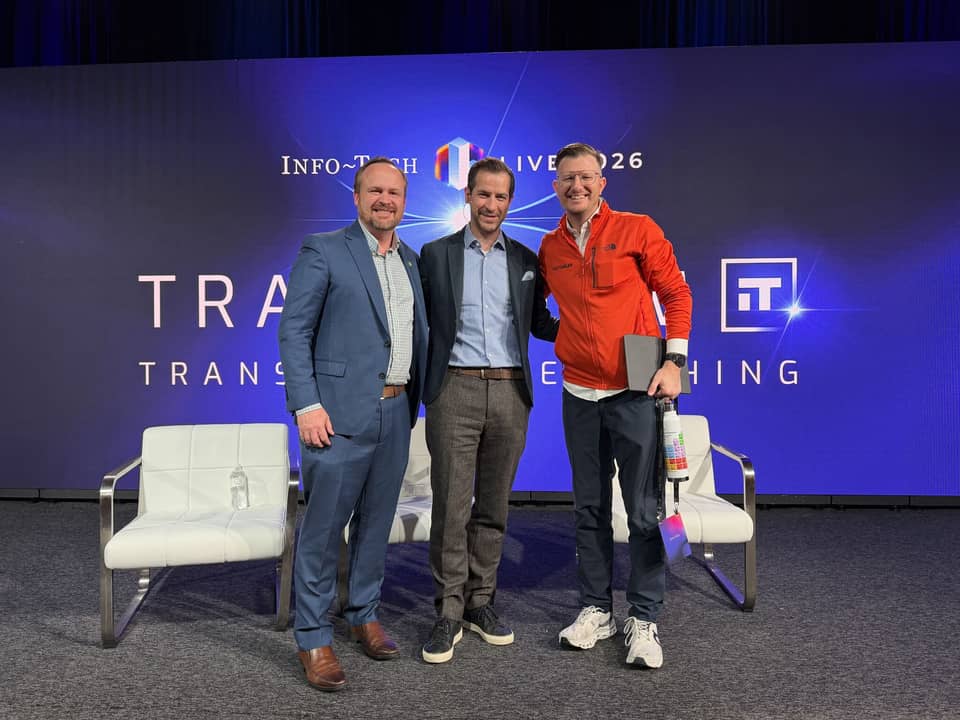
Missed out on Info-Tech LIVE in New Orleans? No worries, you can join TechTables & Info-Tech Research Group at Info-Tech LIVE 2026 - Las Vegas (June 9 - 11, 2026)!
Gold Newsletter Sponsor:

SentinelOne - Learn how SentinelOne empowers this state to stay secure.
Verizon Frontline -The advanced network that keeps first responders connected when it matters most.
Carahsoft - The Trusted Public Sector IT Solutions Provider™, supports government agencies and education/healthcare markets. Contact your Carahsoft rep today to access special discount pricing exclusively through the TechTables + Carahsoft partnership!
Guests
Episode Transcript
In this EDUCAUSE episode, Kyle Bowen from Arizona State University, Joe Sabado from UC Santa Barbara, and Doug Thompson from Tanium make the case that efficiency was never supposed to be the finish line — and break down what responsible AI adoption actually looks like when it connects to the mission.
Joe Toste: [00:00:00] Hey, what's up everybody? This is Joe Toste from techtables.com and you're listening to The Public Sector Show by TechTables. This podcast features human-centric stories from public sectors, CIOs, CISOs, and technology leaders across federal, state, city, county, and higher education. You'll gain valuable insights and current issues and challenges faced by top leaders through interviews, speaking engagements, live podcast tour events.
Joe Toste: We offer you a behind the mic look at the opportunities top leaders are seeing today, and to make sure you never miss an episode. Head over to Spotify and Apple Podcast. Hit that follow button and leave a quick rating. Just tap the number of stars that you think this show deserves.
Joe Toste: Welcome to the Public Sector Show by Tech Table. Super excited to have everyone here. Two returning guests. Doug, let's kick off with you short intro.
Doug Thompson: Sure. Doug Thompson. I'm the Chief Education Architect at Tanium. Been there about five years and I'm just this nerd, sales nerd, geek ai.
Doug Thompson: I'm wave here, but these guys have to say about ai.
Joe Toste: I thought you were like a chief education architect.
Doug Thompson: Well, I said, I thought I said that, but yeah, that's why I am, but. It's simply, I know more about education at Tanium than everybody else.
Joe Toste: [00:01:00] So you're a good person to know.
Doug Thompson: Good person to know. Yeah.
Doug Thompson: Been in, been in the higher ed business for now, like 15, 16 years from very, again, both companies I worked at, and I, I just love it.
Joe Toste: Kyle,
Kyle Bowen: Excited to be here at EDUCAUSE Kyle Bowen, deputy Chief Information Officer, Arizona State University. You know, it's an exciting opportunity to kind of focus in on all the things happening around AI learning and health and how those things come together.
Joe Toste: Yeah, I love it. We're gonna unpack. The, the big enterprise of ASU. Also linking back to last year's episode. We'll have that in the show notes too. Joe. Joe,
Joe Sabado: good afternoon,
Joe Toste: Joe.
Joe Sabado: First time, I'm one of the first timer here. So I'm Joe Sabado of Deputy CIO at UC Santa Barbara. So I oversee a team of 65 amazing individuals student information systems, financial information systems data governance.
Joe Sabado: I'm leading that effort as well. Also leading the AI community of practice. On my side gig with my interest. I also have a website called Campus AI Exchange, and that is where I think we connected about the framework on how to do responsible AI adoption in higher education, which I think we'll [00:02:00] talk about today.
Joe Toste: Yeah, we'll talk about that today. And for the cool kids, I know he said UC Santa Barbara, I will probably refer to it as UCSB for the rest, living in Santa Barbara. Joe, we'll we'll kick off with you. So you spent 30 years at UCSB. I am not even 30. No, I'm totally kidding. But that's, that's a, that's a great amount of time.
Joe Toste: So you've become a thought leader questioning the AI hype. We had a couple of those people on the podcast today talking about the AI hype cycle and you put out a lot of content on LinkedIn which I think is actually really great. One of the most common things we're talking about right now is a lot of people are getting excited about AI, but they're not focusing on, Hey, what's that business problem we're trying to solve?
Joe Toste: Which I think. There was an article in the Wall Street Journal about this, about, I think, I wanna say it was Walmart. I might have got it wrong, but I think it was either Walmart or another company where they had done so many POCs and they actually figured out we don't even know what we're doing, so we're gonna shut down a bunch of those.
Joe Toste: So but I like that you're questioning, right? I mean, this is kind of the academic piece. We want to be critical thinkers. And so the in [00:03:00] quotes you had is, show me the evidence. Right? I love that. I love that. So. Just kinda walk through real quick, you know how are you thinking about the current cycle that we're in?
Joe Toste: How are you thinking about AI and how that applies to real use cases at UCSB?
Joe Sabado: So, and I'll talk about UCSB of course, and then also what I'm seeing in higher education. Oftentimes what I've seen is, and just I've been in higher education for the last 30 years, and there's always, you know, mobile first, cloud first, the technology first, and I always have to say.
Joe Sabado: At the end of the day, what is the outcome we're looking for? Right? And of course, for me, being a first generation you know, immigrant, I always look at it from like an equity lens, a student success lens. And so that's one of the ways I try to look at adoption ai, right? It's like, at the end of the day, why are we doing this in the first place?
Joe Sabado: And, you know, Kyle didn't ask me to say this, but I, I am really impressed of what a SU is doing in terms of the outcomes outcome driven. Right. And to me it's evidence-based. So, you know, oftentimes I say, well, we're adopting this agent, this and that. And I [00:04:00] have to say, well, how does that tie to your mission?
Joe Sabado: And I was privileged enough to be able to present at the last week at Gentech AI and, and, and student experience and the things they're doing there with ai. It really is consistent with the president's saying, which is like, we're not measured by the number of students that we exclude. It's the number of students that we extend.
Joe Sabado: And so the things that they're doing there, there's evidence that that's happening. And to me, at the end of the day, you just ask students, I had a student attend one of my sessions, and just the passion that they have about, about AI and the experience that they have, to me, it goes, goes down to that
Kyle Bowen: Right.
Kyle Bowen: Personal experience.
Joe Sabado: Again, he didn't tell me to say this, but I, I very
Kyle Bowen: impressed. I appreciate the, the vote of confidence. There's,
Joe Toste: I love that. We're gonna talk a little bit more about that conference in a second, but I do want to talk about you, you mentioned this briefly, the campus AI framework. Sure.
Joe Toste: And focusing on. Technology and the whole person. Sure. Tell us a little bit more. You share, we you actually share my, we talked for what, 75 minutes. That's right. That's right. Yeah. We went for 75 minutes. You're sharing your screen and showing me walk, walk, walk us through the campus AI framework and [00:05:00] everything that you shared.
Joe Sabado: Sure. This is more of a a product of my curiosity. So, you know, I'm, I'm a person, I'm a curious person, so I want to understand how higher education in general is approaching ai and without a framework, it can be overwhelming. Right. There's a policy, there's a. There's risk assessments, there's community practice like change management, although it's implementation.
Joe Sabado: So I came up with this framework primarily for me initially to understand how to approach the different topics, eight pillars, all the way from the mission of the university, all the way down to how do you implement it, and change management and community practice being in the middle of that. So that's, that's how I got us started.
Joe Sabado: But that's the way I look at it. Especially even just vendors systems here. How are they approaching adoption, responsible adoption? You know, using those different lenses.
Joe Toste: Yeah, no, I really appreciate that. Is there a, from that, from that framework, was there one or two things that you would love to share for the community out here?
Joe Toste: I'll link to it in the show notes, but that you would really want them to take away.
Joe Sabado: Sure. I think it, it is adoption of ai. I think it's a leadership [00:06:00] imperative. At the end of the day, it's about people. So you start with people, you end with people. And so as leaders, we have to make sure that stakeholders are represented.
Joe Sabado: And I followed this, this theory from Pleasant Mac called the Responsible Leadership Theory. What it says is, you, you're not just dealing with followers, you're dealing with different stakeholders with different values. And you see that often in higher education where you have faculty, you have staff, you have students, you have administrators, you have the community, so you have to account for their value systems, and then also are they represented in the process?
Joe Sabado: And as a leader. How do you then kind of, you know, look at all those different, different values and come up with a solution, not necessarily consensus, you're never gonna get consensus, but really kind of again, just go through that process of being them represented.
Joe Toste: Yeah. No, I really like that. So, Kyle in episode 200 with.
Joe Toste: You know, I didn't originally plan it this way, but on episode 200, Josh Bright came on. Did you say hi to him? Did you see him? He was right here. Hi, this Josh. Oh no. Oh. Hopefully he comes back.
Kyle Bowen: I thought he was gonna sit down here with us for this session.
Joe Toste: Yeah, I know, right? [00:07:00] I thought de deja vu. Yeah.
Joe Toste: Deja vu. Exactly. You had talked about as U'S AI Innovation Challenge and your create AI platform which is a great way, you know, research based way for faculty and staff to pitch their AI ideas. Love that. So to Dovetail, a SU just hosted its first Agentic AI and student experience. I think I might need to come to that next year.
Joe Toste: Where you and Joe were just at. It's crazy. So for those who couldn't make it like myself, tell us a little bit about it.
Kyle Bowen: Sure. Well, the, yeah. So our event was hosted in Tempe, Arizona. Agent AI and the student experience attracted. 600 people from around the world really exploring all of the ways that AI is intersecting with supporting, you know, the student experience, whether it be in the classroom, throughout their journey really helping create, you know, great better services and improvements, helping us all kind of move faster and, and find new ways to operate.
Joe Toste: Can you did you, you presented, I did. Did you present? I'm sure you did.
Kyle Bowen: I, I, you know, I was happy to help moderate and facilitate conversation that day. You know, there were so many voices that we were able to bring to the [00:08:00] table to learn about all the different ideas that people are pursuing.
Joe Toste: Were there one or two presentations that really stuck out to you?
Kyle Bowen: Well, you know, always president Michael Crow from Arizona State, you know, he always provides a, a terrific way of thinking about and kind of framing the, the, the, the organizational evolutions that are happening and new ways for us to think about accelerating our work and, and, and making changes that are really student centered, these kinds of things.
Kyle Bowen: Also, you know, some of the, the sessions that we're really exploring kind of the, the ethical use, the responsible uses of AI and the role that we all have to play in what that future can look like.
Joe Toste: I think that is a pretty underrated conversation that's not happening too much right now. There's a lot of rush and I love it too.
Joe Toste: I was up, I was helping my daughter. She had this entrepreneurship class. I'm helping her build a website on Rept. Mm-hmm. And we're just having fun and it's super late at night. And you know, but the ethical conversation of, you know, all of the data and what you're feeding it and you're not gonna get that back once it's, once it's in the LLM.
Joe Toste: But I think. We know our [00:09:00] response, I think is a very important conversation. And I think we're gonna have on a conversation tomorrow. But I mean, AI's been around for, I mean, I was read, there was a paper I was reading I'm blanking on it, but like, kind of the first think it was like 1950s where yeah, yeah, yeah.
Joe Toste: And so just having, you know, it, it what it would look like. I think he had estimated that like in 2000 LLMs would be. You know, some version of that would be, I'm like, it's not bad. I mean, it's like 20 years off. It's like pretty crazy. So but I, but I love that we're having that, that conversation. So Doug, you work with a lot of institutions, higher ed, around the country who are dealing with endpoint explosion, not just on laptops, but every IO OT device that needs to be connected.
Joe Toste: We had Erickson on earlier, and this is a huge thing, like connectivity. What we didn't cover was the cybersecurity piece of that. Right. So yeah, just love to know, like, you know, how you're helping CISOs and CIOs finally get visibility into their environments that are really even more and more complex, especially in [00:10:00] higher ed, where researchers are bringing their own, their own devices kids.
Joe Toste: I mean, I'm sure it's like the average device is like 9.7 for each, for each person, right? So,
Doug Thompson: yeah. So one, I want to. The fundamentally, if you don't know what you have, you can't protect it is one thing. But I also want to ask these guys here about how important is the fidelity and timeliness of the day-to-day ai.
Doug Thompson: How important is that to make AI work? Well,
Kyle Bowen: well, I mean, data is the fuel that the AI runs on, right? Which, and, and that's where particularly as we continue to enhance in providing these ag agentic workflows, these new ag agentic AI capabilities, having, you know, enterprise data that is. That is AI ready and, and is usable inside of secure private environments is critical to that success.
Doug Thompson: And, and the timelines is, so how recent is it? Right? Is this from like last month or is this 20 minutes ago?
Kyle Bowen: Right. I think it know, it goes without saying that having, you know, kind of that immediate access to relevant information is critical.
Doug Thompson: Well, and that's, and to [00:11:00] your question, that's what we provide.
Doug Thompson: So if you find out all the devices and stuff that you have, then you can get this real time data about them. Right. You use a self-driving car. I don't want data from 20 minutes ago. I want data from okay, what's just happening on the street? Right. You know, so I, that's what we provide to that high fidelity and, and you know, our, we're using AI to help it departments scale.
Doug Thompson: So if you think about from a threat, you know, I'm in the, I'm in the knock and, and I've got all these different signals and stuff coming in from threats. I mean, higher education is like target number one for, for threat actors that come in. So the amount of. The data that you have coming in is just unbelievable.
Doug Thompson: How do you use AI to help parse that? Here's the things that we know. We don't really, you know, these are false alarms. These are lower priority things. We've hardened the network where these aren't a risk. How do you go through all that data to get to the things that you're humans? The carbon based life forms really need to investigate and go do that.
Doug Thompson: That's another area from the general standpoint is where we're going in to try to help help the IT department scale. [00:12:00] But to your point there about all the different devices, you know, PCs, servers, and all the other things, that's pretty easy to do. Straightforward has been doing that for a while, but now you start adding these operational technologies, these iot that you talk about.
Doug Thompson: Every device is connected, and a lot of them aren't designed to be scanned in the typical way that you scan things. Now, they'll tip over. It's like, it's like a fainting goat. You make a loud noise and the the device dies until you can go out there and see it. So how do you talk to them in a native language again to get that data about that device so you know, you can make educated decisions.
Doug Thompson: That's really what we're focusing on.
Joe Toste: Yeah, it's a, it's interesting because there's the snapshot in time, which is in. I, I run very small business, but in the business world, it's like, Hey, you're looking at this balance sheet, which is snapshot in time, but you really wanna know is how's the cash in the bank account work?
Joe Toste: Right? That that's moving daily. Right? And it's the same thing, like in cyber. You could take a snapshot of all the devices, but that might not tell you three months from now. Or if you have an audit, right? It, it doesn't tell you what's happening in real time.
Doug Thompson: Who's running malware XE right now? We need to [00:13:00] stop it.
Doug Thompson: Right? So, I mean, who's got that?
Joe Toste: Yeah. Yeah, yeah. Yeah. So no, no, I really like that. So Joe, something that you started was. The community of practice at at UCSB? Tell us a little bit about that.
Joe Sabado: Sure. The community of practice, born from the, from a couple of folks idea, and I'm one of 'em, and we partner with a, a colleague of mine.
Joe Sabado: You know, we, we partnered together before even ai based on common interests on student success, so online teaching, learning. So we had this idea and said, you know what, let's start with a community, right? I think there's a need for us to be talking about AI in a way that's inclusive and diverse.
Joe Sabado: And that from the very beginning, that has been our motto and, and in our commitment. And so Josh Bright, our CIO is a sponsor along with our A, B, C for online teaching and learning. And so it's been a space of about 340 staff, faculty, and students and researchers to come together in different venues to talk about, you know, the ethics, the responsibility responsible AI and hands on, right, and talk about security.
Joe Sabado: Oftentimes when I see like AI literacy programs, frameworks, security isn't one of [00:14:00] them. Right. And so we built that in to say, you know, part of the responsible and ethical use of ai. So that's been the place where we've been able to kinda do a lot of change management. Right. And I'm actually presenting tomorrow on Acar and Prosci and how change management has been part of that process and how we promote, again, the ethical and responsible use of ai.
Joe Sabado: And we welcome skeptics. That's been the fun part, is that we have students and faculty, you know, having the same conversation in the same room and with respect.
Joe Toste: Have you, have you had this conversation
Kyle Bowen: with Kyle?
Joe Sabado: I don't think we have, but, but I do. I mean, one of the CLPs community practice that I studied was was ASU.
Kyle Bowen: It's a terrific way to get people around the table talking about what's working, what's not working, what the concerns are. It's a big part of kind of mobilizing a community to work on these problems together. You know, part of this is, it's very experimental. Everybody's trying to figure out what does it mean for their discipline, for their work, and the more that they can kind of collaborate with other people, the better.
Joe Toste: Yeah. Yeah. I love that. So I wanna go, I wanna go a little bit deeper. You guys gonna spend some time in, in Arizona together. What were some of the, you know, one or two highlights that, that the two of you [00:15:00] were grabbing from each other?
Joe Sabado: Well, we just kinda had like a little, you know, hallway conversation, but I'll tell you this, I'll get in general, I love the fact that we're now the Gentech AI and student student success experience are in the same sentence.
Joe Sabado: You know, I, I even like, and I'll tell you this one of the comments that was made by a presenter over there says, you know, this is a technology conference, and you know, I'm, I'm a very diplomatic kind of person, but says, well, it's technology. It's not wrong, but it's incomplete. Yes. Gentech AI is about technology and it's also about student success.
Joe Sabado: Right. And so to me, that's where I think the experimentation is coming in different perspective. And same thing with AI for efficiency. It's not wrong, but it's incomplete. Because I think if efficiency is our end goal, I think we're missing something in higher education.
Kyle Bowen: And I, and that's an important part because essentially, you know, in as much as AI is a technological change, it's a cultural change, right?
Kyle Bowen: And so part of it is, you know, being very intent intentional about what are the problems we're gonna take on and use this technology to solve. And that's where, when we think about the student experience, it's, it includes the classroom and in all the ways we're [00:16:00] engaging with students around achieving, you know, better outcomes.
Kyle Bowen: But at the same time, it's like, how can we help reduce barriers to entry, you know, improving the admissions process or improving a student's experience throughout their, their journey at the institution. And so I think all of these places are where AI can play a role. And so it's, it's important to kind of share what's working, how we're thinking about some of these problems so that we can also kind of engage a broader community around that.
Joe Toste: So a SU is a little unique in the sense that the scale is just so massive both the campus. And you've got the online digital piece that as u's very well known for has with the rise of AI and, and where, especially on the LLM front with a faculty member or maybe as a student or a different department has there been a use case or something that has surprised you that's come out of, of the school?
Kyle Bowen: Well, you know, that's where, you know, the, the really neat opportunity right now given the, the state of, of AI and some of the technologies is really the ways that students and faculty can use it to kind of take on more complex problems. [00:17:00] Right. And that's where, you know, we've, we've developed our technologies at ASU one is our, our AI platform we call Create AI.
Kyle Bowen: And a big part of that is to provide access to really sophisticated AI capabilities. Without having to have a lot of kind of technical ability to kind of write code and things like this that you can kind of create tools and experiences and share them with other people. But then as students kind of begin to self adopt or kind of lean into some of these new technologies, the ways they use them to solve problems is just amazing to me.
Kyle Bowen: And every time I meet a student who's kind of taken on a real world problem, I'm always blown away. I'll share a quick example. I met a student recently and she was working as part of a design studio in Hawaii that was taking on this problem of, of coral death. And one of the problems she had was she wanted to be able to explain her ideas to other people in her, her design studio.
Kyle Bowen: And one of her ideas was this amazing concept of, you know, what if a bo anchor worked like an octopus and it had legs and tentacles and could grab onto things without crushing it, which is very kind of hard to describe and imagine. And so using kind of a combination of AI tools, you could [00:18:00] quickly generate these concepts.
Kyle Bowen: And share them with other people in her design group. And so it's things like this where students are kind of self-identifying like, Hey, these are the ways that technologies can help me take on something complicated. And not only take on that problem, but also facilitate what is a social process, right?
Kyle Bowen: Thinking about kind of how, how I can communicate better around my ideas.
Joe Toste: So, so I actually haven't thought about this before, but I like what you just said about the, the social process and. Getting, I mean, 'cause I think like the, when, when the energy comes from the students and they're getting excited about, you know, whatever use case they're using it for, it just starts to, you know, create that ecosystem.
Joe Toste: Which is, which is really fun for those. You touched on a little bit, but could you just go a little bit more on what is create AI so that other universities can hear?
Kyle Bowen: Sure. So, you know, recognizing that that AI is still being invented, new models, new capabilities coming out all the time, part of it is.
Kyle Bowen: You know, a SU needed technology infrastructure that would help us prepare for that future, right? So allow us to be agile, to shift with new technologies, to be able to kind of [00:19:00] integrate those very quickly. Also without kind of going making any long-term investment in any one kind of model provider, different models have different benefits and, and when we begin to apply it across not only the enterprise, but teaching and learning and research.
Kyle Bowen: You know, having a lot of variability in there was critical, but also at its core, which we were touching on a moment ago, was to run the security of our data. Being able to create and blend our enterprise data with AI and doing that in secure responsible ways. And so that's what led us to build out, create ai.
Kyle Bowen: It's, which is a platform that allows our environment to create, you know, very sophisticated AI tools that are leveraged from, you know, one of 50 different large language models, whatever kind of meets. The need of their tool set and then share those experiences with other people. And that can be things, you know, creating a, a, a chat bot that sit that, that exists as part of your canvas course.
Kyle Bowen: And students can ask a questions and get feedback and tutoring and things like that. All the way up to things that will help support computational science and, and provide, you know, the ability to quickly prototype or dive deep [00:20:00] into to research ideas. So it's that kind of core piece of technology that is really kind of helping us fuel kind of what the future looks like at a SU for, for using ai.
Joe Toste: Yeah. No, I, I really like it and IASU is always on the forefront. I actually once upon a time, took a class online at a SU. Well, you're welcome. Anytime if you'd like to take another one, like, like 15 or 17 years ago.
Kyle Bowen: Oh, well, it's time. You're overdue.
Joe Toste: Yeah, yeah, yeah, yeah. Time, time, time to go back. Maybe I need to take a cybersecurity class.
Joe Toste: On, on, on online. So Doug, episode 199, we talked about whole of education. Our, our buddy over there who Did he say whole of whole, of what
Doug Thompson: whole? Well, he starts the whole of government, whole of education. He calls about whole of system.
Joe Toste: Whole of system. That's what it was. Whole of system. So tell, tell us a little bit more right now as far as the landscape of, you know, 12 months ago you were here in this chair a year ago.
Joe Toste: Yeah.
Doug Thompson: I watched, I watched the episode again. Said, well, some of that stuff's the same, some of it's improved. So we
Joe Toste: talk about, so yeah, tell, tell what, what, what, what has changed?
Doug Thompson: Yeah. I'm, I'm seeing a lot more, and I [00:21:00] went to a session today one of the sessions here today, and they talked about the transformation they've made over the, the last six years and, and what's really hard, and these guys seems like they've solved it, but, but in higher education, especially since it's sort of grown up with autonomous model where business school has their own pot of money and they do their own thing and engineering does their own thing and all that.
Doug Thompson: I mean, that's the way it sort of grew up. Yes. Is that now there's a little bit of maturity to say we need to do things better and more at scale, rather than sort of repeating processes in each of these things. How can we do this sort of a system wide, let's do this a little bit smarter and scale and help scale things.
Doug Thompson: So, so, and really that's, I'm seeing a lot more change to that. Well, I mean a lot, a lot in education, like 10, 15%, but I'm having more of those conversations now with how can we help you do these things? And, and the, and part of the impediment is again, is, is cultural change. But she really had a great model of how you sort of go about that change.
Doug Thompson: It's telling a story about how your world can be better. I always like to ask the question, what are you not able to do today because you don't have time. Time is the only thing that there isn't, is [00:22:00] not negotiable. We don't get any more of how do you do more of that? Right? And so, so she's asking that question and it's just like, gives me something to hope for.
Doug Thompson: Right? Hey, if I had more time. You know, there's an identity problem. Somebody, they're, they're tied to either they built it themselves back when the time when you sort of had to do a lot of your own stuff and you had to do these, and it's free like a puffy a lot because there's still a cost with it. So is that cost now being a hindrance to us moving forward and enabling all this AI stuff that they want?
Doug Thompson: Right. So, so there's a lot more enterprise focused, I guess you would say. Mindset being shifted, but it's, it's shifting that way, which I think is a very good thing.
Joe Toste: Okay, so now let, let's go more specific. Do you have a favorite customer story or transformation that you could share?
Doug Thompson: I, I talked about them early last year.
Doug Thompson: We just put a new one, which I'll talk about next year. You have me back, but UT Arlington. So, so they were, and, and the interesting thing about them is I went back with them. I was with them for 10 years when I was at my previous company. I knew they ran a very good shop and, but there were some architectural challenges that they couldn't overcome [00:23:00] with the platform that they had.
Doug Thompson: And so I got excited to go in there. So, look, I'm not here to unsell anything. I sold you. That's the right thing. You've got the other stuff there, but here, can we help you with your problem? But she, she took this thing as, I need data. I need that visibility into all those things that are out there. I need to know what vulnerabilities are out there because if it breaks, it's gonna come to us, then it's gonna come to the system, right?
Doug Thompson: It is simply a reputational type thing. I need to have that. How can I do that? And because of the architecture and security BA and these different things, it was impossible. So they put Tanium in. We've got agents on all the different things. We're not bound by an active directory or any of these other things.
Doug Thompson: You've got the agent on reporting in. It gives you this, a wax view of everything on the field of play, right? I got that view. Now I could push the big red button, like Arizona State of Arizona's got this thing. I could push it, but I don't. So you have to come to an agreement with your, your, your, all the stakeholders that, Hey, look.
Doug Thompson: We just need visibility. We're gonna share it with you so you can share it amongst yourselves, but you're still in charge of whatever you need to do. And that's, they really transformed for. I'll use an example, when they had this old CVE that was [00:24:00] from 2013 that was out there, it's one that Microsoft keep changing that the binaries weren't there unless you had Windows seven out there.
Doug Thompson: And to be honest, I have done A POC and found Windows seven in a closet someplace. Talking about discovery still tied to some printer or something like
Joe Toste: that. Yeah, we seven had the UCSP,
Doug Thompson: so yeah, so, and, and you know, so what we told her that same way is now we can get all that data in, right? And then being able to sort of make the educated decisions about stuff.
Doug Thompson: So the CB was from 2013, they didn't have the they binaries, but none of 'em had changed the registry setting that they needed to do. So it's 24,000 CVEs that I'm reporting. I'm vulnerable for, I got the binaries, how am I still vulnerable? We told 'em how to do that. They used Tanium to fix it. The next time they rebooted it was done.
Doug Thompson: Just that's the speed and scale of which once you know what you've got, then you can go out and fix it.
Joe Toste: Yeah. Love it. And another episode I'm gonna link to in the show notes was actually my episode with the former governor of Arizona, Doug Ducey. We talked a lot about cybersecurity and it was very unique from that perspective 'cause having a, a governor's perspective.
Joe Toste: [00:25:00] Really on, on any initiative of how do you go get money, you gotta go sell this to the legislature. And senior leaders, I mean, you get that, you've gotta go sell that, right? You gotta go get that, those funds. So Joe, I wanna transition to technology leadership. Probably one of the most important pieces and you know, one of the things.
Joe Toste: Right now that I think is super important is keeping curiosity at the front. I think if you lose the curiosity, you kind of just fall into compliance and the rote activity of, you know, we gotta do X, Y, Z, or whatever. How are you keeping curiosity at UCSB going?
Joe Sabado: Sure. I think three ways, and I, I mentioned earlier my curiosity drives the things that I do, and that's just the nature of me.
Joe Sabado: And so I try to promote that modeling that. Right. And so Joe, you mentioned I post a lot on LinkedIn because I have a lot of conversations with my staff about like, you know, the possibilities. So personally, I model that. For example you mentioned time, Doug. I'm a product of that. So one of the ways I use them, and I talk about this with my staff, is how do I go [00:26:00] beyond the efficiency factor in human flourishing?
Joe Sabado: I wanna model that by saying the amount of time that I've saved using ai, I've spent it on myself. I've lost 25 pounds. And since, since June, and, you know, again, regaining the time I, I save using ai right. And, and showing it and spending a lot of those time building relationships. Right. And then, and, and, you know, the students and staff.
Joe Sabado: So that's part of the curiosity factor too. I, I have, I have like lunch with students maybe twice a week. Right. And bring those conversations back to my staff. So I think modeling that is part of the curiosity. Second piece is, again, the community practice. Developing a space where folks can share what they've learned, what's the value of AI to them.
Joe Sabado: And of course just kind of building that, the safe space where you people build connections. Right. And the third piece is through my work, right? The campus I exchange. And having this kind of conversations when I go out there and speak, it's much learning for me as anything else, like the Gentech AI and student experience, I, I was geeking out, it was an [00:27:00] international audience, I think more than eight or the 18.
Joe Sabado: Countries.
Kyle Bowen: I
was,
Kyle Bowen: yeah, that's right. Yeah.
Joe Sabado: And so I had a person from Israel, Luxembourg I think Canada was there, so I was talking with all of them. So to me, I bring those kind of conversations back to my campus, right. And I have a great CIO you know, he allows me to do all this explorations. And so it helps quite a bit to have that culture where professional development and just, just having exploration is part of the culture.
Joe Toste: Yeah, I think. It's, you're in a tough spot when the leader above you is, is not, you know, backing you on anything. It's
Joe Sabado: right here too, by the way. I mean, he's got, he is gonna be one of your, it's gonna be one of your guests tomorrow, right?
Joe Toste: Oh, yeah, yeah, yeah. We'll have Josh, we'll have Josh back on.
Joe Toste: Yeah. So Kyle, I wanted to jump to, you know, you probably get a million use cases at a SU, right? But you still gotta focus and I, and I love geeking out on all of the latest tech. Right now I'm on the, I got the Claude Max. I'm on. I'm on that clock packs code, I'm doing all kinds of stuff. How do you, you know, when something looks very exciting, but you're not sure it's gonna have that mission impact, that student impact, what questions are you [00:28:00] asking if your staff comes to you and goes, Hey Kyle, we, we've got, you know, these five things or these 500 use cases.
Joe Toste: How are you filtering down the noise right now?
Kyle Bowen: Well, I think there's gotta be an openness to looking at those ideas. So part of it's gonna be, you know, to have a. Ha to have a default perspective of, well, we should be trying a lot of different things. Yeah. And exploring a lot of different areas. So more of a question, why not, you know, look at some of these ideas.
Kyle Bowen: But part of it is I think, you know, one space of this is things that are highly experimental and what can those projects teach us about ourselves as an institution? What can those projects, you know, yield as kind of new ways to teach or new ways to work? I think those are part of the opportunity.
Kyle Bowen: Then we're also looking at, you know, transformative initiatives, right? Things we wanna prioritize as an enterprise that will, will help make a process faster, will help accelerate our, our work at a particular place will increase access to the university, will, will help reduce the cost of a process, right?
Kyle Bowen: These kinds of things. And having very specific measures and a plan for how to kind of get to those measures is a critical part of [00:29:00] that. So I think it's really very much a balance of one, kind of focusing on where are the places where we wanna have an impact and let's make sure we're kind of measuring and looking at that.
Kyle Bowen: But the other is enabling people to be creative. Having a space where people can try new things, a safe space to work and experiment, and then learning from that and kind of again, diffusing that learning back into the university.
Joe Toste: So take us, take us behind the curtain. Take us inside. It's this, it is, so this is look like a whiteboarding session.
Joe Toste: How are you getting on capturing all these ideas?
Kyle Bowen: Sure. Well, I tell you the, the most, one of the most effective programs we've developed over the last 18 months is something called the AI Innovation Challenge. And it was something that was born of our collaboration with open AI about putting you know, AI tools in the hands of our faculty, of our staff of our students to kind of see what's possible.
Kyle Bowen: And what we did was we opened that up to the whole campus community, said, who's got an idea? We wanna support it. And every you, we, we received, you know, thousands of proposals. In the last 18 months, we've supported 700 different projects. Along those lines, we've learned something from every one of them.
Kyle Bowen: [00:30:00] And, and part of it is, as part of that proposal, is the kind of sharing back and reviewing those proposals is, is, you know, done by a multidisciplinary panel of people that are, that too are innovators and thinking about what might be possible and hey, what does, what does this proposal teach us about?
Kyle Bowen: Data governor, data governance, or how does this kind of open up new questions about, you know, human subject testing or how does this help facilitate a process for us into the future? So I think these are all different ways of looking at, but, but part of it is having low barrier of entryways for our community to try new things, right?
Kyle Bowen: To be a part of creating whatever this future looks like with ai.
Joe Toste: I love that. Is there a formal process for capturing these lessons learned that you're collecting?
Kyle Bowen: Yeah. And that's where part of the application process. Is the, how do you plan to evaluate what's going on? Now, some of that could be, you know, just in a, in a friendly evaluation, is it kind of having the kind of reach you're looking for?
Kyle Bowen: Others could be more instrumented like a survey or some kind of metric based feedback. And so part of it is the report that comes back from each one of these [00:31:00] projects that helps us understand kind of how that went and sometimes that that helps inform, are we gonna do it again? And I would say 70% of them we do again.
Joe Toste: I'm just going down the rabbit hole right now. I'm super curious is, is any of that public for other institutions to go? I mean, no. Very few schools will have the scale that a SU will have. Like, can UCSB go, Hey, there's a, you know, kind of like a wiki or a portal where we can go see. What, what was the use case and is ASU going to, you know, do it again, that kind of thing?
Kyle Bowen: Yeah, so ai.asu.edu, which is our primary website. It's not only the, the vehicle we use to, to communicate with our, our ASU community, but also to share that with anybody else who would like to, to kind of see and learn about how we're approaching a, our AI journey. And so part of that is, you know, kind of sharing those stories of faculty, of staff of.
Kyle Bowen: Of our students and the things they're doing with ai. So we do that. And then we also publish on a regular something a regular cycle the, our AI journey magazine. And we just came out with a new version last week. [00:32:00] And that too is a culmination of collection of stories that come from things like the AI challenge, but also other, other activities across the university.
Kyle Bowen: And so that's a big part of it is, is not just. Sharing the lessons learned, but like who were the people that kind of, you know, engaged in that process and, and how did they go about it? How did they think about, you know, what that can be?
Joe Sabado: Let me add on to that actually. One of the best conversation I had last week was a student who was sending one of my session, my session, and how she was so excited about you, you know, building an agent and, you know, uploading a resume and being able to interrogate that chat, chat bot, you know, chat bot.
Joe Sabado: He's just so excited about it. And the funny thing is like, she goes, I, I'm worried about my career. I'm going like, you're gonna be okay. Have AWS experience. You're already building these. And she came up to me after the session and she was the only student that came up to me and said, you'll be okay.
Kyle Bowen: And that's why I think, you know, engaging students as partners and kind of co-designing these activities is a critical part of it. Yeah.
Joe Toste: I mean, you guys are selling on me to go into higher ed right now. I am. Like, this sounds fun. This sounds a lot of [00:33:00] fun. Are there any well, I know there are because I've already asked but you know what, what, what, what use cases, you know, have that, have you explored love to hear.
Joe Sabado: Yeah. As a matter of fact, lemme share a story from one, our Chief of Staff for Student Affairs and, you know, our Vice Chance for Student Affairs said, I need a way for, for me to capture my handwritten notes, right. And, and he built a gym. We, we just, we just introduced a Google AI Pro project, 300 people.
Joe Sabado: And the very next day, I think the day after that, he goes, guess what I created? And he shared the prompt, you know, to the community. And he goes, everyone's multiple said, you know what? You just saved me like six hours doing this. That's one. The other piece too that I share with the community is I run an IT mentorship program.
Joe Sabado: And so part of that is gathering the data from the form Google form, building like a, the application process behind it, and then the algorithm behind it. So I create a, it's called Product requirements document. And, you know, I'm a developer for many, many years, so I have a, I have a sense benchmark take me [00:34:00] seven, seven seven hours to develop the whole thing, even the algorithm, how to select measurement.
Joe Sabado: It would've taken me about two weeks minimum using App Script, using Google Sheet. And we're able to, we're running the program because of, of AI enabled. So
Joe Toste: yeah,
Joe Sabado: that's just a couple of things.
Joe Toste: I love that. So Doug, I'd love to hear from you, you know, what, what, what are two to three themes right now that senior level leaders should be aware about in cybersecurity.
Doug Thompson: Yeah, I mean the, your, your root problems still exist.
Doug Thompson: So these guys are talking about all the sexy new stuff and all this. There's still the stuff that keeps the light on and the back, the lights on in the back end that you're running today's stuff, right? Your backup servers, your, you know, your workstations and things like that. You still have to keep those healthy, you know, what they're doing.
Doug Thompson: So, but that's still time consuming. 'cause in a lot of cases you're still doing it the same way you did maybe 10 years ago or these, you know. So how do you help modernize that? It's not sexy, but it's a necessity that goes on. So we're using, well, one way we use this AI and machine learning to say, okay, look, if you install this patch and, and you know, [00:35:00] everybody else has done this in your environment.
Doug Thompson: So like there's 1.5 million endpoints that we see, we get data from. They've had about a 98 perce percent success rate installing expansion. Would you feel pretty good about installing it on a Saturday or a Friday? 98 percent's not too bad, right? I would feel pretty good. But if I've got a 75%, like there's a browser that just came out and 75% of the problem are now having increased CPU and memory usage, I'm not gonna do that right away.
Doug Thompson: So you can use this data, much like you're talking about, to make more educated decisions. Call this the con confidence is gonna go on. So that's some of the things we're thinking about. And then adding that into automat. So it is not, again, it's not sexy, but if I, if it takes me to patch a SQL server, it takes me three man hours to go do that because it's in a cluster and I have a lot of manual steps.
Doug Thompson: That's again, time I can't go back and develop myself. If we can help automate that process again, using some confidence scores and stuff that we have and makes it more reliable, then again, I want technology to feed, face fade into the background. The best technology. You don't know it exists. Right. It just works.
Doug Thompson: And so the [00:36:00] automation piece is a big, big thing. Everybody's looking at how do we do this? There's still some sort of reliance on, well, we've done this, you know, I've got PowerShell scripts, I've got these things I've used for years, which works great until the vendor changes something and then you've gotta go back and redo it.
Doug Thompson: So how about you do this in, in Gartner says this, from automation. To get to autonomous, you need to have sort of a single platform where all the data's the same. I talked about it before, pulling in your OT stuff, your other things. Getting your asset data where it's all in one place where I know what that date is, I know how fresh it is, and then if I got these AI things and on the other end I can apply to that, then I trust it a lot more.
Doug Thompson: So really that's sort of the things that's going on is how do we automate, how do we get more out of the staff that we have? Nobody's ever says, I got enough IT. Budget and staff, no CIO ever said that. I don't think they ever will. Right. I, I need more. You always need more. So how do you do more with the staff that you've got?
Doug Thompson: Not to replace anybody, but how do you enable all this AI stuff, which is time consuming to put into place, to support, to do the guidance and stuff. How do I give them the time back from an operational perspective to do that? And that's really what we're focusing on.
Joe Toste: As we, as we kind [00:37:00] of Thank you, Doug, as we kind of start to turn the corner and wrapping this up, Kyle, I'd love to hear from you, you know, you probably meet with a, a ton of leaders in, in higher ed constantly having that, I don't wanna say like ticker tape, but probably got a, a great pulse.
Joe Toste: Of the conversation. What are you hearing across the nation right now, specifically on the AI front?
Kyle Bowen: Well, I think, you know, for many organizations, as you kind of lay out your strategy around ai the, the, the, I would say the two most common questions I hear is what's a good first step and what's a good next step?
Kyle Bowen: Right? And so I think part of it is, is, is, you know, engaging in that that community building, the cultural component of it, the education piece of that. That's critical. And that's one of those things where at a SU, we did that early on, that has paid dividends since we've been able to engage thousands across the university in professional development.
Kyle Bowen: And that makes it so that people, there's a lot of energy and excitement and interest in kind of continuing to accelerate this work, but then the next step becomes more about, you know, harnessing that technology and, and using it to solve problems inside of your [00:38:00] environment. So a key part of that is.
Kyle Bowen: What are the problems you're looking to solve? And can we kind of improve a process? Can we make it easier to, to, to accomplish something? Can we improve the, the job satisfaction of, of people in our organization? Right? There are many different ways that we can think about the opportunity with ai, but I think that's a critical thing for most organizations is it effectively take a great first step and then take a quick next step to really deliver value for the community.
Joe Toste: I love what you said, a quick next step, because I think it can be very easy to get. Because I think like with ai, it's, it's, it's really a business problem, right? It's not like a an IT problem. It's gonna, it's touching everything, right? And so what happens is you get people into a room and it grinds to a halt.
Joe Toste: Unless leadership is supporting the curiosity it can be very tough.
Kyle Bowen: I, oh, I was, I think that's an excellent point you're making, which is that what's novel about this technology is that it's not necessarily the IT professionals that are creating the IT solutions. Right in this case, using the tools, they're able to kind of create experiences and projects and activities and, and [00:39:00] tool sets that they can share with other people.
Kyle Bowen: They can put the AI to work and it's not an AI managed project. It's done within the bus business unit, kind of applying their knowledge to helping solve that problem. And so this is a new opportunity space for it to begin to define how do we, you know, even support or, or help our, our business units help accelerate in a lot of these places.
Joe Toste: Yeah, yeah, yeah, yeah. No, it's a. What a time to be alive right now. Yeah, it's
Doug Thompson: great. I, I use a ai, I mean, I haven't written a PowerShell script in months 'cause, 'cause a is much better at doing it than I am to go do that. So again, I can then focus my skills limited as they are compared to these guys. I can focus those on other things that are a little bit more important.
Doug Thompson: That's what you're saying. I, I've got a business problem. I can use this technology to solve, to take care of the stuff I don't know, to help me do the stuff that I do know.
Joe Sabado: Well, let me just kind of round up the, the conversation here. We're not done yet, obviously, but. But I was just thinking about, yeah, Kyle and I we're Deputy CIO.
Joe Sabado: So yeah, we're talking about AI today, but we do have foundational systems to support information systems, financial information systems, you know, the applications that support [00:40:00] that. And so while we're talking about AI today, you know, and, and the idea of sizing, you know, we've talked about that with previous technologies, but really it is a possibility here.
Joe Sabado: But at the end of the day, it, we still gotta do our part to make sure that our data, if you talk about fidelity. We need to have infrastructure that are solid and we need to make sure that we have the services that will enable the community to be able to take advantage of that. And so there's another, other layers of looking at ai.
Joe Sabado: I mean, it you know, the roles that we play and the partnership that we're developing. So we're giving, you know, we're evolving as well. And my hope is that as we advance ai, it does come down to us being human beings and working together as a community. 'cause that's what it's gonna take. For us to advance this in a responsible way.
Joe Toste: So I, in the, I'm laughing 'cause I've, you've used this line a hundred times today already, but in the words of my friend Ryan Murray, who you would know and you would know the State CISO in Arizona, I'm gonna double click on what you just said. So, one of the things that I also lead round tables and [00:41:00] one of the things in the round table that I often hear.
Joe Toste: Other CIOs or CISOs asking is what amount of time do you spend on keeping the lights on versus what amount of time are you spending on innovation or strategy? Getting a kind of above the fold. I'd love to hear what, what amount of time? Is it an 80 20? Is it 50 50?
Joe Sabado: Are you talking about myself or like my, our IT organization?
Joe Sabado: For you? For me, I mean, still operations. You know, again, we talk about the sexy stuff, but at the end of the day, there's still operations being run and I think the more we can modernize our systems, the better we can then talk about str, you know, strategy and the leadership piece of it. So for me, probably 80% of that 70% is operations.
Joe Sabado: You know, 15% of that is on leadership. And then I feel like the sexy stuff, ai, so they all come together, but again, of the day, it's like how do we build ourselves as community?
Kyle Bowen: You know, I might challenge the premise. Innovation is keeping the lights on. And I think it is, it's incumbent upon us. We are obligated to, to provide a better experience, to reduce the cost of, of attendance to the greatest degree that we can, to, to use every [00:42:00] conceivable way that we can identify, to help provide a successful environment for our students, for our researchers, for the for, for the people that make the university happen.
Joe Toste: I love it. I love it. Any final words?
Doug Thompson: No, I mean, I love what these guys are doing. They've got the right priorities to go on. You need to sort of keep thinking ahead. Like I said, it is a priority if we don't develop that somebody else is going to to do that. But to your point there about the operational piece, how much of that time can you get back?
Doug Thompson: It all comes back down to time. How much time can you get back and still have reliable and high fidelity data to enhance these AI solutions you're trying to do? You gotta think bigger. What got you here today is not gonna get you there tomorrow. You need to think about how you're gonna transform as an organization.
Doug Thompson: And personally like, like the, I loved what he did with his time to go back and be human and sort of feed yourself. And I've been trying to do some that we all should be able to do that and do what humans do best, which is learn from each other, but become better people.
Joe Sabado: And by the way, I'm gonna say AI did not, you know, just magically you make that happen for me.
Joe Sabado: But it did help me enable that. Yeah. So it had to be mindset, got rid of some
Doug Thompson: excuses that you put in your own mindset that I can't, I don't
have
Joe Sabado: time to, to do. Right. Yeah. Mindset. [00:43:00] Right. It has to be commitment, but I think it's just the idea of modeling what could be. Right. Like I said, I mean it's, it's not just efficiency.
Joe Sabado: We gotta go beyond that, right? Human flourishing is my goal.
Joe Toste: I love it. Well, it, you know, I, I could go on a lot of other topics within this realm for, for a few, for a few different hours actually. Just even right now, what used to be, you know, SQL injections, you've got prompt in, inject. I mean, there's articles I'm reading every day where I'm like I'm educating myself.
Joe Toste: 'cause I'm like, wow, I need to be careful and even like. With chat, GBT, you know what comes up, right? I'm like, is this real? We gotta make sure nothing's, nothing's running. So it's kind of fun in that sense where kind of rolling the clock back a little bit, used to be the, the days like Craigslist. You go on Craigslist and you're like, oh, that person's really not who they say they are.
Joe Toste: And then it, you know, kind of evolved from there. You had to be diligent. And then we talked a lot about, you know, cybersecurity and, you know, leveling up your own employees to be that kind of first line defender. And now it's kind of taking the next step. Right? And so with AI and [00:44:00] all that. But this is a fun conversation.
Joe Toste: I know we probably can't cover everything, but I really appreciate y'all come coming on the show again.
Doug Thompson: Thanks. Thank you. Thank you.
Joe Toste: Thank you.
Hey, what's up everybody? This is Joe Toste from techtables.com and you're listening to The Public Sector Show by TechTables. This podcast features human-centric stories from public sectors, CIOs, CISOs, and technology leaders across federal, state, city, county, and higher education. You'll gain valuable insights and current issues and challenges faced by top leaders through interviews, speaking engagements, live podcast tour events.
We offer you a behind the mic look at the opportunities top leaders are seeing today, and to make sure you never miss an episode. Head over to Spotify and Apple Podcast. Hit that follow button and leave a quick rating. Just tap the number of stars that you think this show deserves.


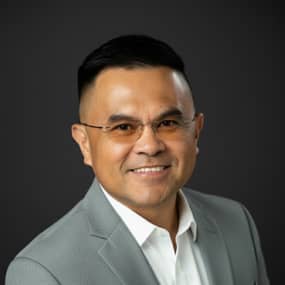
Deputy CIO, UC Santa Barbara