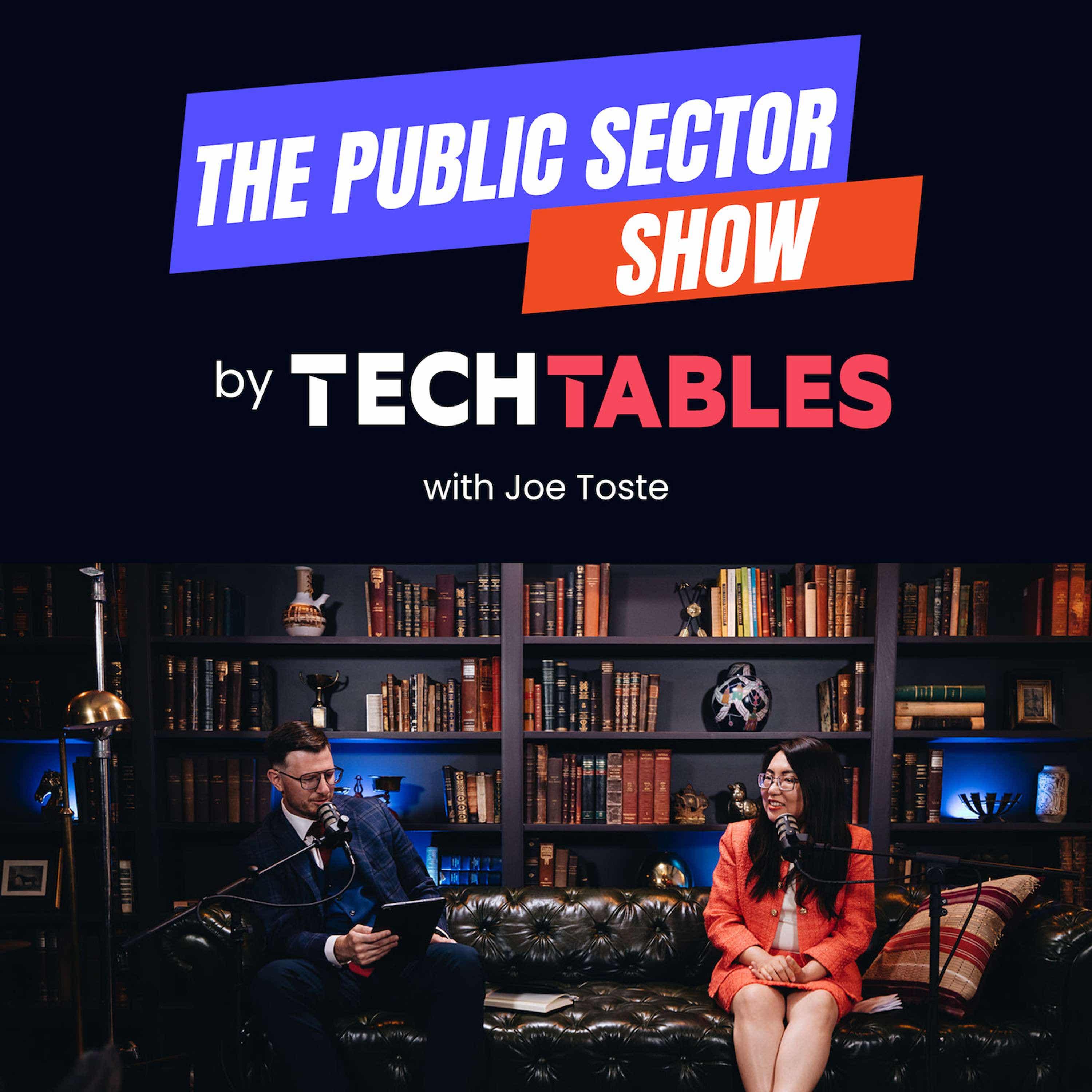


#225: CSU, UT System & Palo Alto Networks on AI Access, Cybersecurity at Scale & the CSU Promise
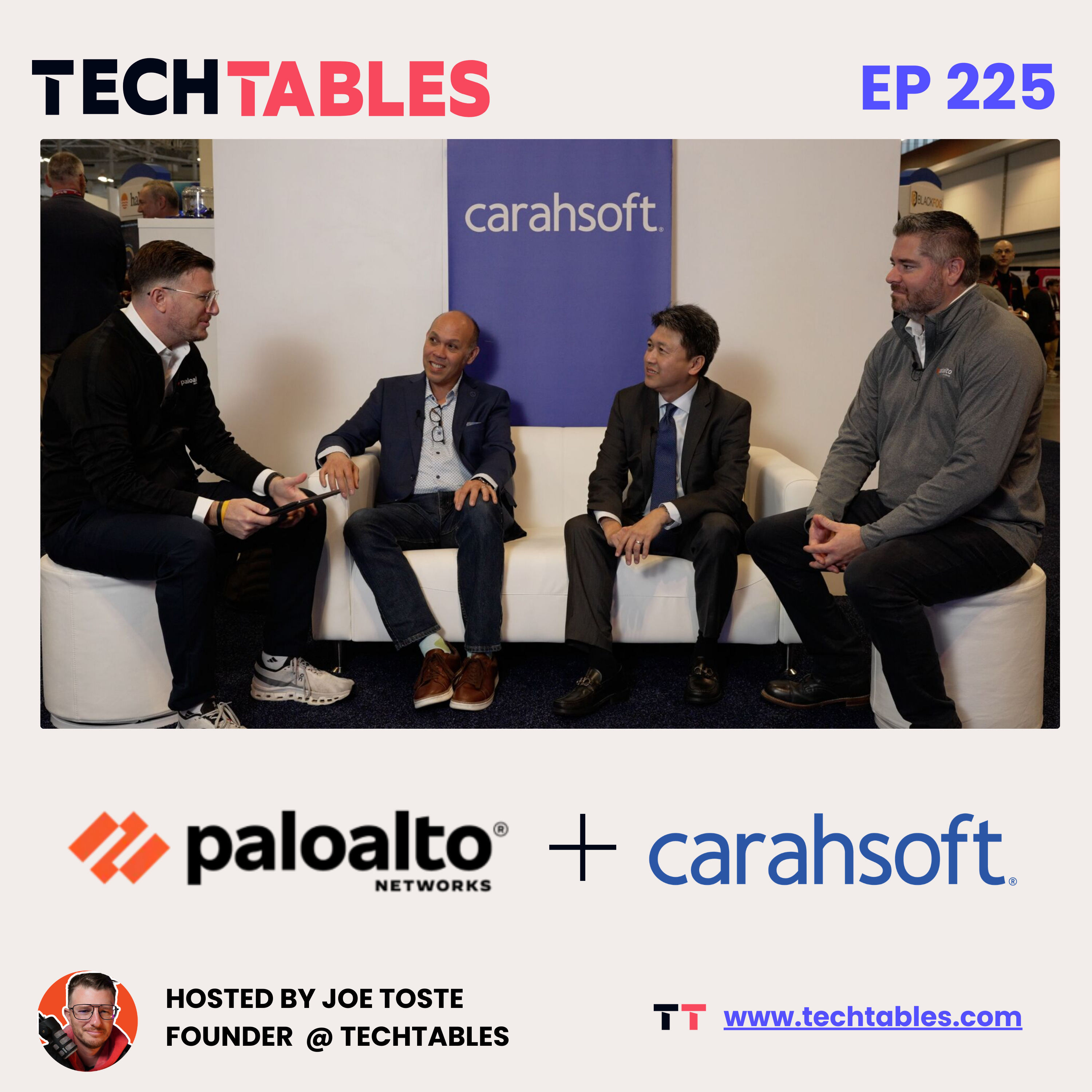
In this EDUCAUSE episode, Ed Clark from CSU, William Huang from UT System, and Chuck Romero from Palo Alto break down what it actually takes to close the AI divide across 460,000 students — and why browser security is now the front line.


🤝 Join the CIO Communities for Local Government
A private, vendor-free network where public sector CIOs share what’s actually working
Members get:
- 2x National Retreats (facilitated by Info-Tech Research Group & Gartner)
- 4x CIO Virtual Roundtables
- Monthly “Behind the Mic” intelligence brief (1-pager)
Apply to Join → https://techtables.com/communities-local-government
📝 Show Notes
Featuring
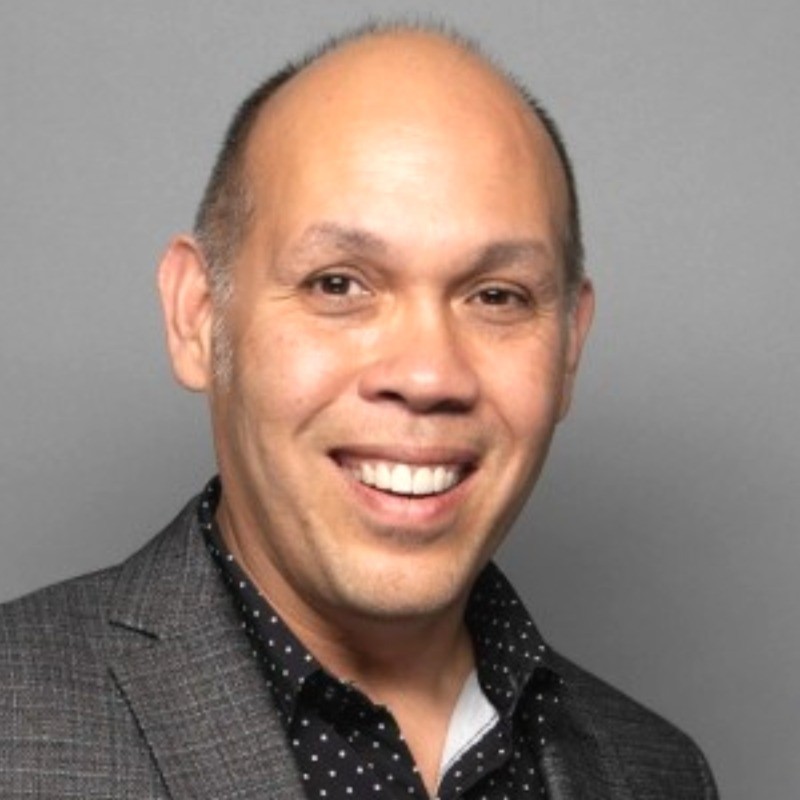
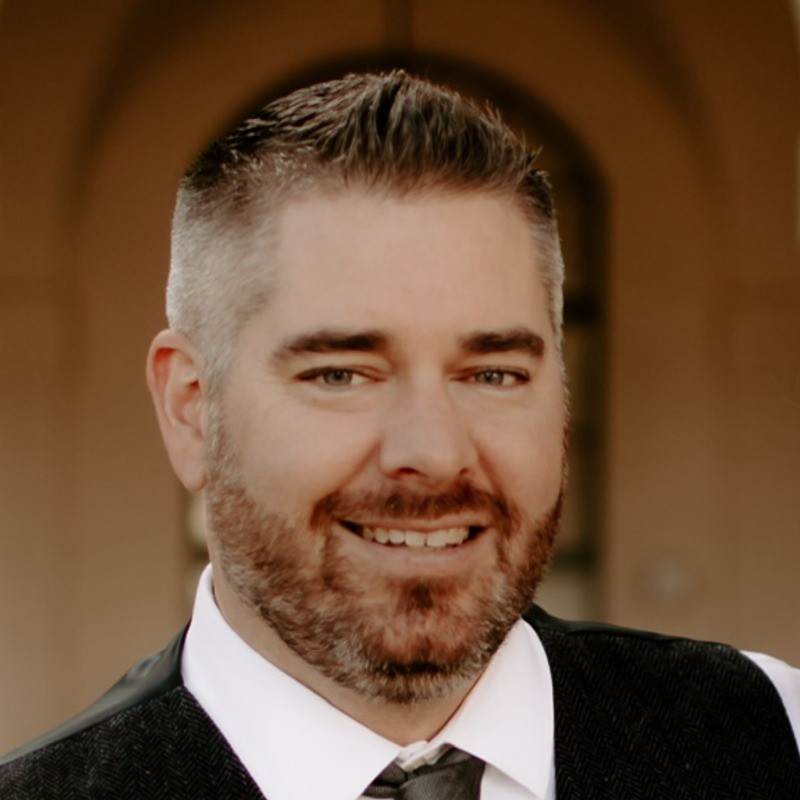
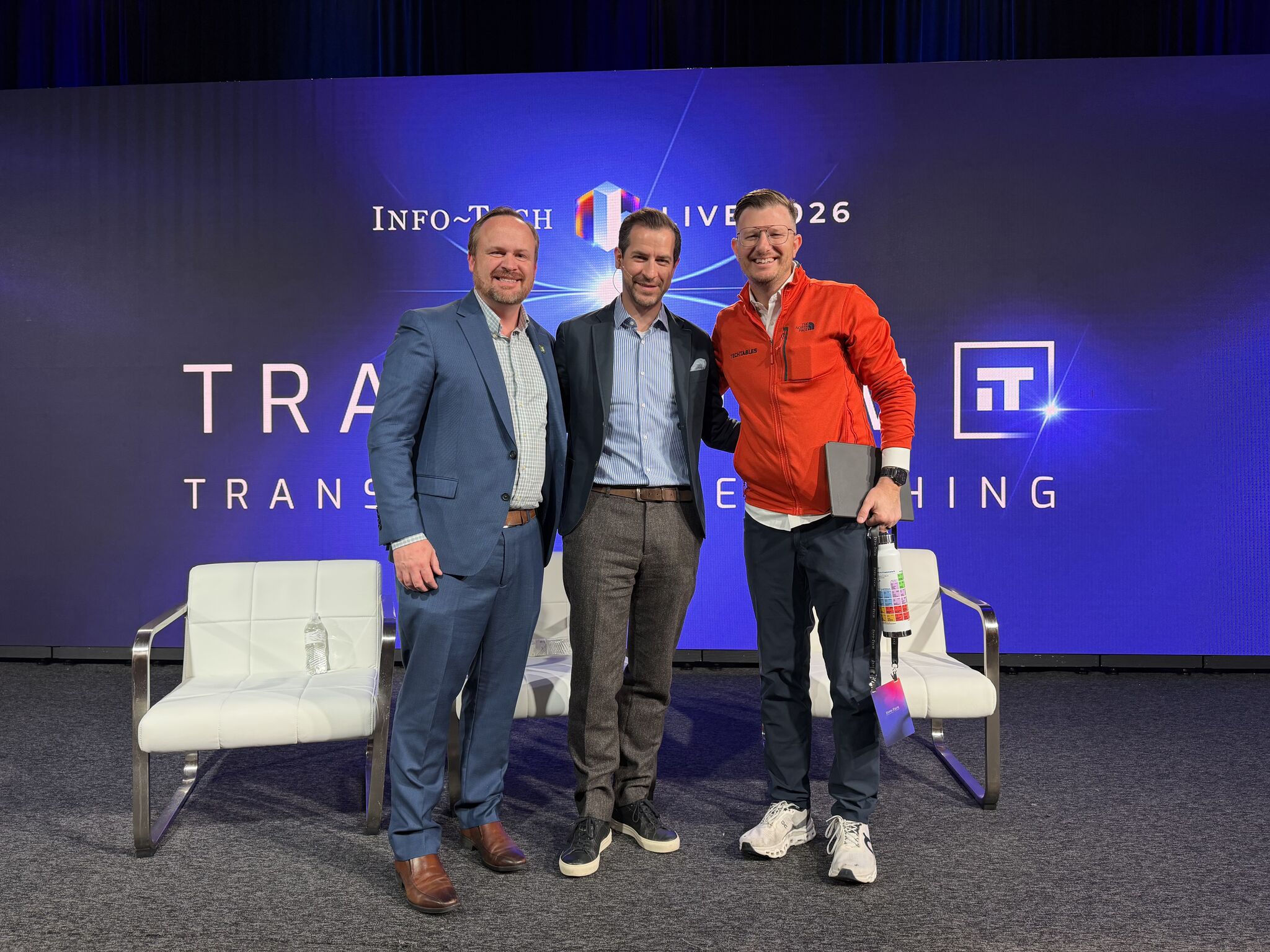
Ed Clark is CIO at the California State University System — overseeing technology for 22 universities and 460,000 students, teaching Information Systems at Cal State Fullerton, and co-leading California's AI Workforce Acceleration Board alongside Governor Newsom's office and top AI companies.
William Huang is Deputy Chief Information Officer at the University of Texas System — leading IT strategy across 13 campuses serving 260,000 students and 160,000 clinicians, faculty, and staff, including a landmark merger of UT San Antonio's academic and health institutions.
Chuck Romero is Solutions Consultant Leader at Palo Alto Networks — focused exclusively on education systems in California, with a team of former higher ed practitioners helping institutions secure AI access at scale through browser-level security.
Timestamps
(1:00) AI and the digital divide — why CSU gave ChatGPT to all 460,000 students
(3:00) Scaling cybersecurity across 500,000+ endpoints — why browser-level security is the new front line
(6:00) AI data risk and prompt injection — what happens to data once it's inside the model (8:00) UT System's footprint — 13 campuses, 260,000 students, and the UT San Antonio merger
(12:00) Governance, risk & compliance during campus consolidations — cybersecurity as a foundation, not an afterthought
(13:00) Inside the AI Workforce Acceleration Board — how CSU brought together OpenAI, Google, NVIDIA & faculty
(18:00) Micro internships and the CSU Promise — a career path for all 460,000 students, not just the top 1%
(25:00) Leadership lessons — clarity of mission, collaboration across 22 universities, and growing the next generation
(33:00) Teaching while being CIO — Ed Clark on faculty resistance, Cal State Fullerton, and what students actually need
Whenever you’re ready, there are 3 ways you can connect with TechTables:
1. 📬 The TechTables Newsletter
Thanks for reading TechTables! Get early access to new episodes, insights, upcoming events, and more — straight to your inbox.
Join now: https://www.techtables.com/
2. 🤝 Join the TechTables CIO Communities for Local Government
A private, vendor-free network where public sector CIOs share what’s actually working
Members get:
- 2x National Retreats (facilitated by Info-Tech Research Group & Gartner)
- 4x CIO Virtual Roundtables
- Monthly “Behind the Mic” intelligence briefing doc
Apply to Join → https://techtables.com/communities-local-government
3. 🤝 The Better Together Virtual Series
The narrative-driven series bringing together industry partners and public sector CXOs. Discover the compelling stories that unfold when we stop working in silos and start building together.
»»» Email joe@techtables.com to learn more.
Platinum Newsletter Sponsor:
Missed out on Info-Tech LIVE in New Orleans? No worries, you can join TechTables & Info-Tech Research Group at Info-Tech LIVE 2026 - Las Vegas (June 9 - 11, 2026)!
Gold Newsletter Sponsor:

SentinelOne - Learn how SentinelOne empowers this state to stay secure.
Verizon Frontline -The advanced network that keeps first responders connected when it matters most.
Carahsoft - The Trusted Public Sector IT Solutions Provider™, supports government agencies and education/healthcare markets. Contact your Carahsoft rep today to access special discount pricing exclusively through the TechTables + Carahsoft partnership!
Guests
Episode Transcript
In this EDUCAUSE episode, Ed Clark from CSU, William Huang from UT System, and Chuck Romero from Palo Alto Networks break down what it actually takes to close the AI divide across 460,000 students — and why browser security is now the front line.
Joe Toste: [00:00:00] Welcome to the Public Sector Show by TechTables. Super excited to have you all on. William, you are a return returning guest. I love it. Thank you for coming back on the show. We'll just go start down here and go down the aisle. Ed, quick intro.
Ed Clark: I'm Ed Clark. I'm the CIO for the California State University System, and I've been in my role for about three years.
Joe Toste: Let's go California. William.
William Huang: I'm William Huang. I'm the Deputy Chief Information Officer for the University of Texas System. Been in my role for about eight years.
Chuck Romero: Yeah. And I'm Chuck Romero. I'm a solutions consultant leader for Palo Alto and my team and I focus only on education systems in California.
Chuck Romero: And it's a pleasure to be on the podcast with you all today.
Joe Toste: I'm super excited. And wait, hold on. Is your jacket say public sector?
Chuck Romero: Yes, it does. Oh, yes it does. Does
Joe Toste: this one say public
Chuck Romero: sector? Yeah. No, it does not have a conversation, a better one. We'll figure that out.
Joe Toste: And are you in Pasadena? Is that right? To be safe?
Chuck Romero: Yeah. I live in Southern California.
Joe Toste: Okay, awesome. So we're pretty close. William, if you ever come to Southern California, look at, look us up. Ed, so you're running it for 23 campuses?
Joe Toste: Yes. Did I get that right? 23,
Ed Clark: yeah. 23 campuses. 22 [00:01:00] universities.
Joe Toste: Yeah. Okay. 23 campuses. 22 universities. Is that around 460,000 cities? That's right. Yeah.
Ed Clark: Cool. Yeah.
Joe Toste: So we talked about a Wall Street Journal article. Titled "Why AI will widen the gap between superstars and everybody else." Basically predicting that AI creates winners and losers based on who has access.
Joe Toste: And I wanted to hear your approach. How are you thinking about this?
Ed Clark: That digital divide aspect was so important to our AI strategy because, what we were seeing in our community that is, we had faculty and staff and even students buying their own subscriptions, but because the CSU is, 50% first and family third per 30% Pell Grant recipients, we were, we're gonna leave some of our community behind by just letting that happen.
Ed Clark: The other thing we were seeing in our 22 universities, they were, some of 'em were negotiating to get their own contracts with open AI or Microsoft or even Meta. And again, what we'd be seeing from that is a whole, a spread of different kinds of tools, but also some campuses not being able to afford to participate, which would leave some of our community members [00:02:00] behind.
Ed Clark: That's why we decided to make sure we addressed any kind of digital divide by giving a common baseline like. We're gonna give ChatGPT for everybody, and that's what we did as a system.
Joe Toste: So Chuck, that's a lot of students, and I'm sure we have some researchers. We have faculty members. How are you thinking about it from the security end?
Joe Toste: We're deploying, we've got the innovation, but we also need to think about the security.
Chuck Romero: Security is always a challenge, right? Anybody that says security's easy is either never done it before or doesn't have an idea of what actually security is. So when Ed's talking, I'm always thinking about you have your students 460,000, your faculty, so say five to 600,000 endpoints are just out there things, right?
Chuck Romero: And it's a scale conversation more so than anything is how do you scale security architecture to meet the need? And traditionally, like traditional methods of security, like firewalls, obviously Palo Alto does firewalls. Great, awesome. Thumbs up. But that doesn't really apply in the circumstance.
Chuck Romero: We're talking about people accessing systems outside of your network, outside of your control. Where do they [00:03:00] do that from? So what we've done is go look at how do you deploy security in a consistent, scalable, and easy manner. That can be used anywhere. And we've shifted our focus away, not necessarily away from firewalls, but more towards the point of access, which is the browsers, and everyone is using browsers.
Chuck Romero: Nowadays, you need, how much of your job is now done inside of a browser, Chrome Edge, whatever it might be? 85%, a hundred percent, most likely. So thinking about scale, thinking about AI what goes into AI and data? Context, whatever it might be. What runs the AI, the systems we were talking about off camera, all those things are now coming into play that are all accessed through a browser.
Chuck Romero: So what we've done or are doing is transitioning away from a big iron pipe, everything through a big iron, we'll do inspection, all that kind of stuff going towards why don't we just do that at the browser level? It's getting fully decrypted anyways, so it's being presented to you. So we're thinking about point of access, identity, and device.
Chuck Romero: That's where we're [00:04:00] focusing now. And with AI there comes its own unique challenges, as we all have probably seen in our own personal lives. Is using it for fun. Using it for harm is what's happening more so in our industry and trying to figure out that gray line, we gray line in between has been a challenge, but we're doing it I think this, to answer your question directly, it's the scale question. And we know that these are education systems. We know this un not unlimited budgets as we were talking before, that always comes into play. Then how do you do it at scale and at speed? The speed of AI it's through a browser.
Chuck Romero: That's really how you do it.
Joe Toste: At that scale, can you just talk a little bit more about, the relationship side of it, how, the importance of the relationships there?
Joe Toste: There's the security technical piece, but there's also the human aspect. There, there's a lot of students, a lot of campuses, a lot of universities love to hear how Palo works with the CSU.
Chuck Romero: Yeah. So like when Edward, we were working with your teams, we're proposed a challenge, how do we solve.
Chuck Romero: Data loss or data risk data exfiltration. We want our students and our faculty to be able to use these tools, but in a more [00:05:00] secure way. So how my team looks at it is we're consultants and architects. We look at the problem, go, okay, what do you have today? What do you guys running? All that kind of stuff.
Chuck Romero: Do our due diligence. And from there, your use cases really stem around. We want to enable our faculty and staff to do their jobs in the most efficient way possible without introducing the typical security friction that you might see. So the solutions or tools are easy to find, right? Okay, B, browsers, security, here's how you do it, blah, blah, blah, blah, blah.
Chuck Romero: It's implementing them in practice. So standardizing on a tool set that will scale with you, but also provide the same level of forensics for your SOC and being able to do your research. So with working with the CSUs, we're thinking broader than just AI. It's more the full picture of what you're looking at.
Chuck Romero: I'd ask you guys . I wanna learn just like as much as I can from you is how much risk do you apply to your data policies and allow towards ingestion and EEG aggression out, right? So that's what I'm thinking about AI is , how do we provide you with a level of [00:06:00] visibility to give you the tools to make a decision?
Ed Clark: And that's why in our ChatGPT.edu space, we have our own private instance where, open AI is not allowed to access it. Third parties can't access it. And that way we're protecting intellectual property and we can do things like, here's some student records. What are the patterns you're seeing in there that protects us from that perspective?
Ed Clark: But to your point about bringing data in and out of that to is what we need to watch out. And that's why we have Palo Alto and other partners helping us making sure that doesn't get out there.
Chuck Romero: And you actually brought up a good point, and this is another aspect of AI. I'm talking about all AI access and the ability to get data and data out, research, whatever you're doing, but also the AI algorithm itself and the large language model itself.
Chuck Romero: We also are paying attention to that side of the fence. And we have tool sets that I won't dive into right now, but. We're looking at code injection through prompts. We're looking at code call evolution. As the AI engine runs, it becomes smarter just like [00:07:00] Skynet, and you gotta pay attention to that stuff simply because if someone enters student records or someone in finance and payroll is trying to do a payroll scrub, that data then gets inputted.
Chuck Romero: It modifies the language, and then that impacts everyone else using it. If you think about traditional like network segmentation, I'm gonna put everyone in their own VLANs or subnets or whatever it is. That same theory can be applied to AI, and that's where our heads are at is okay, you can control data going in with Reg X and discovery and pattern matching and all that kind of stuff.
Chuck Romero: But really what happens with it once it gets in there? Where does it go? How does it sprawl? How does it change? And those are the areas that are the more advanced security areas that we're focusing on and developing right now.
Joe Toste: I love it, William. I'd love to get your thoughts on all this.
William Huang: Yeah, no, it's spot on.
William Huang: You've gotta think of it holistically, right? So if you think of our academic campuses or health centers, you've got a lot of devices that students, stakeholders, patients, come on, bring on. So you've gotta find an equitable way to give them access to your platform. And then for those that [00:08:00] have affiliation.
William Huang: How do you do it securely, right? So you can't assume that you control the entire environment because there's a lot of devices that are coming on and off campus every day.
Joe Toste: Yeah. So I wanna go back. So last year you came on episode 2 0 1 a year already. Wow. You said it was the year of the student.
Joe Toste: Is there a new phrase for this year? The next 12 months?
William Huang: I always think it's the year of the student because that helps us keep centered. But being here at EDUCAUSE in terms of all the activities, certainly AI is on the forefront. But let me first talk a little bit about our footprint.
William Huang: We've got 13 UT campuses. We serve about 260,000 students. We've got 160,000 clinicians, faculty, staff. So it's a big footprint. So for us in it it's always keeping the lights on, the engines running. But I think if I think of the theme for this year, it's change, right? Embracing change it's coming faster than we know it in what we can be prepared for.
Joe Toste: And not just digitally, there's been a lot of. Did you call it mergers? I don't know what you call this. I was gonna say acquisition, but the medical [00:09:00] schools coming in. There's a lot, there's a lot moving on. Do you wanna share a little bit about that?
William Huang: Yeah, sure. So in September we announced the alignment and the merger of our two UT campuses in San Antonio, the University of Texas, San Antonio Health, and UT San Antonio on the academic side.
William Huang: It's now one entity very large merger if you will, but really it's intended to strengthen. The footprint that we have in San Antonio to be able to serve the community better. In terms of what's happening on that campus, it's been amazing the past year. A brand new 100- bed hospital opened in the past year, and then we're about to open a new center for Brain Health to help with some terrible diseases like dementia and Alzheimer's.
William Huang: So really exciting things happening in San Antonio.
Joe Toste: So 70% of the UT system is medical schools. Is that right?
William Huang: It's health related. Health related. So if you think of clinical care medical education medical research translational research.
William Huang: So it's a broad area, right? So we've got 13 campuses. But if you think of our our historic split where academic versus health, there's more of a blurring [00:10:00] because when you blend the two San Antonio campuses. Is it a health campus? Is it academic center, medical center? Is it academic campus? So yes, it's a UT institution.
William Huang: And we did similar things with Tyler a few years ago. UT Tyler and UT Tyler Health similarly merged a few years ago. So while we're only 13, we're still pretty sizable enterprise in Texas.
Joe Toste: I'd love to hear, this is very interesting because you with.
Joe Toste: You've got the traditional schools, health related, those, there's different regulations, hipaa, like the cybersecurity concerns are, are very broad. Do you just wanna kinda maybe touch on that a little bit?
Chuck Romero: Yeah. So I'm listening to you talk and I think about organizations that have gone through.
Chuck Romero: I wouldn't I wouldn't call it mergers or acquisitions, just consolidation. Like trying to figure out how do we, that's a great run our business a in a way that's more sustainable. I always think about risk, governance, risk and compliance, and that's where it's a great starting point in the organizations that have gone through those processes or change evolution, if you will.
Chuck Romero: As long as you have a good foundation of getting everyone to the table discussing the program or the project at hand, [00:11:00] and you don't treat cybersecurity as the afterthought. It has to be forced, built in natively into whatever you're doing.
William Huang: Number one,
Chuck Romero: ologist. I think about immediately going, okay, let's do a risk assessment of the organization.
Chuck Romero: Let's figure out where our gaps are, our differences are. That doesn't mean it's good or bad, it's just simply what are the differences and which one do we wanna standardize on? Or do we need to think about broader, think broader about beyond just their immediate focus. So when I listen to you talk, I'm thinking, you got medical researchers, you got your education platforms, you have.
Chuck Romero: The doctors. Patient safety is always patient care, patient safety number one. I started my career in healthcare, so I'm very familiar and I just think about all those things. It's all governance, risk and compliance. That's the starting point, and that's how you really evolve your security practices.
Chuck Romero: It's always like business risk, like how much do we wanna lock things down before we're gonna inhibit progress or the business needs? So that's what I'm thinking is as you guys go through your, just think about. Leveraging folks like ourselves to help. 'cause that's what we're here to do.
Chuck Romero: It's not always about the money, it's always about how do we do things [00:12:00] better? And I always think, I love how you're talking about the students. It's always a year of the student. It's always a year of just making the world better, and that it's more safe and secure.
Joe Toste: I love that, ed. You partnered with Governor Newsom's office.
Joe Toste: He brought you, the CSU faculty, California's top AI companies together to form the AI Workforce Acceleration Board. First. Give us kind of a sneak peek behind the scenes of, what problem are you trying to solve with this and and the impact that you would like to have.
Ed Clark: In the same way that it's the year of the student, for us it's always the year of the student. The what was actually happening is you've mentioned how fast things are changing. It's, it is happening so quickly. Fields are changing, industries are changing, how we do teaching and learning, changing so rapidly, and AI is a huge element of that, right?
Ed Clark: So we had these AI firms started with the tech firms and they were going to the governor's office and saying, we're worried that universities aren't preparing students well for how rapidly, workforce is changing. And so they approached each of the systems, the community colleges, the CSUs, and the [00:13:00] UCs.
Ed Clark: Said, what are you gonna do about this? The governor's office. And so we act, I got a bunch of collaborators in a room, and we came up with this idea, let's get the governor's office, let's get these big tech firms, let's get our faculty and, even our, some of our academic leaders, presidents, provosts in a room and say, how could we better prepare our students for this rapidly evolving future?
Ed Clark: And so it was I went out and recruited all of these members and. It. There was a concern, is this gonna actually work? Because a lot of these are competitors. You have Microsoft and Google and AWS and OpenAI, and Nvidia and all these other folks in the room. And then the faculty were saying, will they even understand our concerns?
Ed Clark: But it turns out that having this big problem, like we are creating the future of higher education and how we're gonna prepare students. That ties everybody together to say, yeah, 'cause these students are gonna be your employees, right? These are the students that we want to have. They're gonna be the future of the United States.
Ed Clark: That has tied everybody together in a way that's been really effective. We started, our first meeting was around, we [00:14:00] had a student panel and the students were, Hey, we're hearing that we need to know how to use these tools when we graduate, but our faculty are saying, don't use it. It's cheating. Those kinds of things, right?
Ed Clark: But it was good to have that student voice in this room where everybody can hear it and say, oh, I get it. Yeah, that is weird. Who can ignore that? The second meeting of this group was around the faculty point of view, which is look how hard it is to do teaching and learning now, like where every test is now meaningless.
Ed Clark: Every quiz has an answer in your Chrome browser, right? And it's like, how do we do teaching and learning this environment? That's a big challenge. And in the third meeting that we just had was around the government perspective. We have one of LinkedIn's economists on there, Governor's perspective about workforce, what's happening, LinkedIn's patterns that they're seeing and those trends.
Ed Clark: And then the next meeting we're having is gonna be about the employer perspective. So that creates an awareness across all parts of this group to have this conversation. Yeah.
Joe Toste: A couple quick follow-ups on that. So you signed an MOU Yep. And and you had to go, you went to go speak to the California legislature, right?
Ed Clark: . [00:15:00] AI oversight. . Committee. Yeah. Yes.
Joe Toste: Yeah. Tell us a little bit about that, because that's not a conversation that is the same as faculty. Or Right. So that's, you gotta really speak to the benefits, right?
Ed Clark: So I think that, you know what's, we are just like everybody else, there's all these benefits we're trying to mine out of AI, and there's a lot of concerns about safety and security.
Ed Clark: In fact, there was a story about I think a high school student committed suicide, when they were interacting with ChatGPT. So the question was like, how are you protecting the health and safety, mental wellbeing of your students? Which of course is first and foremost, we're again, always about the student.
Ed Clark: And this is a tough question. These new technologies come out and of course you could say you could use social media and, do bad things there too, but this is a new technology. What are we gonna do about it? And that's why these partnerships are super important. So we've been working hand in hand with OpenAI what are we gonna do about this together?
Ed Clark: These are the things we wanna see in our environment. And and they've now reached a point where if they see someone's in mental distress, they'll just exit you out. You should be seeking, professional support and this is not the platform to do that. It's [00:16:00] where we ended up.
Ed Clark: But that's an example of the kinds of questions come up. Other questions about environmental impact? I'm sure William is hearing all the same things in his environment, right? But all of us that are here at EDUCAUSE are dealing with the same issues and that's partly why we're here to discover that solutions together.
Ed Clark: Yeah.
Chuck Romero: You brought up a couple points that I like. I love them because it's, that's exactly why we all exist here, is that we're just trying to make it all better and improve. A couple things that you guys might not know that we do and my team focuses on we had a body of students come to our HQ and ran them through a day in a SOC and had 'em do a cyber threat hunt and figure out things and learn, and that we did it with the K-12 group, but we'd also do it with universities like your size and the higher education systems and. For us. Like my all my team were practitioners. They worked in school systems. They all came from your guys' side of the fence.
Chuck Romero: And what I find interesting is like they're still focused on the students like this. Exactly what you're talking about is like, how do we educate people for the future? ' cause at one day we're all gonna get old [00:17:00] enough to where we don't wanna work anymore. And then they're gonna be taking care of us and that's gonna be great.
Chuck Romero: So
Ed Clark: I'm
Chuck Romero: already there. Yeah. I'm not far behind you. But the idea is we're always looking ahead, how do we develop the next generation or the next set of individuals are gonna take the reins and bring this forward? And you also talked about a bunch of big OEMs out there that really are also shaping the world that we live in.
Chuck Romero: And I would say at least from what I've seen and all the conversations that we're having with the education systems, the conversations are changing. It's no longer, oh, AWS is doing this Google, OCI, they're all doing these different things and it's now going towards. Alright, how do we get everyone together?
Chuck Romero: How do we work together? How do we do this together? Because at the end of the day, AI is not beholden to some type of hyperscaler. It is whatever it can be. So it's gonna hit all systems, it's gonna touch all things. Most people now are going to use it. So we have to partner together. And on the topic of partnerships we have design partnership programs that Palo Alto offers where you help shape the future of the product or the solution set.
Chuck Romero: So an [00:18:00] example would be. It's like personal browser for instance, is a, the browser security platform I was talking about. We've engaged several higher education systems and large, K-12 systems to be design partners help us shape this product and this platform to meet your needs.
Chuck Romero: Same thing with SOC modernization and all those tools that you, that we leverage to investigate potential incidents or breaches or whatnot. It all matters 'cause you are the ones using it. So we wanna make sure the tool sets meet the need. So in case of partnerships, I highly recommend everyone, leverage your OEMs.
Chuck Romero: They're there not just to sell you something, they're there to help and you can really help shape how the world functions.
Ed Clark: Should I talk about the micro internships or is that for Yeah, because I, 'cause one of the things that we were noticing, 'cause we have part of our strategic plan is this we're calling it the CSU Promise.
Ed Clark: And it says, the CSU promise is that. , By graduation, every single student will have an opportunity for their first career job. Or they will go into grad school. And that's a huge promise, even for a thousand students, like 460,000 students. How do you do that?
Ed Clark: And so one of the things that we were [00:19:00] talking about, we know set internships. There's these high stakes internships. Like you get Deloitte, one out of a hundred students might get a Deloitte internship, right? And they get paid a lot of money. What happens to the other 99? We have to worry about that.
Ed Clark: Because we said all of them, right? So one of the models we're working on is this micro internship thing where it's two weeks a paid project. They can work for Palo Alto, learn how to use those AI tools in that space. They get paid if it's 25 bucks an hour for 20 hours 500 bucks. It can make a huge difference in that student because they did something for Google one month.
Ed Clark: They did something for Palo Alto next month. That becomes a very powerful resume by the time they've graduated to show that they've done useful projects using many different tools at many different organizations and fantastic. So many of our partners are doing are working
Chuck Romero: just on that. Yeah. And like for instance, like Palo Alto, I know we have our academy program where we get, fresh graduates into it.
Chuck Romero: They get taught up on the solution sets and learn, and I know a lot of the other OEMs have the same kind of programs. But I really liked what you're talking about, and I'll actually take that as a note to bring [00:20:00] it back to the big bosses. Food for thought for your organizations and others that are maybe listening to this in the future.
Chuck Romero: We do run special workshops for organizations where if you wanna bring students in and get them engaged to do like a JSOC or something like that, where get them engaged on not just like tools, but how to do the jobs and maybe it might find interesting. And we run those alongside your practitioners as well.
Chuck Romero: So you're really crossing lines , IT departments, security departments, helping out the student population. And it's not to show how cool we are, it's more about talk to each other. These are the people that you're protecting. Also, these might be the people that are also breaking, the fine line of cybersecurity. So we'd happily engage in those efforts with your teams. And we do them all the time. It's a great, it's a fun day. Spend a day, break some stuff, learn how to fix some stuff, and how things work. Sounds
Ed Clark: fantastic.
Chuck Romero: Yeah. Yeah, so I'll touch base with you guys
William Huang: add to that at EDUCAUSE I was presenting with Vanessa Keenan from UT San Antonio about UTSA's partnerships.
William Huang: So similarly to the micro internships, [00:21:00] UTSA as a partnership with ServiceNow. So all of their students get to take the ServiceNow ITSM training modules and then if they complete all the modules, they're certified in ServiceNow. So they've got useful skills. Whether they work for UT or the private sector, they're at least familiar with the ITSM products, so That's right.
Ed Clark: Yeah.
William Huang: Yeah.
Joe Toste: I love that you brought up the CSU Promise 'cause I think too I've had just an awesome experience traveling around the country doing TechTables, and so I've been to the SOC in San Antonio, so I've been there. I've had the opportunity when I threw an event in Houston I had the future information technology professionals come out from Rice University.
Joe Toste: And I had all the CIOs hand hand out their business card to all the kids. They were counting 'em like it was a hundred dollars bills. Like it was awesome. But I like this, micro internship. It puts a lot less pressure on I need to land this job at Palo that I might not even like.
Joe Toste: Or may I, maybe I do love it.
Chuck Romero: It's I don't know how you guys all started your careers, but I sure didn't start it in insecurity. I grew up in construction. [00:22:00] Building houses, just working with my hands and over time, life happens and here you are. But I can't tell you, I always look personally I got two little kids at home and what's it gonna be like in 15, 20 years when they're going into education systems potentially.
Chuck Romero: And what's that gonna look like? What are the career choices you can make? It's gonna be different than it is right now. So like that, that really hits home. And the way you think about, it's did you start your career in tech? No. Like
Joe Toste: I wanted to go to the NBA.
Chuck Romero: Yeah. See like it's like I wanted to be a Dodger.
Chuck Romero: Maybe I'd be in the World Series right now. I don't know. But at the same time, it's it's great to see that and great to see the opportunities. And I know me growing up, companies weren't doing that now. Now it's different. Now it's very open and. Trying to find ways, get people educated. It's wonderful.
Ed Clark: And beyond the lower risk. 'cause these companies if you're one of these students that gets a internship in Seattle with AWS, you're getting paid a real good salary and they're paying for your apartment and all this, that's a lot of expense for AWS. So if it doesn't work out, it's that was a lot of investment here you're saying, look, I've got this short engagement and can you deliver this project?
Ed Clark: And to your point, the student may not like [00:23:00] it, or AWS doesn't like it, but. Or it could work out and they can find a different kind of student they would've never had a connection with to say, yeah, you'd be a great employee here. The other thing that it allows for is small businesses are gonna be like small and medium businesses.
Ed Clark: They're always talking about every student that comes outta college wants to work for a Google or a Microsoft. They don't even think about us, the local. Name your shop. Absolutely. And so this is another way that we can engage our students with those companies and those firms as well.
Joe Toste: Hey, I'm a small business owner.
Joe Toste: Why don't you, do you think about TechTables, right? Do you wanna edit the podcast? Or you could stand behind that video camera over there,
Chuck Romero: right?
Joe Toste: Yeah.
Chuck Romero: Like what you're talking about is like entrepreneurship, right? And getting the students nowadays, forget about the big, fancy logos and all that kind of stuff.
Chuck Romero: Like grassroots it, start from the ground up and create your own organization. I think the, like we go back on the AI topic, there's a use case right there. Let AI help build your company for you. So you don't have to be, you don't have to know it all, but you got to be smart enough to write.
Ed Clark: And these small firms, there's, and we'd like to get in this AI [00:24:00] space, we'd like to have a custom GPT, but we don't have where's our talent base to do that?
Ed Clark: This could be a way to connect them, yeah.
Chuck Romero: And just like on that final, at least from my side, is like we have the Palo Alto Academy program. It's based outta Plano, so close in the University of Texas area, and it helps new students, new graduates come in, they're in the program I think for a couple years, somewhere around that.
Chuck Romero: But they get the direct engagement with organizations like yourself and all the other different types of verticals that are out there. They learn architecture, they learn networking. They learn data center, tech. But it also gives them experience about how to communicate. How to engage, how to collaborate, which is a big skillset that you can't learn from a computer.
Chuck Romero: You can only learn it from doing like things like this. So yeah, it's a great program. Highly recommended,
Joe Toste: I love that. So one of the areas we talk about on the TechTables a lot is leadership. It's a big piece. Everyone, sometimes I even had one time I did this at an event.
Joe Toste: And someone afterwards told me, you're totally wrong. It's not about leadership, it's about the technical work. I coach high school basketball and I can draw X's and O's up seven [00:25:00] days from Sunday. And I will tell you if the team doesn't buy in, it doesn't work.
Joe Toste: And then sure enough, I'm reading a quote from Coach K formerly at Duke, and he is that's the hardest part I can get guys to play. They. Do they wanna play together? Do they even want to be teachable or humble? He's I'm trying to win national championship. That's kinda how it goes.
Joe Toste: So I'd love to hear, we heard Josh earlier, Josh Bright from UCSB, talk about the MOR leadership program. I'd love to know just the impact on your leadership journey and what that's meant as far as growing leaders within CSU. So not just you, but really multiplying.
Ed Clark: I think growing leaders is what we wanna do with our students and, I think that I would say that two things that just immediately jumped into mind when you talked about leaders. One is if you have that clarity of focus, Hey, let's work together to change higher education, to better prepare students. There's hardly anyone that would say no to that. That's how I was able to get these big executives to say.
Ed Clark: Yeah, I will be part of that. That is a powerful mission. That's a powerful calling. And so if you have a clear vision that [00:26:00] helps bring people together because you're trying to work together to solve a common good. The other thing is, at every point along the way, things were, we don't like this.
Ed Clark: We don't wanna do that. There's a lot of changes. And if you can take the feedback well and flex with the moment and be adaptable, you can start, you can still build progress along the way that really, these are some of the leadership lessons that. You have to be adaptable. You have to go with the flow, and you'll discover things along the way that help, again, pursue that higher goal.
Ed Clark: And then to your point about developing leaders, once you have that kind of goal, I'd say that like every university system, our universities we're largely operating like independent empires, right? But once we started saying, Hey, this is our CSU promise, it's not just mine, it's yours too. And we all have the same CSU Promise.
Ed Clark: That again, ties everybody together. This is what we're here for. How are we gonna achieve that? We can't do that alone. So that brings people together and that makes us all leaders in this effort.
Joe Toste: I love to hear just some of the leadership on the Texas side of the house.
William Huang: Yeah, sure. It's about collaboration. It's as ed said it's [00:27:00] not working silos. So for us it's collaborating with our 13 IT leadership teams and really understanding the mission at the campus level, right? So if you look at our world- class healthcare organizations MD Anderson in Houston. Very different mission than maybe our UT Permian Basin in West Texas.
William Huang: So understanding what the mission needs are at the campus. Understand the ultimate customer, the student, the patient the research sponsors. So for us it's about understanding the balance between what the campus needs are from technology infrastructure versus. What are the real outcomes and outputs that make a difference for the mission and really the end customers, if you will.
William Huang: So for me, that's it's not easy. It's a balancing act because you've got different priorities. We talked off camera about budget challenges. So I think the idea is how do you do things at scale? How do you do things that make a difference and not try to boil the ocean, so to speak? Yeah.
Joe Toste: Yeah, that's [00:28:00] really good.
Joe Toste: I say this all the time on the podcast, but I think sometimes folks gloss over you hear collaboration and you're like yeah. You just collaborate and it's really easy. It's actually very difficult, very hard. When it is, it just starts growing. There's a lot of different parties.
Joe Toste: They have their own agendas and motives, and they're also busy. And so how do you bring people together? How do you kinda get the buy-in? You might ruffle some feathers too, right? And how can you keep driving this? Driving this forward is a lot harder, which is one of the reasons I actually talk about it.
Joe Toste: It's, you can buy the Prism browser, that's pretty easy, but getting buy-in
Chuck Romero: deploying it, maintaining, just consistency. That's hard.
Joe Toste: Yeah, it's real tough. I lived here on your end around the private public partnership that you have across the state of California.
Chuck Romero: , So that's a big question.
Chuck Romero: I'm only focused on education systems, but what I can talk about is is spirit of collaboration and the seen by projects and momentum shift and move where we've seen successful organizations deploy tough technology or new, we'll call it new technology, like emerging technology is what [00:29:00] we were supposed to call it.
Chuck Romero: The ones that do it well take the time to build those collaborative teams. They actually have, you could call 'em like programs set aside or tiger teams or whatever you wanna call 'em, but their purpose is to work together to find the solution that's gonna fit best for the organization. The egos are set aside.
Chuck Romero: Doesn't matter if you're a network technician or a security architect or data center, or cloud doesn't matter. Here's the goal, here's what we're trying to do. A good PMO team cannot be understated by any shape or form, but it's. The success comes from the collaboration. It is not easy. Of course, everyone has their own priorities, their own agendas that they're trying to get across.
Chuck Romero: And to that point, when you leverage teams like Mars, like the other Big Five Tech, use 'em, that's what they're there for. And if you can integrate those teams into your strategy, into your development, that's where we see progress. A good example of this could be with your team Ed. So we've been working with your teams on.
Chuck Romero: We did our big EEA last year. It was fantastic. Thank you for, trusting us to continue the [00:30:00] cybersecurity deployment, but also your teams were invested. Like how do we do this better or differently or extend towards AI? And that's where the browser conversation came in. That's what I was talking about earlier.
Chuck Romero: It was like, it's just that foresight to think about. We know things are changing, we know we're not the experts in it, and we know there's other organizations that can support us. So in terms of the state of California and what we're seeing in. Across the board. It's those organizations that are, have the foresight to know, we aren't the experts, but we know people that can help us become the experts.
Chuck Romero: And those are the ones that are successful. So like with your team, it's been great working with everyone, and I know we're gonna have big plans here coming up in the next six months, but it's more about , the communication, the collaboration, the consistency, it's all fantastic. The moment that it stops or moment that it gets, I don't like saying the word budget, but the budget cuts happen or.
Chuck Romero: Reprioritization, whatever you want to call it. That doesn't mean we can't, we can stop working on the actual product. No, let's keep going. Let's figure it out. So when time comes and you're ready, guess what? We've already got the groundwork developed and I think it's just an [00:31:00] investment of time, obviously energy, but also like foresight to really think ahead.
Chuck Romero: And that's where we see the biggest push is like thinking ahead is the big key. We can't keep doing things the way they were traditionally, like the Segment and CSU system or. You have 13 individual things coming together to be one that's hard. That's very difficult. Everyone has budgets, everyone has priorities.
Chuck Romero: Everyone has conflicting thoughts on how that should happen, but having a CSU chancellor's office come in and say, Hey, this is the CSU promise, this is what we're doing, this is how we're gonna go do it. That helps. Sometimes you just need to have someone come in and say, this is the plan.
Ed Clark: Yeah.
William Huang: Right.
William Huang: And Chuck I'd say on top of what you said about having strong project management, making sure you've got good change management. Technical change controlled to turn things on, but more is the organization ready? Having someone who's actually thought about the culture of the enterprise and where are some areas you can get good change agents that can be evangelists and not just have things die on the line.
Chuck Romero: You, you're speaking my language a little bit there. So that, that's an area I cut my teeth on and the [00:32:00] operation side was change control. And you see under the covers a little bit like what's happening with the organization. And that's where if you have a great collaborative team that can focus on just, Hey, this is a change we wanna do.
Chuck Romero: This is why. Here's the risks involved. Here's how we're gonna do it. What do we think needs to be better about this? Having that like more positive and progressive conversation versus, oh, do we need to have that? Why is it being done? We shouldn't do that during this time. Like it needs to be more insightful and progressive versus the why not.
Chuck Romero: Because that's where we see, the outdated code happening and all of a sudden you're hitting bugs and it is not keeping up. And we have the actual challenges that incur downtime and, no one wants that kind of stuff. So you, I couldn't agree more with the change control aspect of that.
Joe Toste: Turning the corner towards the end of this conversation. Ed, one of the things that really stuck out to me was that you were an English major.
Ed Clark: Yes.
Joe Toste: And Josh was. A philosophy major. Turn CIO. That's crazy. And so you're also teaching at Cal State Fullerton too.
Joe Toste: I'd love to hear, that should, I think that provides like a lot of [00:33:00] empathy that you would have. You're both faculty and you're on the other side of the house. Can you just maybe talk about that those two unique roles that you're able to bring as you're thinking about. Pushing the bleeding edge of technology throughout the CSU system?
Ed Clark: Yes. I'll say, first from the teaching side, I have had some angry faculty kind of corner me and say, this AI thing is terrible. You must stop it, and how dare you, and all these other things. And then when they learn that I'm also teaching, I and I will share that, actually I'm going through the same struggle, right?
Ed Clark: I inherited this course. It had all these quizzes. And the students can get an answer just from their browser. You don't even have to, it just automatically fills in the answer. And and so what it means is you have to change everything, how that course was designed. You have to think about how you're gonna assess their learning and all these, and so I'm going through the same pain, pro painful process they are.
Ed Clark: That helps build that credibility. Okay, we're all, but one thing that I have been saying over and over again is. If you're going to be an instructor in this world, if you're gonna be a faculty member and you watch the world change, we have to prepare our students for that. So we can either [00:34:00] choose to participate in helping this technology, shaping this technology to serve our needs, or we can watch it just go take off in its own way.
Ed Clark: Either way, it's gonna happen. Our role is to participate and prepare our students. So I'd say that's from the teaching and learning side. Now, I'll say that the most important thing I'm seeing from my students. I'm teaching at Cal State Fullerton, and again, our students, many of the ones I'm teaching at night, right?
Ed Clark: So all of these are working, they've been working their job all day. Now they're coming and taking this course in information systems. And their main concern is like, first of all, some of 'em are, when they graduate, they wanna get a better job. That's the reason why they're in college. I wanna get a better job.
Ed Clark: I wanna provide for my family. Or they're trying to re-skill to get, again, they're trying to, all trying to do something better with their lives. And they're concerned now is Hey, I'm not sure how easy it is to get these jobs when I graduate. Again, having that empathy for these people are here, they're paying tuition so they graduate and get a meaningful job and a meaningful career preparing it.
Ed Clark: It just, I think any faculty [00:35:00] member, any instructor that's really faced with that. Would have to have a lot more empathy about this is part of the future. I have to help them figure this out. And that is why, that's actually why I continue to teach, even though I have a full-time job as a CIO.
Ed Clark: Yes. So
Chuck Romero: seems like you got a lot of free time to just go do teaching and,
Ed Clark: but
Chuck Romero: not that's
Ed Clark: great. Yeah, I do Thursday nights and this fall and Monday nights in the spring yeah. Yeah. So it's a, but. Just that one course adds a whole lot of extra hours to your week as you point out. Yeah.
Ed Clark: Yeah.
Joe Toste: You might have to ask Ed if any more staff members are cornering you. You might have to ask Chuck to come call
Chuck Romero: the help desk. No, yeah, no I what you're talking about is I always think about education and like learning, like everyone learns differently, but the key is you gotta be open to it, and university systems. This is what your university is on the edge of research, advancing society and all that kind of stuff. So when it comes to technology, even in my own life, personal life, you always think about, ah, everyone's so resistant to these things, and rightly so, right? If it's something that you're not familiar with, but at the same time, it's like you cannot, you have a choice.
Chuck Romero: Either you learn it or you [00:36:00] don't. What happens if you don't? What happens if you do and weigh those options, and it's very important. Yeah. That's great. I was, I didn't know you were a teacher also. That's awesome. Yeah.
Joe Toste: Awesome. As we round out, I would just love to hear from each of you, what's one piece of advice that you would give to a rising technology leader
Chuck Romero: That's good.
Chuck Romero: I'll get us kicked off, is people are still people. Everyone learns differently. Everyone works differently. And we live in a world where it's it's so easy to categorize everyone into certain buckets or things or ideas. Just take a step back. We're all just people. We're all trying to support our families.
Chuck Romero: Do what's best. Like I work at a company that just wants to make the world safer. Sure, it has a big logo. That's all they, that's the mission. Just make the world safer. That's it. Bring it back down. It doesn't need to be high intensity all the time. High stress. Everyone has lives and personal lives, so treat everyone with respect.
Chuck Romero: Just treat people as you would like to be treated. Don't forget the basics and the fundamentals. That's all. So there you go.
William Huang: I think my advice would be be present in the moment. Engage, interact. Everyone's on your own journey, but the journey [00:37:00] may not be linear, right? So I think to your point, as you interact and build the network and cultivate ideas, people sometimes be very open-minded.
William Huang: What you think may be wrong or right. Just based on who you meet with you may learn new things. To me, the world's open books. So be open-minded and most importantly be present. Be engaging.
Ed Clark: Yeah. I would share, one of the lessons from our AI workforce acceleration board, our faculty were like, our students need to graduate with critical thinking capabilities.
Ed Clark: They have to be able to like really be skeptical of the information they're being received and being able to, sort out what's true, what's false, and be willing to test out the truth and falsity of whatever they're seeing. And it turns out all of the industry partners are saying the same thing.
Ed Clark: When we hire someone, we want people with those durable skills. They're curious, they're kind, they're collaborative, they're open-minded. It's the soft skills. They're adaptable. Yeah. All these things that people want are still the things people want. And so when you say technology leader, it's almost anyone.
Ed Clark: If you have those other things, the technology will [00:38:00] sort itself out. .
Joe Toste: There's drive, there's curiosity, . Being hungry.
William Huang: We tell our IT students, we care about attitudes sometimes more so than experience, attitude, aptitude, just for some of our student workers.
William Huang: We can teach you the technology, but we can't teach you that passion, the drive and the work ethic.
Chuck Romero: I've had the privilege to work with like experts, right? Like incredible individual people. But then, there's, they're very micro-focused on what they do. And then I have other people that don't, maybe don't have those great expert technical skill sets.
Chuck Romero: But they're wonderful to work with and they just, they're not workhorses. They work with purpose, they have energy, they have drive, and they have that curiosity that is like unbelievable. And those are the individuals that really excel beyond, what they can see, they can do. And always, they're always open to something opportunity.
Chuck Romero: That's common. So it's great. Yeah.
Joe Toste: I love that. Thank you for coming on the Public Sector Show by TechTables. I really appreciate the conversation. Thanks for
Chuck Romero: having us. Thank you.
Ed Clark: Thank
Joe Toste: you. Thank you.