


#227: UCSB, Virginia Tech & Cisco ThousandEyes on Leading IT Before the Problems Find You
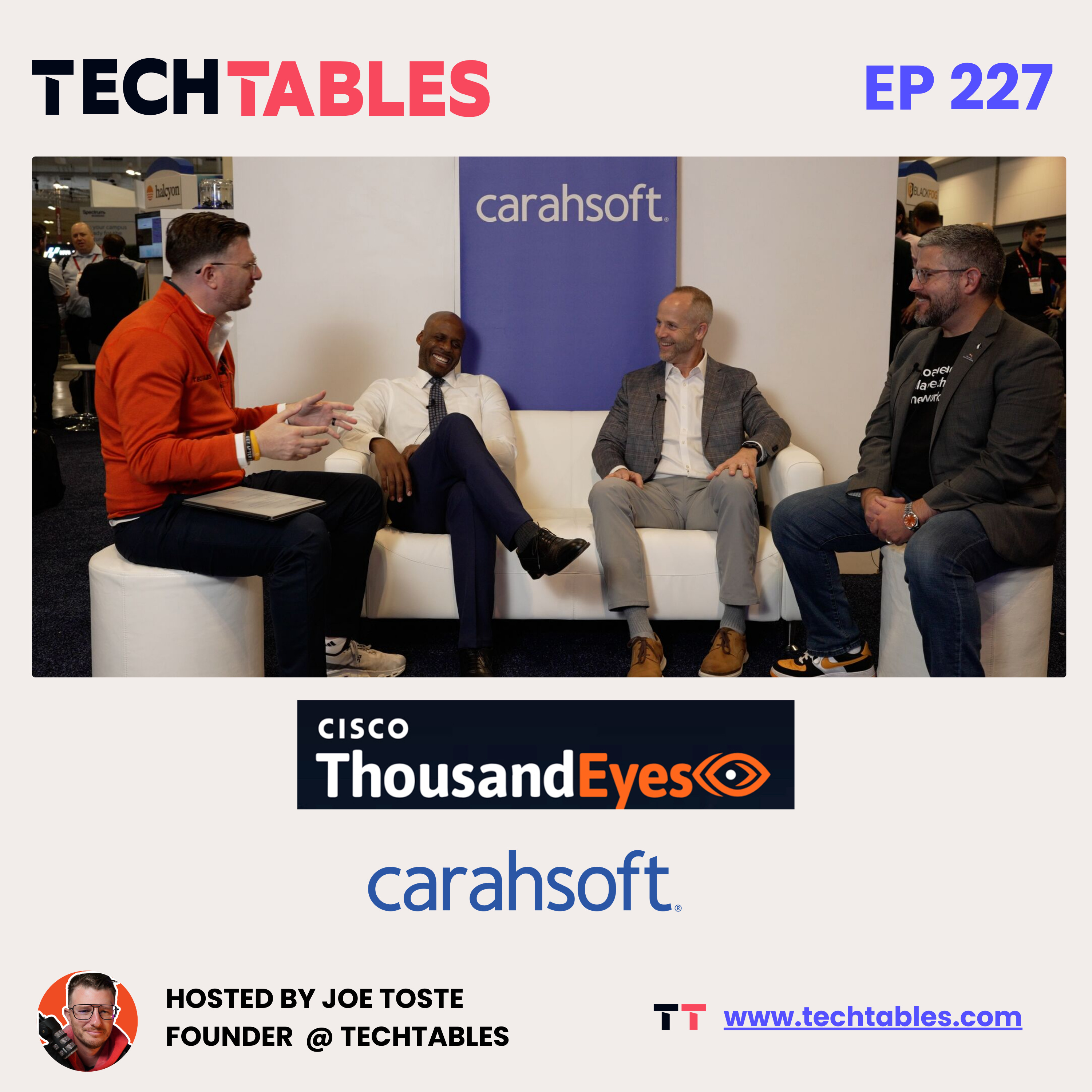
In this EDUCAUSE episode, Josh Bright from UC Santa Barbara, Dwane Sterling from Virginia Tech, and JJ Mahon from Cisco ThousandEyes break down what it means to lead IT before the problems find you - from building a collaborative leadership team to monitoring the student experience before the first ticket ever lands.






🤝 Join the CIO Communities for Local Government
A private, vendor-free network where public sector CIOs share what’s actually working
Members get:
- 2x National Retreats (facilitated by Info-Tech Research Group & Gartner)
- 4x CIO Virtual Roundtables
- Monthly “Behind the Mic” intelligence brief (1-pager)
Apply to Join → https://techtables.com/communities-local-government
📝 Show Notes
Featuring
Josh Bright is Associate Vice Chancellor for IT and CIO at UC Santa Barbara - a returning guest from Episode 200, now 18 months into a campus-wide IT strategy that his provost cited as a model for cross-silo collaboration.
Dwane Sterling is VP for Enterprise Solutions and Enabling Technologies at Virginia Tech - five months in from six years as CIO at Skidmore College, where he helped replace 90% of the institution’s infrastructure and applications.
JJ Mahon leads the higher education team for Cisco ThousandEyes across the U.S. - a former Army helicopter pilot, high school math teacher, and French horn player who now focuses on proactive digital experience monitoring at scale.
Timestamps
(0:00) Josh Bright, UCSB - from service function to IT strategy success 12 months later
(3:30) Dwane Sterling, Virginia Tech - the listening tour and what shocked him in the first 90 days
(6:00) Communication as a scalpel, not a rock - Dwane on why IT leaders need to wield it differently
(7:30) JJ Mahon, Cisco ThousandEyes - shifting IT from cost center to campus catalyst
(9:00) Seeing the smoke before the fire - JJ on the case for proactive monitoring over reactive ticketing
(11:00) Josh Bright - UCSB's AI community of practice and building on AWS Bedrock
(14:00) Dwane Sterling - Virginia Tech's vision for safe application development and AI security
(18:00) Josh Bright - putting his leadership team through the Moore Leadership Program and what changed a year later
(24:00) JJ Mahon - common operating language as the breakthrough for breaking down IT silos
(26:30) Closing advice - "Leaders rise to the level of their collaboration"
Whenever you’re ready, there are 3 ways you can connect with TechTables:
1. 📬 The TechTables Newsletter
Thanks for reading TechTables! Get early access to new episodes, insights, upcoming events, and more — straight to your inbox.
Join now: https://www.techtables.com/
2. 🤝 Join the TechTables CIO Communities for Local Government
A private, vendor-free network where public sector CIOs share what’s actually working
Members get:
- 2x National Retreats (facilitated by Info-Tech Research Group & Gartner)
- 4x CIO Virtual Roundtables
- Monthly “Behind the Mic” intelligence briefing doc
Apply to Join → https://techtables.com/communities-local-government
3. 🤝 The Better Together Virtual Series
The narrative-driven series bringing together industry partners and public sector CXOs. Discover the compelling stories that unfold when we stop working in silos and start building together.
»»» Email joe@techtables.com to learn more.
Platinum Newsletter Sponsor:

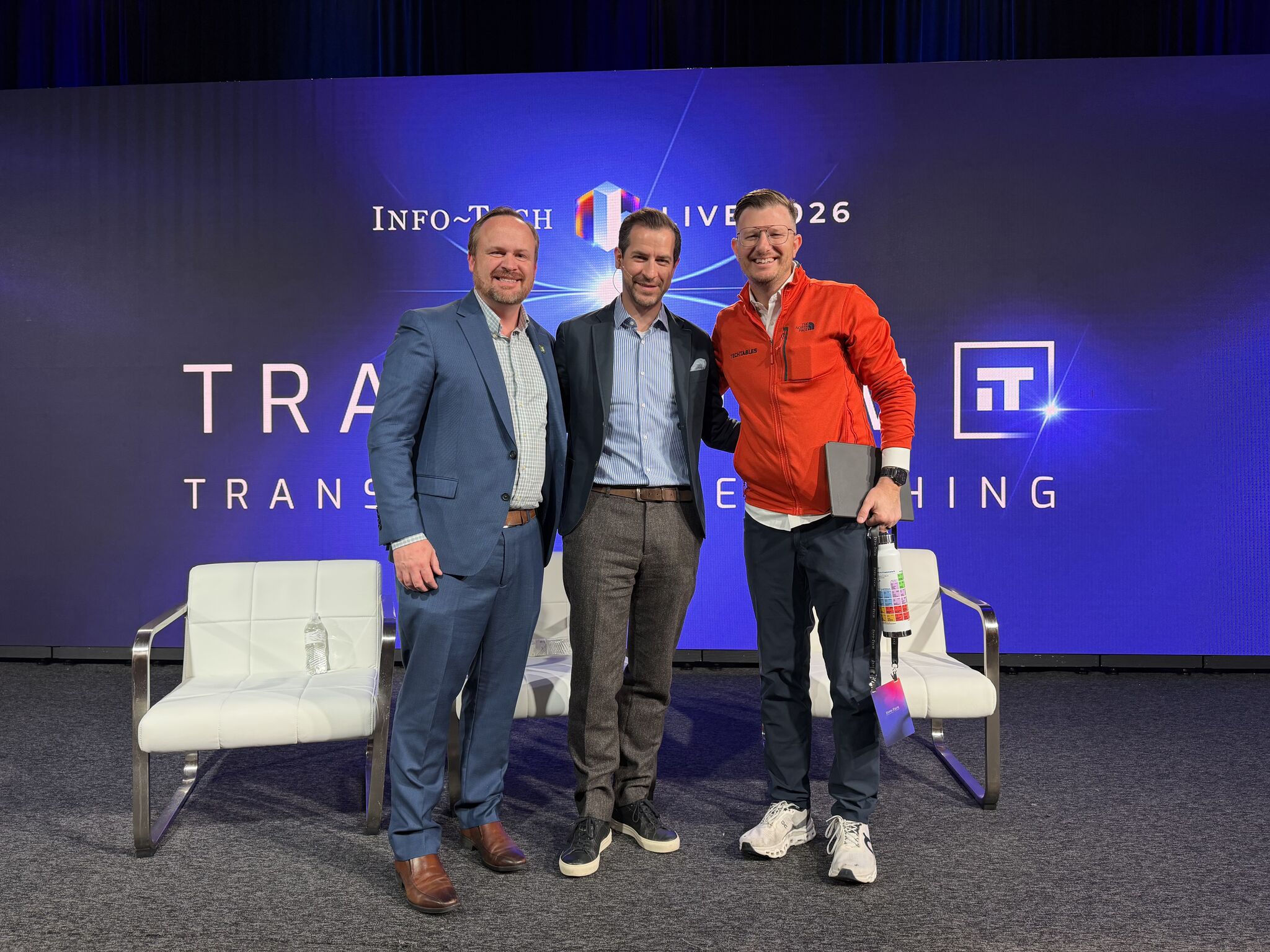
Missed out on Info-Tech LIVE in New Orleans? No worries, you can join TechTables & Info-Tech Research Group at Info-Tech LIVE 2026 - Las Vegas (June 9 - 11, 2026)!
Gold Newsletter Sponsor:

SentinelOne - Learn how SentinelOne empowers this state to stay secure.
Verizon Frontline -The advanced network that keeps first responders connected when it matters most.
Carahsoft - The Trusted Public Sector IT Solutions Provider™, supports government agencies and education/healthcare markets. Contact your Carahsoft rep today to access special discount pricing exclusively through the TechTables + Carahsoft partnership!
Guests
Episode Transcript
In this EDUCAUSE episode, Josh Bright from UC Santa Barbara, Dwane Sterling from Virginia Tech, and JJ Mahon from Cisco ThousandEyes break down what it means to lead IT before the problems find you - from building a collaborative leadership team to monitoring the student experience before the first ticket ever lands.
Joe Toste: [00:00:00] Welcome to The Public Sector Show by TechTables. Super excited to have you all on here and returning guest, Josh Bright from my hometown, Santa Barbara, California. I love it. Josh, give us a quick intro.
Josh Bright: I'm associate Vice Chancellor for IT and CIO at UC Santa Barbara. Been there about three years.
Josh Bright: I lead the central IT organization and I also coordinate strategy for technology on the campus.
Joe Toste: Dwayne,
Dwane Sterling: Dwayne Sterling, Virginia Tech. I am the a VP for Enterprise Solutions and Enabling Technologies, long story short, I oversee all of the applications and applications infrastructure for Virginia Tech.
Joe Toste: JJ short intro.
JJ Mahon: Hey, JJ Mahan. I work at Cisco focused on thousand eyes and a little bit of a varied background past in and out of it. So my first job as a French horn player, I flew helicopters for the Army. I was a high school math teacher, and I found my way into Cisco, where now we focus on helping individuals have the best user experience possible proactive measures.
JJ Mahon: So in, in higher ed, I get a chance to lead the team that covers all of the us. So I see a lot of different perspectives from different locations as well.
Joe Toste: So Josh came on [00:01:00] last year, episode 200.
Josh Bright: Yeah. That's amazing. I'm honored.
Joe Toste: Wow. Part of that 200. And we're still go, we're still in business. It's still going. You told us. So it is not the show in higher education. I pulled this quote from the transcript. We're a service function.
Joe Toste: You were in the middle at the time of building out your new UCSB's IT strategy at the time.
Joe Toste: Here we are a year later. Yeah. What's, give us the update 12 months later.
Josh Bright: Joe, I love you bringing back my quotes from the previous episodes on that. Yeah. So, yeah, I think at the time I also expanded to explain what I meant by that is that, you know, we, we are, we exist in higher ed in it to serve those and that deliver on the mission, the faculty and staff that deliver that.
Josh Bright: And so. From a strategy standpoint, we have to understand what the priorities of the leaders in that space and those faculty and staff, what they wanna do to know what our priorities are. And that's really what we were doing with our strategy. We were trying to kind of illuminate and uplift and bring resources to bear on those priorities as well as to build collaboration across the campus.
Josh Bright: And I would say now a year and a half in, it's been a real success on both of those levels. We have done a [00:02:00] lot of important work. We have, developed, begun the development of a campus IT research strategy. Out of that, that was the number one research priority. We've deployed systems that have enhanced the student experience.
Josh Bright: We've had a major business transformation implementing Oracle financials. So we just launched in July. We've had a major uplift on network and security, so we've done a lot of really important work that was identified as strategy as key strategies on the campus. But then we've also really built the collaboration.
Josh Bright: It's, we manage the IT strategy outta the central IT unit, but it's being delivered by units all across the campus. Our office of Teaching and learning, our academic IT units, our research IT units and it's been a really driver of, of a better culture there on campus. And I think the hallmark of that is in our.
Josh Bright: In his remarks at the end of the year, our provost cited the IT strategy work that we've done as kind of an indicator of the boundary crossing and silo destroying kind of work that the campus needs to do going forward. So that was a real success. We're in a transition now. We are 31 year chancellor just stepped down, and we have a new chancellor as of September, Dennis Assanis.
Josh Bright: He's announced his intention to take the [00:03:00] campus. Through a strategy process. And so we're managing this strategy. We have a four year roadmap, but we're managing it on a year to year basis, like a budget. And so we are gonna finish up this year. We've kind of learned from year one, narrowed our focus and we're gonna be ready to pivot to the institutional strategy when it gets developed in the future.
Josh Bright: So it's been a great ride so far. I
Joe Toste: So 12 months from now we can get another update.
Josh Bright: There we go. You can throw another quote back at me at that point.
Joe Toste: And if you want the full context of what Josh said, we will link to episode 200 in the show notes. There we go. So you can listen back to that.
Joe Toste: Thank you Josh. So Dwayne, you're five months, I get that right,
Dwane Sterling: four or five months now.
Joe Toste: Yeah. Okay. At Virginia Tech, you spent six years as the CIO at Skidmore College where you also built their technology strategy and infrastructure.
Dwane Sterling: I think I got to Skidmore at a time where they realized that their technology needs had kind of outstripped the infrastructure that they had in place. Right? And part of the reason why they went and they picked me up and the first place was they knew that I was going to aggressively drive change forward within that space.
Dwane Sterling: So I think we swapped out probably 90% of the, you know, the [00:04:00] infrastructural applications running the organization. And it led to a very, we'll, say, an exciting ride, so to speak. Now their capabilities are, you know, I would say on par or slightly ahead of the, the curve with respect to their peer and aspirant schools.
Joe Toste: Okay. So now as we transition to Virginia Tech, now Virginia Tech, so talk about first, first 90 days. What did, what did that look like?
Dwane Sterling: So, interestingly enough, within the first 90 days, I didn't actually do very much with technology itself, right? Whenever I get to a new organization, the first thing I do is, I call it a listening tour is I spend all of my time just getting to know the organization and the people they're in, right?
Dwane Sterling: And specifically the folks in my, my own universe. So, sitting down and having, you know, we'll say, getting a, a breakdown of where they've been, where they are now, where they hope to be, looking at it from a person. Perspective, looking at it from a departmental perspective or from an organization perspective, you do that over the course of the first 90 days.
Dwane Sterling: It'll set you up for success moving forward.
Joe Toste: Anything that shocked you in the first 90 days?
Dwane Sterling: There are a lot of things that shocked me.
Joe Toste: [00:05:00] Okay. Camera's right there. Yeah. Zoom
Dwane Sterling: on that. Yeah, so I mean, I'll, I'll say that. With an organization as large as Virginia Tech, it's still. Interesting to see how some of the challenges that you have at smaller organizations have not really been solved by the larger ones.
Dwane Sterling: I'll say one of the big ones is is communication. I think communication is something that we, particularly in the IT space, just don't really do well. And so that's gotta be something that I focus on moving forward. It's something that I'm trying to help my team with and I'm trying to help the overall IT organization kind of do slightly differently.
Dwane Sterling: I like to, to describe it more as. Communication can't be a, like a blunt rock that you hit somebody over the head with, right? You want to kind of wield it like a scalpel, right? Because you have to craft narratives and you wanna make sure that you're leaving people in the right space after you've done that communication.
Joe Toste: So I'm laughing because I, I say this all the time, so I coach high school basketball and with adults you have to be very friendly and collaborative and give them a hey buddy, to try and get people to move. [00:06:00] But with high school boys. It's not that way with high school boys, it's the rock. I mean, not the rock, but it's get on the court, you know, move the ball.
Dwane Sterling: There's a, a, a lot more vocals used. Well, I think, you know, if I put a, a finer point on it, right, it's, it's understanding your audience. It's understanding what they need to hear in order to move them through that transition, right? At the end of the day, I think everybody knows and understands. Change is not easy, right?
Dwane Sterling: And change scares a lot of people. So if you can't effectively communicate that changes are coming, then you're gonna end up with some pretty significant challenges.
Joe Toste: A hundred percent. And for the listeners that are, are tuning in high school boys are different than adults. Do not take, do not apply high school boy coaching to adults.
Joe Toste: It'll go south for you pretty quickly. So JJ, a big theme from this, this past week that I've been hearing a lot about the student experience and what. So first, first, before we head into like, Hey, what does that look like in 2026? What does student experience mean to you?
JJ Mahon: So I think when, when we look across the US in different higher education, first of all, I just [00:07:00] wanna throw a comment out because.
JJ Mahon: Yeah, we're seeing a transformation when you get a chance to see multiple different customers, right? Some folks are doing a really good job of changing it from a commodity to a business partner. And it sounds like you both are, are taking that, that first step. And when you do that effectively, it, it changes from a cost center to a catalyst, right?
JJ Mahon: How can I be a catalyst for the education space? You may not be the, the show, you may not be the front end, but we're, we're facilitating that on the back end and the places that struggle. Yeah. Still view it as a cost center and there's still a siloed piece. There's lots of aggregate aggravation. So kudos to you guys for really pumping up the, the, the partnership aspect of it.
JJ Mahon: To become a catalyst for the education space. Student experience is everything, right? At the end of the day, students get to choose where they go to school minus the acceptance piece, right? Yeah. But the highly competitive students have a choice. So if they go to the website to make an application and they can't get through, and they do that twice and they may just bypass and go somewhere else if they're on campus and they can't execute what they're trying to execute for, for school, for education, or for getting onto either the latest gaming platform for PC gaming.
JJ Mahon: They're frustrated and their experiences is negligible, and that bleeds over into the overall campus experience, the [00:08:00] education experience as a whole. So how can we facilitate a, a better digital experience when more and more things are becoming so digitally dependent?
Joe Toste: Yeah. And so now where do you see this going?
Joe Toste: So student experience is really ramped up the last couple years. Where do you see this heading into 20, 26 and beyond?
JJ Mahon: So I've put a lot of thought into you know. Obviously what we do with Thousand Eyes at Cisco, how our vision in motion, I think we're not the only ones that are doing it, but I think we're doing it the best, obviously.
JJ Mahon: Right? But at the end of the day, when I look at all the different organizations, everybody has a common theme. Not everybody's the same, obviously, but there's a common theme we want to get reduce the downtime. When something happens, we wanna fix it faster and we wanna get more, they say this word proactive, but if we look at the traditional ways that we've done things in the past, everything was owned.
JJ Mahon: You owned everything, and now you don't. But you're still accountable for it. So it could be an ISPs issue, it could be Canvas, it could be AWS, it could be all these third parties that you, you can't control, but you still own the responsibility for the experience across. There's a, a ton of metrics. So we, we talk to customers all the time.
JJ Mahon: Tell me about your last time you had an issue. Well, [00:09:00] this happened. Well, how did you know about it? A ticket came in and then 20 tickets came in, and then we looked at everybody across the space. Network said it was all good. Infrastructure said it was all good application, said it was all good, but there was still an impact.
JJ Mahon: All those things that we're leveraging for the most part today are reactive. We're waiting for an incident. We're trying to aggregate data and pinpoint where it is as fast as possible. So for me how do we get organizations to be proactive? How do we get you to know what the student experience is at two 30 in the morning when nobody's experiencing anything, when they're not accessing the resources?
JJ Mahon: If that goes down, how do you know proactively? So how do we truly get more proactive in that process? And if we do that effectively, we see the smoke before the fire. And you get to fix the issue before the student impact even occurs.
Joe Toste: Josh, you wanna ask some color on how UCSB is being proactive in the student experience?
Josh Bright: Yeah. We're trying to engage with our students and understand where they're at through a variety of different ways. We work with our partners and student affairs to do that. They really have kind of the pulse and those contact points with the students. And then try to build our strategy based on that input that we're, that we're having there.
Josh Bright: We're working to kind of uplift in the kind, in the [00:10:00] abilities, the capabilities we have in our technology platforms in that space. But fundamentally we have to know what the students are saying and what they're doing and what they're desiring. And so we're working to kind of not wait for them to come to us, but to reach out and get that information.
Josh Bright: So
Joe Toste: yesterday we had your deputy CIO on Yeah. Joe Sabado. He was great. He's been doing a lot of great work. And he also meets with students. Yep. And he is. But he's gotta be the most curious person on the planet. I don't know if there's someone, someone more curious than Joe. Yeah. And I'm not talking about myself.
Joe Toste: Yeah. He could you talk about just like how you've empowered him? I mean, he's leading a lot of different projects
Josh Bright: Joe's a fantastic leader. He's a real and tremendous asset. You know, he's been at UCSB for over 30 years now from an undergraduate student all the way through.
Josh Bright: He is a great success story for UCSB. And yes, he, he always wants to go back to his roots and always wants to continue to give back to students, and I love that about him. So, yeah, we try to leverage Joe in a lot of different areas. He's doing fantastic work right now with our AI community of practice.
Josh Bright: Which is something we're really proud of. We've got over 300 different faculty, staff and students that are working to kind of drive change and bring up ideas with ai. And [00:11:00] Joe is a leader there along with Dr. Lisa Berry from our Office of Teaching and Learning something that myself and our a BC of Teaching and Learning co-sponsor on the campus.
Josh Bright: And it's kind of, it's an example of how UCSB has kind of collaboration built into its DNA which is something that I really love about the campus. One of the things that I've been looking at is it, uCSB can often kind of default to a community of practice type strategy and often organizations go that way when they think that there's not really resources to be brought to bear, right?
Josh Bright: It's a way we kind of scrape together resources and energy and those kind of things. And so what I've tried to focus on as CIO is to try to bring resources to support those efforts across various different spaces. I think change efforts of any kind, they work best when they have both the bottoms up aspect of it.
Josh Bright: And kind of the top down buy-in on those sorts of things. So we're working in the AI space. Our community of practice is actually piloting our AI model platform that we're building in AWS bedrock and giving us feedback on that to help us drive it forward. We're working in data in a similar sort of way.
Josh Bright: We have lots of people in different silos that are, that are very engaged around data, trying to help deliver on the campus. And [00:12:00] we tried to leverage our Oracle Financials project to bring in someone to partner with us, to help us to build a best practice data governance structure to support that and actually drive it together towards coherent practices.
Josh Bright: The other place we're actually doing that I'm thinking about collaboration and how we work it is actually in accessibility. We have these kind of, this tremendous federal government requirements coming at us. We're trying to get our arms around what that's gonna take for the campus, and it's going to be a major effort that we have to drive forward.
Josh Bright: But in talking to other campuses, our partners down at SDSU, big 10 campus and others that are really leading, I think, in this space. What they're doing is they're making sure that they're actually hooked into those folks and those communities on the campus that are already passionate and have been working on accessibility for years, if not decades.
Josh Bright: Because you really have to build things to support them. They're gonna be the ones that continue to drive change and compliance with those accessibility requirements. So I think it's really important to leverage those kind of collaborative structures when you're trying to drive change and then bring resources to support them
Joe Toste: I love the quote you had collaboration built into its DNA.
Josh Bright: It's absolutely part of the campus. It's part of what I love.
Joe Toste: I actually spent on the intro call with Joe, I had spent 75 minutes with him and this thing was only scheduled for 30 minutes.
Joe Toste: But [00:13:00] he was showing me his screen. He was like, Hey, you wanna see this governance structure I set up and we've kind of going down the rabbit hole and yeah, it was fantastic. I'm
Josh Bright: pretty sure Joe doesn't sleep all that much. I
Joe Toste: don't think he sleeps.
Josh Bright: Yeah,
Joe Toste: I don't think he sleeps. I don't sleep and I don't think he really sleeps.
Joe Toste: Dwayne on your side, just on the emerging technology side. Tying in with student experience, where, where do you see this going?
Dwane Sterling: So, on our side of the equation, I haven't even gotten into that part just yet 'cause I've only been there for five months. What I see is that Virginia Tech has kind of this we'll say this rich environment that's, I'd say poised for for innovation and success, right?
Dwane Sterling: So one of the areas that I, I like to, to try and we'll say, investigate a little bit more heavily is. How do we encourage people to build applications in our, in our environment, right? What's the platform that we provide people? Because building applications can be something that's that's somewhat challenging or somewhat daunting from a security perspective.
Dwane Sterling: It's certainly something that we want to keep our eye on to. So how do we create an environment that allows whether it be, you know, standard students, grad students members of faculty, [00:14:00] or really just other satellite business units to build the kind of applications that provide for them in some significant significant way.
Dwane Sterling: I don't know whether or not that kind of. Feeds back into the question that you're, that you're talking about, but I haven't had the opportunity to kind of explore that universe just yet.
Joe Toste: Okay. So let's go down the rabbit hole a little bit. What's your, what do you think? What, what, what, what would be your vision?
Joe Toste: This isn't concrete, even though it's on video. On the video's right there. What, what is your vision?
Dwane Sterling: So, you know, I think the vision's gotta be trying to, to come up with the division between. When is it appropriate for us to build an application? When is it appropriate for us to to buy an application?
Dwane Sterling: And how can we create an environment within which people can, can explore those characteristics in some way that keeps the organization safe? Right? So at what point do we say you're connecting your application to, I don't know, to institutional data? Is that something that we're okay with? Right? We want to, we wanna make sure we encourage that innovation because that's part of the spirit of Virginia Tech, right?
Dwane Sterling: But [00:15:00] at the same time, we also want to try and keep all of our stuff safe from an IT security perspective, which I think is very, very, it's becoming increasingly challenging. We, once you start talking about adding AI as a layer on top of that, everything is gonna become very we'll say very exciting, but also scary at the same time.
Dwane Sterling: Back to your concept about losing sleep.
Joe Toste: It is most exciting and, and, and, and scary. JJ, thoughts?
JJ Mahon: One, again, I love the vision that, that I hear across the board from a higher ed perspective, I was a teacher in high school, so I, I felt the faculty from a high school perspective, when it works great, it works great.
JJ Mahon: When it doesn't, it doesn't, my oldest daughter actually works for UW Madison. So from a faculty perspective there, she's a, a science writer and kind of converts, you know, the researchers and message into something we can all consume. So a lot of digital media in the background. Lots of reliance on the digital tools and connectivity.
JJ Mahon: My youngest daughter is actually a senior at U UNC Chapel Hill. So one of the things that sticks out is when we talk about, you know, experience, it permeates not just the students but the faculty as well. And my youngest daughter especially as a freshman, you know, you're trying to figure out this new space.
JJ Mahon: You've got maybe a roommate in the [00:16:00] dorm got wifi in the dorms to do work, but it's a place of learning. So you have to find a comfortable spot, and it's a tough challenge for CIOs and for technologists in higher ed to create this. Pervasive space that no matter where the student goes, they can be effective and learn if they're sitting in the quad, if they're sitting in the library, if they're sitting in their dorm, if they're in a classroom.
JJ Mahon: So being able to, like, I think the underpinning there is how do we, how do we ensure or provide assurance that no matter where they are all the time they're able to connect back to the resources of its internal hosted application. How are they able to get there and what's that experience look like?
JJ Mahon: If it's an external hosted application, how do they get there and how do we make it easy? To push that information to you. So the AI conversation is exciting on our side as well. In the old days, we we used to talk about, from a technologist perspective, the, the goal for a single pane of management, single pane of glass, to manage everything that has never come to fruition and it won't and maybe good, good news, right?
JJ Mahon: If you're an app guy, you don't want to have a network tool to try to manage the applications with. But what we want to get to is how do we give you a single pane of [00:17:00] analytics? So it doesn't matter where the data's coming from, you can see it all in one place. And then leverage the AI in that space to be cross correlate things automatically.
JJ Mahon: Instead of trying to configure, get a, get a ticket, have it to understand, hey, there's an outage here, or a student complaints here. Is it one, is it many? It's all aggregated for you. Hey, we identified these things. Here's the potential root cause analysis. Here's your potential remediation facts. And if we do that effectively, all the big level projects you guys are working on, on the top level behind the scenes, it's like, you know, a duck, right?
JJ Mahon: The, the feet are kicking underneath the water, but it's seamless to the student. It's seamless to the staff, and that's really what we want to get to at the end of the day.
Joe Toste: That was great. Thank you JJ. Transitioning to my favorite topic, leadership. I love leadership. It's my favorite topic and my favorite quote, one of my favorite quotes Josh.
Joe Toste: So when the leader gets better, everyone gets better. So last year you had put your leadership team through the year long Moores associate program.
Joe Toste: So here we are a year later. Love to know what's changed with the leadership team and how has your team of leaders started to be multipliers throughout the university.
Josh Bright: Joe, I I, I [00:18:00] appreciate this question 'cause you, as you know, something, I'm also really passionate about. That was a, a, a really exciting opportunity.
Josh Bright: I had the opportunity myself to go through the Moore program the year before. It is the best leadership program that I've experienced in my career. Moore has, in my view, kind of cracked the code on leadership development because they really structure their program on the way people learn and change.
Josh Bright: You know, it has, it's a very intensive program. It has multiple different onsites. It has coaching on a regular basis. It has accountability structures built into it. It's focused around the development of behavioral practices, and you can take. Take away from it. So I loved my experience and I felt like this is something I really need to bring to my leadership team.
Josh Bright: I've got a fantastic leadership team. We, our CSO is very new. The rest of my leaders in my executive leadership team, I think the least tenured or the newest to the university has been there 17 years, 17, 18 years. But they've come together from the five or six different organizations that we have consolidated into central it from units with very different cultures.
Josh Bright: And, and they have a shared history that can be complex. There was, I think clearly, and, and, and in many [00:19:00] cases they haven't had the opportunity afforded them to do professional leadership development. And I think this is something that lots of organizations, lots of it organizations don't invest in.
Josh Bright: Right. And it's really a, it's really critical. So I needed to level up my leadership. We needed to level up our ability to work as a team. And so put this opportunity in front of 'em. They had to commit because of, it's an intensive program and, we have a lot of stuff going on, but they did and we really started to really see the benefits of that.
Josh Bright: I see it in, in my individual interaction with 'em, the feedback they've given to me about the program, their implementation of the practices into their leadership with their teams. Also the real benefit of putting them together as a cohort. There were kind of two pieces. One, we developed a shared vocabulary of leader, vocabulary of leadership that I see now permeating through the organization.
Josh Bright: Some of the more terminology about feedback being a gift about operating with the three lenses. Across all the different kind of problems that we face. And that's happening throughout our organization. It's something that I'm planning to push down further through the organization. It's getting a little more complex with budget cuts and things like that, but it's something we're gonna be committed to and then potentially.
Josh Bright: Across the organization as well. The number [00:20:00] one hallmark that I know was a success is that we, my leadership team and I meet all the time. They now have a standing monthly lunch without me where they go and they continue to work on their leadership and their team, and their team together. So yeah, it's been a great success.
Josh Bright: I'm, I'm incredibly grateful to them.
JJ Mahon: It's gonna say sometimes it's hard to, when you bring teams together in ways they haven't been done before, for them to work together. But getting the leaders to speak the same language, breaks down the walls and silos and everybody works with, works together better.
Joe Toste: So. Kind of follow up question that's coming out to me like you just said. They have a standing monthly lunch without you. Was that hard? Was that hard at first?
Josh Bright: Yeah. I, I tried to invite myself at first, like, no, no, we need to actually work together. Yeah. I was like, oh, all right. Well, I sort of feel left out, but No, it's, it's, it's actually fantastic.
Josh Bright: I really love the fact that they're engaged around this that they're thinking together. Part of the, during the actual program, we did an exercise, so I've working with the more leadership, they actually set something up. Well, we got together as a team and they sat down and said, this is what we need from you as our leader.
Josh Bright: And then I talked to them about what I needed from them as leaders and hey, we're, we're all works in progress. And that said, and that effort is still a work in progress, but we've gotten those things on the table and [00:21:00] we have the openness to give each other feedback even when it's hard. That's another exercise they kind of went through, kind of, kind of walk to through some of those issues that come out of their, their past relationships and left.
Josh Bright: So again, I can't say enough about the program or again, about my leadership team and their commitment to it, so yeah.
Dwane Sterling: So there's an interesting value in the team meeting without you as well, right? Yeah. Because on top of that, with you not being there, someone else has to step up and take on that mantle of leadership.
Dwane Sterling: So in a way you're also growing and developing them to be able to operate without you being right there. Yeah,
Josh Bright: absolutely. Yeah.
Joe Toste: That was one of the, one of the first conversations we had this, this week at Edika on the podcast was some CIOs who. Really had, they really struggled making the jump from the technical side to the leadership side.
Joe Toste: And they were, they were, maybe I should recommend the Moores program to them. But that, that, that was, it was a real struggle, especially for the younger CIOs. And there are a lot of kinda that next generation wave coming in right now and moving from the technical, like, [00:22:00] you're so good at your job, you get promoted and you're like, how do I.
Joe Toste: I don't know. How do I manage?
Dwane Sterling: Yeah, it's it's a, it's a quantum shift.
Joe Toste: Yeah. It's a
big,
Dwane Sterling: yeah. And I think it's particularly challenging in the tech space because in order for you to be a good person in technology, you have to be really, really deep into that specific discipline. And a lot of the times people somewhat neglect the softer skills that you then need in order to be an effective leader.
Dwane Sterling: So it's, it can be hard to make that shift over from, I'm high on the technology scale to now I'm also dealing with and leading people in a different way.
Joe Toste: Yeah, this goes dovetails very well. So Sharon Pitt
Joe Toste: had a quote about you. When you were first hired, said you bring a very collaborative leadership style.
Joe Toste: Did Sharon, when you met with her, what did she see in you
Dwane Sterling: Part of me wants to say she saw a war torn past, right? Mm-hmm. So, so if you look at, if you look in my past, certainly I've had more recently, I was, you know, I was in, on the higher education side, but on the smaller liberal arts side, [00:23:00] right? And so the spirit of collaboration is really, really big within within that space. But before that, I was in healthcare, right? And I think that healthcare tends to be a very, very complicated universe. And so if you don't approach healthcare within the realm of collaboration, you're just not gonna be able to get anything done.
Dwane Sterling: So I'd like to say that. What Sharon saw in me was somebody who's gonna work really, really hard to make sure that everybody is where they need to be, emotionally, mentally, or otherwise around the decisions that you're making so that we can move things forward collaboratively and hopefully in, in some semblance of success.
Joe Toste: So when you met with her throughout the hiring process did you say, Hey, I have got this thing called a listening tour. You're gonna love it.
Dwane Sterling: So I, I didn't actually tell her about that. Okay. I don't know whether or not she got that on the on the front side. Okay. I think she expected that when I first got there, I was gonna spend a lot more time listening and understanding the environment than I was trying to initiate changes right away.
Dwane Sterling: Right, right. And, and I think when you're dealing with an organization the size of Virginia Tech, you don't want to be the person [00:24:00] that goes in, thinks that you know everything to start and then just starts doing things. I think you really need to make sure that you understand the environment first.
Joe Toste: JJ, I'd love to hear, you know, from you, you talked to a lot of different customers. What, what are you, what are you seeing across, across the aisle? On, on, not just to student experience, but maybe some just non-obvious insights in the higher education space that, that you can glean, that you've gleaned.
JJ Mahon: Yeah, so I think, I think you guys have addressed you, especially like bringing the team together from a leadership perspective, creating a centralized IT space. We're seeing more universities, more higher education entities going that way. So instead of having a security team that's separate and having, you know, application team that's separate, there's a more cohesive piece.
JJ Mahon: And as you bring those folks together I think folks struggle with. Not just the leadership, common operating language, like having the same language to speak, coming together, but also a technological common operating language. So I spoke with one of the, an Ivy League user of our product, a Thousand Eyes, and he said, yeah, we love the product.
JJ Mahon: Obviously the, I'm biased for it, right? But he described a great example where there's an in in-home application that is running [00:25:00] and it requires SSO authentication. SSO authentication is in-home as well. And they were getting user complaints all the time. And I've got my, my favorite shirt on today.
JJ Mahon: Go ahead. Blame the network. Right? It's always the network's fault first. And he runs the network in the knock piece. So he described basically you know, we kept getting these ticket calls saying the applications are running slow and it's an issue and it's a problem. And they were able to leverage our tool to look at everything from layers three through seven, end-to-end connection, and then pinpoint it's at the authentication space.
JJ Mahon: It's taking five seconds to authenticate. Here's the, the whole piece. The application is totally good. The network's fine. We need to work. There's some bug in the, in the the authentication piece. So by creating whether it's, it's in human form, right? Creating breaking down those barriers so people see each other as colleagues instead of, you know, competitors.
JJ Mahon: And instead of saying Everything's great, I don't need to worry about it. Or when I have a conversation sometimes with someone and I think, you know, I've got a home run 'cause I've identified on their public facing website, it's taking 10 seconds to load. And I present it to them and they're like, yeah, but we don't get yelled at for it.
JJ Mahon: So we don't really care about it. Having that mentality that says, it doesn't have to be just in my [00:26:00] lane. It can be across anywhere, and we need to be better as an organization and having the tools that, that both from a soft skill perspective, create a common operating language. And from a technology perspective, create a common operating viewpoint across that end-to-end landscape, from network to security to whatever it might be.
JJ Mahon: So you can pinpoint where you need to focus at faster. And it's not about being right or wrong, it's about providing the best service possible.
Joe Toste: As we wrap up. This conversation. I'd love to know you know, what's one piece of advice that you would give to a rising, a rising technology leader?
Joe Toste: Could be a Joe Sabado. He is kind of passed the rising piece, but he's still Deputy CIO and one day he might wanna become a CIO. And it ranges to kids, right? High could be high school kids, could be college kids who are interested in technology right now. And JJ we'll kick off with you
JJ Mahon: it takes a tribe. So build a family network, have a common operating language and a shared vision and goal, and don't, don't get so focused on your individual piece. Focus on how your individual piece ties into the greater good.
Joe Toste: Yep. Tying into the mission piece of advice for a rising technology leader,
Dwane Sterling: I would say.
Dwane Sterling: Focus on your [00:27:00] curiosity, right? Don't be afraid to expand outside of the realm of what you feel comfortable with, whether that be a, an emerging technology or starting to explore management and leadership and what that looks like. I would say focus on your curiosity and continue to grow in that direction.
Dwane Sterling: I love. Josh,
Josh Bright: I'm gonna build off what Dwayne said earlier. I think leaders in higher education, they rise to the level of their collaboration. I think the secret to being a leader in higher education is understanding the culture of your institution around around collaboration and change.
Josh Bright: And then understand the direction of your leadership and, and sitting at that intersection, being able to drive things forward at the pace that that culture will I dunno if accept is the right word, tolerate maybe. And hopefully, ultimately embrace to, to, to move that forward and, and kind of keeping the throttle, keeping the throttle at, at the right level there.
JJ Mahon: So and if I could say just one more thing because Yeah, yeah. I'd love to talk leadership as well, right? Yeah. For, for my money. In any role. The most important thing if you're pursuing a leadership gig is figure out who you are [00:28:00] first and then be authentic. Because if you're not authentic, people smell it from a mile away and your message never lands.
JJ Mahon: So who are you? What do you really wanna accomplish? And be authentic with how you deliver. Yeah,
Joe Toste: But I loved the quote that you had, Josh.
Josh Bright: Like I said, I'm probably quoting
Joe Toste: somebody else. That's okay. I'm gonna, I'm stealing that. You rise to the level of your collaboration. I love that. I appreciate you all coming on the podcast. I really appreciate the time and the conversation and thank you for coming on the show.
Josh Bright: Pleasure. Thanks Joe. Thank you. Thank you.