

#229: You Can Write an AI Policy Today. The Feds Will Rewrite It Tomorrow.
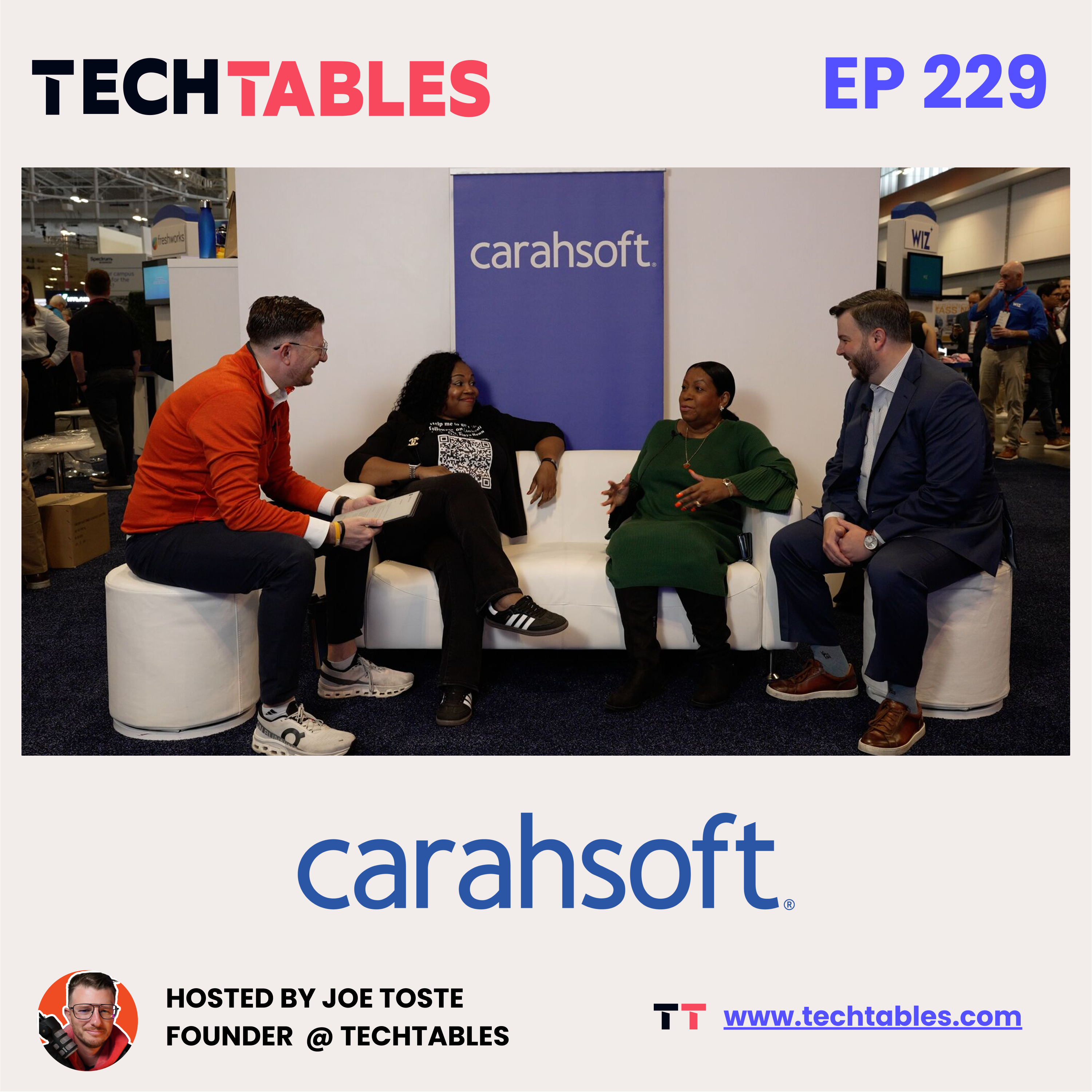
In this EDUCAUSE episode, Dr. Vanessa Kenon from UTSA, Tonya Bennett from the University of Pennsylvania, and Tim Boltz from Carahsoft break down how universities are building student workforce pipelines, navigating AI’s legal wild west, and cutting through procurement complexity - all before the pace of change outstrips them.


🤝 Join the CIO Communities for Local Government
A private, vendor-free network where public sector CIOs share what’s actually working
Members get:
- 2x National Retreats (facilitated by Info-Tech Research Group & Gartner)
- 4x CIO Virtual Roundtables
- Monthly “Behind the Mic” intelligence brief (1-pager)
Apply to Join → https://techtables.com/communities-local-government
📝 Show Notes
Featuring
Dr. Vanessa Kenon is Associate Vice President for Information Technology at the University of Texas at San Antonio - leading IT through a major university merger while keeping innovation and compliance from pulling the institution in opposite directions.
Tonya Bennett is Director of Educational Technology at the University of Pennsylvania - managing the LMS-centered EdTech ecosystem across 12 schools and bringing a master's in law to every AI governance conversation she's in.
Tim Boltz leads the Education Vertical at Carahsoft - 17 years in, representing 1,500 manufacturers, and building the cooperative purchasing infrastructure that lets institutions stop waiting on 12-18 month RFQ cycles.
Timestamps
(0:00) Introductions - Dr. Vanessa Kenon, UTSA; Tonya Bennett, UPenn; Tim Boltz, Carahsoft
(8:00) TASSCC - how Texas built its own EDUCAUSE and why vendor partnerships made it work
(11:00) Financial pressures in higher ed - why leaning into IT investment beats pulling back
(15:00) Frictionless EdTech at UPenn - one credential, every platform, zero manual steps
(26:00) Carahsoft's easy button - cooperative purchasing vehicles already live across all 50 states
(29:00) AI's legal wild west - agentic AI, IP liability & who's responsible when the agent acts
(35:00) Curiosity vs. compliance at UTSA - keeping innovation alive without losing governance
(39:00) Closing trends - community over commodity, workforce readiness & what's next for higher ed
Whenever you’re ready, there are 3 ways you can connect with TechTables:
1. 📬 The TechTables Newsletter
Thanks for reading TechTables! Get early access to new episodes, insights, upcoming events, and more — straight to your inbox.
Join now: https://www.techtables.com/
2. 🤝 Join the TechTables CIO Communities for Local Government
A private, vendor-free network where public sector CIOs share what’s actually working
Members get:
- 2x National Retreats (facilitated by Info-Tech Research Group & Gartner)
- 4x CIO Virtual Roundtables
- Monthly “Behind the Mic” intelligence briefing doc
Apply to Join → https://techtables.com/communities-local-government

3. 🤝 The Better Together Virtual Series
The narrative-driven series bringing together industry partners and public sector CXOs. Discover the compelling stories that unfold when we stop working in silos and start building together.
»»» Email joe@techtables.com to learn more.
Platinum Newsletter Sponsor:

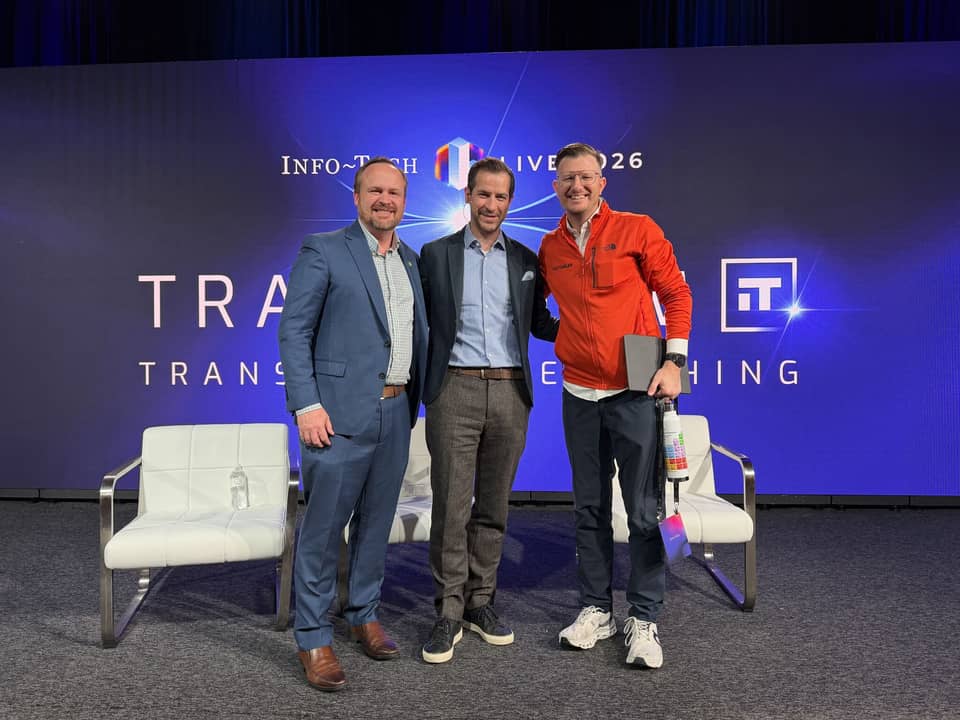
Missed out on Info-Tech LIVE in New Orleans? No worries, you can join TechTables & Info-Tech Research Group at Info-Tech LIVE 2026 - Las Vegas (June 9 - 11, 2026)!
Gold Newsletter Sponsor:

SentinelOne - Learn how SentinelOne empowers this state to stay secure.
Verizon Frontline -The advanced network that keeps first responders connected when it matters most.
Carahsoft - The Trusted Public Sector IT Solutions Provider™, supports government agencies and education/healthcare markets. Contact your Carahsoft rep today to access special discount pricing exclusively through the TechTables + Carahsoft partnership!
Guests
Episode Transcript
In this EDUCAUSE episode, Dr. Vanessa Kenon from UTSA, Tonya Bennett from the University of Pennsylvania, and Tim Boltz from Carahsoft break down how universities are building student workforce pipelines, navigating AI’s legal wild west, and cutting through procurement complexity - all before the pace of change outstrips them.
Joe Toste: [00:00:00] Welcome to the Public Sector Show by Tech Table. Super excited to have you all on here. We'll kick off with Vanessa, returning guest.
Vanessa Kenon: Yes.
Joe Toste: Is this podcast four or five? I can't even remember.
Vanessa Kenon: It's at least number four.
Joe Toste: It's at least number four. Yeah, it's at least number four. I'm excited. For those who don't know you, give us a quick intro.
Vanessa Kenon: Vanessa Keenan. I'm the Associate Vice President for University of Texas at San Antonio. Love it. So we just had a big merger, so our name has changed to UT San Antonio. So lots of things going on down at UT San Antonio.
Joe Toste: Tanya.
Tonya Bennett: Hi, I'm Tanya Bennett and I am the Director of Educational Technology at the University of Pennsylvania. Where my team covers teaching and learning tools so that the teachers can teach easier. And the students can learn easier.
Joe Toste: Love that. Tim,
Tim Boltz: Tim Bolts I lead our education vertical at Carahsoft.
Tim Boltz: Been with the company for 17 years and very excited to be part of the conversation today.
Joe Toste: Vanessa, we're gonna kick off with you. We've covered the Bold Careers program, but it's just like a flagship program for you, which I [00:01:00] love. Serves over 85 students, and maybe there's an update on that.
Joe Toste: Maybe there's even more. That has become part of the integration with the partnerships with eSports Trade Association, Six Flags, Dell Technologies, RackSpace- So many partners. We actually went to Six Flags in 2023.
Vanessa Kenon: Yes, we did. That was, it was like a whole group over there. It
Joe Toste: took a whole group.
Joe Toste: Yeah, we, it was fantastic. Walk us through just where we're at today with the Bold Careers program. Catch us back up for those who aren't, who haven't turned tuned into the past episodes.
Vanessa Kenon: That is amazing. We are close to have served at this point in time, over 400 students in this program. So I'm gonna talk a little bit today about one that you didn't mention, which is a big one, and that is ServiceNow University.
Vanessa Kenon: So we are doing some amazing things with ServiceNow University. ServiceNow has a component where you can go in and train. So for most places, if you're a university, your staff can go in and you pretty much buy credits and pay for this. For our students, it [00:02:00] is a free service and our students have piloted quite a bit of the work there that's sitting in ServiceNow University, including the new cyber component that they added last year.
Vanessa Kenon: So we're really excited about that. The students go in, they get badging if they go through the complete section. They get certifications. And so it was really neat because last year while we were here at EDUCAUSE, they were piloting the cybersecurity portion that is now there and open for students across the United States to use.
Vanessa Kenon: So a new pilot in there. So this year I looked at them and I was like, okay, artificial intelligence, Quantum's gonna come up on us. What do you guys have? We need you to do a AI component. They were like, Vanessa. We already have just dropped AI into all they thought ahead of us. This time we didn't have to pilot anything they thought ahead of us.
Vanessa Kenon: And so just to give you an example of how popular this program is for our spring semester, 'cause that program is in cohorts, we have over 150 applicants in the portal right now for [00:03:00] about 25 positions. So it's going to be really interesting to see how that goes. But the students are really excited.
Vanessa Kenon: Because if you haven't seen what's going on with ServiceNow and ServiceNow University, you'll also notice that Idris Elba is doing their commercials. So if you're watching the football games, the basketball games, he's there all the time. So for our students, if they didn't know a whole lot about ServiceNow, at that point in time, they see this.
Vanessa Kenon: And it's exciting for them to go through that process to realize, Hey, he's doing all this stuff for artificial intelligence right now. A big rollout and they're a part of that because they're some of the first people to get a chance to train in that portfolio. So it's exciting to see what's going on right now with that program.
Joe Toste: I've also actually had a chance to tour that, tour, the SOC when I was there. And isn't he supposed to be like the next James Bond? I think I read an article about that.
Vanessa Kenon: It's going to be interesting. I'm not going to comment, so I'm not sure who it will be.
Vanessa Kenon: I think and I thought he would make a great James Bond, but I think everything I've heard from him is he is going on to do other things as [00:04:00] we can see. This is a big deal for him to actually be a spokesperson for such a large company like ServiceNow. And I'm really excited and so proud of what our students are doing and we're gonna see that expand more in our system. We have actually, since we have had, we had the only ServiceNow University in the system. Everybody loved it so much. Now, William, who you've had on your show before, so on your show before, William now has a ServiceNow University as well, so he is gonna be, he is the second person.
Joe Toste: I love that. I was just giving William a hug outside, so I'll see you tomorrow.
Vanessa Kenon: That's right. He'll be on your show. So he just added that to their portfolio for the entire UT system. So we're excited that we work the pioneers, the folks to get it started.
Joe Toste: Yeah, no, there's a lot of exciting stuff right there.
Joe Toste: So Tanya, you're champion the tri-chair leadership model at Penn, where you've got the past chair, the current chair, and the chair elect working together. Walk us through a specific moment where the distributed leadership model prevented problems that would've [00:05:00] happened as you were trying to grow that out at UPenn.
Tonya Bennett: I am the past chair currently of the Penn Professional Staff Assembly. And that model is basically it's an elected position and we just elect a chair elect. And so , the chair serves. And the past year serves. And what helps with that model is institutional knowledge is not lost because somebody knows what we did last year and we can just pass it on.
Tonya Bennett: And the chair is basically like an understudy. The elect is an understudy for the chair, so they're getting their legs under them and learning the ropes while they also have mentorship of the past chair to tell them what to do. And I think that model is very helpful because when I was chair elect and I was supposed to be paying attention to what the chair was doing, I really wasn't.
Tonya Bennett: And I was like wait, I'm chair now. I wasn't paying attention. What am I supposed to do? And the chair jumped right in and was like, Hey, this is what you need [00:06:00] to do. This is what I did when I was chair. These are the timelines. These are the dates. These are the key people. They passed over a file that had all the information of what we did previously.
Tonya Bennett: So we weren't reinventing wheels either. And it's just a good model because everyone has a piece and everyone has a role as written in our bylaws, but we're also learning and mentoring and doing the job at the same time.
Joe Toste: Okay, so you te you teed it up. So I want you to cover the organization just a little bit more and then.
Joe Toste: Now that you're the past chair, talk about the mentorship, the coaching that you are now providing.
Tonya Bennett: Okay the organization is the Penn Professional Staff Assembly and we serve the monthly paid staff at Penn. And so we put on events and we do professional development. We do lunch with leadership series.
Tonya Bennett: We hold an employee resource fair where. They can dispose of [00:07:00] electronics safely and there's a shredding machine. And they can find out about all the resources available to them at Penn. So that's the organization and there's an executive board, and then there's the tri chair model. And so me as the tri chair it's just, so what I'm doing now is we're planning our employee resource fair, which is our biggest event by far.
Tonya Bennett: And so I just remind them, oh, when I was chair I did this. Or when I was chair I did that when I was planning it. So that's really important for them to know so just in case they don't know what they don't know. You don't know If you've not been through it, you may not know all the little intricacies.
Tonya Bennett: And and then I jump in and I'm like, Hey, do we have signs? Okay, I'll do the sign. So I also do some of the work and planning as well.
Joe Toste: I love it. So do you see how I teed this up? Have you talked to Vanessa about TASSCC? You talked to her about TASSCC?
Tonya Bennett: No, I have not.
Joe Toste: Oh, you should ask her right now, Vanessa.
Joe Toste: What's TASSCC we're gonna give task a highlight on this.
Vanessa Kenon: Okay,
Tonya Bennett: Vanessa, what's TASSCC?
Vanessa Kenon: TASSCC is like our state, I call it this, our state of Texas [00:08:00] EDUCAUSE. So it's all of the folks that are in higher education and folks that are in higher education, as well as in our public sector as well as all of our public agencies.
Vanessa Kenon: You're talking about the Texas Department of Transportation. The Tobacco and Alcohol Commission folks. Everything that has to do with the agencies and we have a lot of them in Texas. They all get together and they put on an event very similar to this one once a year, but we also have a state of the state in December, so I'll be going over for that.
Vanessa Kenon: And I serve on the board of directors for that particular group in Texas. And we encompass also, we have been pulling in the community colleges. So it is a big organization down there in Texas and we had well over a thousand folks participating in our annual meeting this past summer. So a lot of the vendor partners you see here also participate in that event.
Vanessa Kenon: I'm seeing more and more states are looking at that and looking at a way when they're not here at EDUCAUSE, how do we get everybody together in between? This is not just a once a year thing and [00:09:00] EDUCAUSE is doing the same thing because EDUCAUSE just had yesterday its partnership summit. And there was close to a hundred people there with both the folks that are here from universities as well as some of our vendor partners to talk about how can we partner together And that's what task does a lot of, how can we partner together with some of those vendor partners?
Vanessa Kenon: And some of those partners I met helped us with our Bold Careers program. Rackspace is a great example.
Tim Boltz: I'm a proud supporter of TASSCC have been for many years and can vouch that it's a great event and absolutely must attend.
Vanessa Kenon: And I would be remiss if I did not talk about what they do
Tim Boltz: for community service.
Vanessa Kenon: Our president now, Heather Hall, is really big on community service, so that's a big part of what they do for the community. They always put on a huge fundraiser for the annual meeting. Whatever city we go into, we fund things like we funded. Oh my goodness gracious. The last one was for our veterans program in San Antonio, we funded eSports programs.
Vanessa Kenon: We funded a travel [00:10:00] van down in Galveston when it was there, helped that fund that, just a lot of things that they do, but all year long they're doing bicycles for kids. During the holidays, they go to the cemeteries and put flags on the veterans memorials for holidays. Just a lot of things outside of just those events.
Vanessa Kenon: We're constantly working all year long as well as supporting some of the other organizations in the state of Texas.
Joe Toste: Yeah, I love that. Actually I met Vanessa when, I think I outbid some people on a baseball jersey one year. Yeah. Which was a ton of fun. And I gotta give a shout out to all of the TASSCC members and agencies in Texas.
Joe Toste: Most of them have been on TechTables got much love for y'all. So thank you for sharing that. Tim, you are seeing financial pressures mounting everywhere, but especially Higher Education space. We got decreasing enrollment, uncertainty around grant funding, increased legal pressures.
Joe Toste: You've got a wide portfolio. Tell us about an institution that's facing these, basically these perfect storm conditions, but decided to lean into [00:11:00] technology investment rather than retreat from it.
Tim Boltz: Yeah. Thank you Joe. Super important question, and these ladies can talk about their day to day and their staff's day to day on all of those sort of mounting challenges in the landscape.
Tim Boltz: What I'm seeing as our education leader across the country is that the landscape is changing, right? Whether it's funding, whether it's priority, whether it's grants, there's just a lot of uncertainty. And decreasing enrollment is depends on where you are in the country, but that pressure added with some of the other uncertainties in the market are creating real challenges that we have to address.
Tim Boltz: And a couple of observations that I always validate as, hey, are these, accurate? Is that I think that IT is a great way to spend your hard earned budget, right? That may or may not be increasing. I think it's all about return on investment. And so us as the vendor community have to make sure that you and your staff are successful when adopting a technology like ServiceNow University.
Tim Boltz: I see tons of ROI, tons of application, tons of impact [00:12:00] to the students. And so we have to do a better job as industry to help you guys tell that narrative and be successful internally. And so the universities and campuses that are leaning into that assumption that, hey, I am going to actually increase the amount of budget that I'm allocating to IT and spending it wisely.
Tim Boltz: And with a plan that brings all of the campuses together, right? As, Hey, this is our priority. This is what our, directional outcome is looking for, is something that is super important. And where I'm seeing investments be made is AI, AI governance, cybersecurity, and then cloud. The operating model of, Hey, how do we do this better?
Tim Boltz: How do we focus on shared service in some of these aspects to bring best of class or best practices to the community that you're building. Because it's hard, like these things are moving at such a rapid pace that I think it takes a community and collaboration to deal with these challenges.
Tim Boltz: And at Carahsoft we've leaned in and created an education vertical. And we're really willing to be part of the community to see how we can help solve some of these big challenges. [00:13:00] And the universities that are spending more on IT, spending wisely on IT and collaborating with their peers, I think are gonna be better positioned to impact the future and change, their student outlooks.
Tim Boltz: We've talked a lot about AI and how students need to be prepared for AI when they enter the workforce. And something that's a really cool, pivotal moment. It's like the birth of the internet. I think all of us back then didn't know what the internet would mean for us today.
Tim Boltz: I can't survive without the internet. I get, things shipped to our house when I'm here in, in Nashville and located in dc oh, we're running low, I think the AI's market is going and impact is going to be a hundred fold what the internet was to society. It's a really cool inflection point to make sure that our students are well prepared. And I think it's industry's responsibility to partner with our education and universities to make sure that we're ready.
Joe Toste: . And it's gonna, it's gonna take the ecosystem coming together to solve a lot of these challenges.
Joe Toste: I loved your perspective on that. Especially the leaning in piece of it. It can be easy to focus on. The [00:14:00] pessimistic side. This isn't working. We don't got money. This isn't happening, but Hey, can we like lean in?
Joe Toste: Can we just figure out, hey, how can we find a solution to come? We can. Part UTSA, you got so many partnerships.
Vanessa Kenon: The partnerships are amazing. We just signed for our Road Runner Gaming and MOU with Six Flags. We, of course have been there with our Bold Careers program, having students work there helping when they started to set up that arena over there, which is a multimillion dollar arena. Coca-Cola helped to fund over with Six Flags, and we just signed A MOU for signage to be able to put some of our Roadrunner Gaming things there. That's how those partnerships come in, because funding is limited, so how can you look for creative ways to bring in that funding, especially for our students.
Vanessa Kenon: And what we're doing with ServiceNow is we have students who work for us. Most universities have a lot of student workers. I'm sure you do too. So we have some of those students that we're training, they're going to work in our ServiceNow portfolio, which is completely different from ServiceNow University.
Vanessa Kenon: And [00:15:00] it's expansive.
Joe Toste: Tanya, so we talked about a goal of frictionless holistic campus experience. You lead the educational technology piece of it. How critical is it to prioritize easy integration in SSO? Across, just to really have a seamless experience. Those seem like very basic things, by the way.
Joe Toste: And in 2025, I still look on websites and I go, but the experience still isn't nailed. So yeah, tell us a little bit more about that.
Tonya Bennett: For in my space in the educational technology space for teaching and learning, we have an educational technology ecosystem. Where there's a core, which is our LMS and Learning Management System, for those who don't know what LMS is, and so everything plugs into the LMS and the students only have to authenticate once because the LMS doesn't do everything.
Tonya Bennett: We need something to start recordings. We need something to do our evaluations. We need something to do all of those [00:16:00] other, even to give secure exams. We need a platform for that. And so all of these different platforms mean more credentials, more logging in, more clunkiness, more bouncing around from site to tab to site.
Tonya Bennett: And so basically the frictionless part is that the LMS is at the core and through LTI integrations we are able to start there and then just pass through credentials to all of the other pieces of the EdTech ecosystem. So if a student can go from reading something to watching a video, to maybe they're doing a reading and watching a video before an exam, and it's all in that same platform and they've credentialed once instead of credentialing every single time and opening a new window and getting lost in the shuffle.
Tonya Bennett: And that kind of automation is great. The other piece is that with that frictionless integration. Our recordings for our classes go right into our [00:17:00] LMS. So once a recording is done, once a lecture happens, it just passes right into the appropriate folder. The students have access to it immediately.
Tonya Bennett: There's no manual moving or matching or linking. As soon as it happens, it's automated. Even our Zoom where Zoom Shop and even our Zoom recordings also pass right through and go right into the course folder. So students just get a quicker, more seamless experience. We saw fewer tickets. People aren't asking for things.
Tonya Bennett: People aren't waiting around for recordings to be moved. And so we went from, when I started there, we were in a fragmented system and so there was a different LMS and a different platform for videos and everything was so disjointed and fragmented, and it was quite an experience for me as an admin to learn it.
Tonya Bennett: So I was like, yeah, there's no way we're gonna put the students through this. And so we built a system that like they can move around and get to all the [00:18:00] pieces of the puzzle without actually like leaving it iframes in. And it's wonderful. And that's our ecosystem and that is very helpful for our students to have a frictionless experience.
Tonya Bennett: And so it's all about the user experience and as an end user and as being a perpetual student. I get both ends, so I totally get the student's plight and I totally get the admin plight, so I get to see it full circle. And so I think of myself as a student, what I would like the experience to be, and I've created that for our students.
Joe Toste: Yeah. No, I love that. Are there any satellite campuses?
Tonya Bennett: Oh, yes. We some of our schools have different campuses I work at the vet school, but Wharton has like Wharton, San Francisco, and so there are other campuses of the University of Penn. We have 12 schools.
Joe Toste: Okay.
Tonya Bennett: Particularly Wharton. When, some of the schools,
Joe Toste: the next podcast after this, we're gonna have Joe Way. Oh,
Tim Boltz: oh gosh.
Joe Toste: And then his buddy BC Hatchet, who is like your position, but at Vanderbilt University. Oh, nice. Okay. Yeah. Which is gonna be great. They're [00:19:00] launching Vanderbilt's about to launch a number of satellite campuses.
Joe Toste: That's why it was top of mind for me. So Vanessa, we talked about. Did we talk about Roadrunner Gaming? I think we, I don't know if we mentioned Roadrunner Gaming quite yet.
Vanessa Kenon: Yes, just a little bit. We talked about them and Six Flags and the fact that we just signed at MOU and I, it's going to be exciting for the students because I wanna see what they come up with.
Vanessa Kenon: It's beyond just putting jerseys in there. What are some of the other things that people who are coming through Six Flags? If you think about it, we have a dynamic Six Flags down in San Antonio. There's no really amusement parks that size in Houston. So we get all the traffic from Houston, we get all the traffic from the Rio Grande Valley coming up to that Six Flags park
Vanessa Kenon: soon as you walk in the door of Six Flags, that arena sits right there to the right. So on a hot day, it's a great place to go and spend some time. It's gonna be interesting to see what the students put together. And to me, that's a student program, so it's run by students. But we still have to work with them.
Vanessa Kenon: They have an advisor, Dr. Siddiqui works with them, but for all things [00:20:00] that have to do with compliance, making sure they're doing things the way they're supposed to be doing from the technology portion policies, making sure they're following the policies. I have all the technology policies and stuff, so that's why we are involved with that particular group.
Vanessa Kenon: Plus we also have the eSports trade association. Basically, that organization is under IT as well at UTSA, so really exciting things going on.
Joe Toste: Can you talk about the experiential learning? That's a big piece at UTSA that you're leading.
Vanessa Kenon: Oh yes. Our Experiential Learning Program is amazing. We get a chance to work with folks, so the student serve as interns and ambassador.
Vanessa Kenon: UTSA has a goal for a very large percentage, more than 75% of our students, to have some type of exp experience, experiential learning experience while they're there at UTSA. So the Bold Careers Program gives them that opportunity both inside the university as well as outside. And I tease because we have, I know I have one contractor who works with me and [00:21:00] he does stuff for the federal government.
Vanessa Kenon: He's the Department of Defense contractor. Those students report directly to me, but I have no idea what they do. They're working on Artificial Intelligence . They do things in space. We're gonna be doing a hackathon with them. There's a lot of things involved there for the students to get involved with.
Vanessa Kenon: And of course we have some who work in the Security Operations Center from time to time. Of course, we talked about ServiceNow. RackSpace has been an amazing partner .
Vanessa Kenon: They've been the type of partner where they come in, they do lunch and learns, and not just with our students, with our faculty and our staff as well. And then our students are going out to their facility. They have a brand new multimillion dollar facility over in San Antonio. Our students get a chance to go there, and they're holding events for them on the weekends, even during the course of the time.
Vanessa Kenon: So they've been very committed and. The list of partners, I can't leave out Dell who has been on campus all the time, just absolutely amazing. And what they're doing and what they're doing to help us set up [00:22:00] our eSports lounge at UTSA as well as CDW, who's also played a part with articles support coming out to support our events and our students' events.
Vanessa Kenon: I could go on and on, XP League as well, all the folks on our jerseys when we bring out jerseys. You'll see all the names of the people who are there. Weaver Technologies in San Antonio as well has been a big supporter of some of the things that our students are doing and some of the things that they're doing.
Vanessa Kenon: So just nonstop. And we keep adding to that portfolio. And I do believe that's why EDUCAUSE is very much supporting those vendor partnerships and that's why they're having that summit. We meet twice a year, by the way, we meet here at the annual meeting. But we also have a online meeting. So we've had three meetings that started last year in San Antonio, and we'll continue to see how we can do a better job as universities and vendor partners working together.
Tim Boltz: Joe, if you don't mind Vanessa, we represent 1500 manufacturers. You just, the vendors you just mentioned, a lot of our partners [00:23:00] Lever, CDW, Dell, et cetera. Okay. Representing the industry, how can we help you with that community, build that collaboration, if, if new vendors wanna get involved in, the Esporting and gaming sort of industry, which is, I think it's, as a employer, I think it's great students that participate in the D1 or, collegiate sports eSports is the same.
Tim Boltz: We get the same skill sets and so I, I've hired a few folks coming out of eSports and they are phenomenal employees. They're ready for the workforce.
Vanessa Kenon: We'd love to, and as you talk about that and the eSports and the folks that are coming out as gamers as well, look at what's happening.
Vanessa Kenon: And I think it's a great point with our air traffic controllers, how we need so many of them. If you look, I do believe it was NBC News did a special on that, on the fact that the kids that are coming out as gamers, when you go through to be a air traffic controller, it's a serious operation to be able to do that.
Vanessa Kenon: Their hand to mind coordination is much faster. They're the people that are passing the test. Those are the people who are going to be taking care [00:24:00] of us as time goes on. So it's not just about the gaming, it's about all the other stuff that's going on. Think about the drone technology that's going on in our military.
Vanessa Kenon: Those are the folks that are going to be doing that. The eSports is now going to be an Olympic sport. A lot of people don't realize that. So it will be in a Los Angeles Olympic. LA and Joe will talk about that, I'm sure when he is here. They're doing a lot out there in California to really pick up and get prepared for that.
Vanessa Kenon: And I also didn't mention Extron. Extron has been a wonderful partner as well with our classrooms looking at what we're doing with eSports lounges. And they're out there in Anaheim, so they have brought a team together too to look at what's happening with that. And then looking at the professional side of gaming, there is a lot of money made on that side.
Vanessa Kenon: Just like we're seeing with sports betting, you're also seeing that with eSports. I went to the, I do believe it was a Blast TV event. It was called Overwatch in Austin, and they tell me it was almost [00:25:00] a thousand dollars for a ticket to get in there. Completely sold out. It was almost like going to a WWE competition where the guys come out with the smoke and the whole works and people are sitting there watching them play games.
Vanessa Kenon: So there's so much more to it. I also see as we start to talk about artificial intelligence and so many other things, we're going to see a lot more with gaming and technology move into our workplace for training. It's just a part of it. Even if you think what we're doing with ServiceNow, the students are getting badging, they're learning, they get a badge.
Vanessa Kenon: It's, there's not much difference between the two things. So yes, there'll be lots of opportunities.
Tim Boltz: Fantastic. Looking forward to it.
Joe Toste: Plugging my own content, which I always have to do. We interviewed the CIO for the City of La Ted Ross, LA 2028. I live in Santa Barbara, so we're like getting a bus, hopefully an autonomous bus.
Joe Toste: In the words of my friend Ryan Murray, state CISO in Arizona. I wanna double click on, on something. I wanna talk about simplifying the procurement [00:26:00] process.
Joe Toste: You were asking about how they can help, but can you talk a little bit more about how seamless Carahsoft makes it for their partners?
Tim Boltz: Absolutely. So Carahsoft is the leading distributor in Public Sector, so need to differentiate between a distributor and a value added reseller. We can talk about that.
Tim Boltz: That's a. Probably its own, 30 or 45 minute TechTables talk. But essentially our view of the world is that we need to make it easy for you all to procure the technologies when you need to procure it, to serve the mission of supporting your students. And so what we've built is a platform of cooperative purchasing, state purchasing vehicles across the entire country.
Tim Boltz: And what we do is we act as an extension of your contracts and procurement team. So that when your procurement team says, Hey, here is Texas's rules, regulations, requirements, here's Pennsylvania, the Commonwealth of Pennsylvania's rules, requirements, et cetera, we turn it around and go to our 1500 manufacturers and say, Hey, if you wanna sell in Texas, here's the law.
Tim Boltz: You have to agree to this. Hey, if you wanna sell in the Commonwealth, here's the law. You have to agree [00:27:00] to this. So we're trying to be a good partner and an extension of your procurement process so that when you fill out the requirement. Good job. All of the manufacturers that can serve that requirement have already agreed to terms are already on contract.
Tim Boltz: And so now it's not an RFQ, it's not a sole source, which could take 12 to 18 months. Now it's a, Hey, I'm gonna go use the state contract vehicle or the cooperative vehicle. And all the terms are the same. So it's apples to apples when you're selecting the manufacturer that you want to procure. And a lot of folks don't realize that Carahsoft has already done or laid this groundwork.
Tim Boltz: And so that's my mission here at EDUCAUSE is to educate all of the vendor community, but also our customers on, Hey, there's an easy button out there, it's called Carahsoft. And if you don't trust me, call your, DIR right? And ask them, call, your state procurement agency and ask them about Carahsoft and what contract vehicles and what the rules and requirements are, and they'll tell you exactly what I said.
Tim Boltz: I'm just happy that we're getting the word out and as the technology [00:28:00] outpaces us right? The innovation is just exponential. And I think this has always been a problem in public sector, having a contract vehicle or terms that will keep pace with the pace of technology.
Tim Boltz: And so we're doing our best to tighten those two curves as best we can to make sure that you guys are supported when it comes to technology. I think it. Always a problem. And you have a partner on the other side that understands it and is trying to make it better.
Vanessa Kenon: And I was gonna double click on that, but he beat me to it and say Yes for, to us in Texas, Carahsoft and DIR, they are on top of things.
Vanessa Kenon: TASSCC. Our TASSCC organization. Carahsoft has been great. And being partner.
Tim Boltz: Thank you for that.
Joe Toste: I love that you double clicked on my double
Vanessa Kenon: click. Double click on it.
Tim Boltz: That's right.
Joe Toste: That was great. That was so good. But the simplifying, simplifying procurement piece is I think, becoming such an urgent problem right now.
Joe Toste: Whether it's NASCIO or EDUCAUSE it's become so hard to actually procure solutions. Like everyone's being, Hey, how can we make this simpler? What does this look like? What does [00:29:00] AI look like in contracts? Can we just make this easier? There's a lot going on there to unpack, so I appreciate that.
Joe Toste: So Tanya let's jump back over here. So given your background and focus on AI governance, you also, do you have a law degree or did I just make that up?
Tonya Bennett: I do.
Tonya Bennett: I have a master's in law.
Joe Toste: So you're probably better equipped than me to have this conversation right now.
Joe Toste: But talk about the legal and business context of how you spot and navigate critical compliance issues. Especially in the age of AI.
Tonya Bennett: Oh, wow. How long do we have? No, I'm just kidding. So I could talk about this all day, quite honestly. But one thing I learned in law school in my master's program was to spot issues.
Tonya Bennett: So I'm great at spotting issues, not that I can do, really do anything about them, but it's made me very aware and very risk averse. As well. So I'm like, Ooh, who's accountable? Who's getting sued? If something goes wrong. And I do follow those cases and just see what's coming out about AI.
Tonya Bennett: And it's a weird space because we're in a hype cycle and things are [00:30:00] moving so fast and and so right now just governing and vetting and. Like procuring and using AI is definitely, it's moving so fast. It's moving faster than I've ever saw. Even Higher Ed, I feel like it's a little bit glacial.
Tonya Bennett: And so it's just things are moving so fast and so there are a lot of issues, right? So there's intellectual property issues. Where are these models? What are they trained on? Are they trained on things that are copyrighted? Do we even know? Do we even care? I think of a lot about those issues.
Tonya Bennett: Those are the kind of things that, that keep me up at night. And then with the rise of Agentic AI, we're thinking about agents acting on your behalf. And if an agent acts on your behalf, who's responsible? Are you responsible? Is the agent responsible? Is the company that is providing the who's responsible?
Tonya Bennett: Who makes the guard rails? Who's watching what's going on, and who's really aware. [00:31:00] And I really enjoy just thinking through those issues. And even with likenesses. So the United States feels like likenesses can't be copyrighted, but our friends across the pond feel like that they should be copyrighted.
Tonya Bennett: So if someone takes me and does a deep fake, what are my options? What can I do with that? And of course the technology is going to outpace regs, regulations all the time. So it's a, it's an under-regulated space right now, and so it's a bit of the wild west if it were, as far as like the law goes.
Tonya Bennett: I've just been watching it very closely and trying to tell people to use AI responsibly. And and so we have a lot of work to do in order to set some guardrails because there needs to be guardrails and people just need to understand. There are also environmental issues and sustainability issues.
Tonya Bennett: How much water are we using to run this [00:32:00] GPT search for me to make myself with a shirt that's a meme? So there are just so many things to think about. And governing use and space and who has access and what permissions an agentic bot has, what they don't have. And so there's a lot of things to just think about in this space and in this area.
Tonya Bennett: And I talk a lot about that on my LinkedIn. And yeah, and I follow all the cases so you'll be able to see who backpedaled on a copyright is really a big one because. It's protected material, then there's a fair use. But then people wanna use fair use, but then they don't want AI to use their content because it's not fair use.
Tonya Bennett: But is it? And who answers that question and who decides? And it's very interesting space we're in right now as far as AI because it's very under-regulated and it's moving at lightning speed.
Joe Toste: Yeah. The federal government's trying to figure out the 50 states are trying to figure it out.
Joe Toste: There are actually a couple thoughts. Number one is so on LinkedIn, if you don't opt out of it, they will train on your own [00:33:00] profile. That's crazy. I have opted out. I don't want them training on TechTables. And but I do wanna say if the benefits are high enough. You will want it.
Joe Toste: And I think the best use case for this is like TSA, right? You want my fingerprints? You want my eyes? I can go through the airport faster. You want two hands? And we actually talked about this shameless plug for my private community, the Collaboratory Rishma Khimji is the CIO for the Las Vegas airport.
Joe Toste: And we talked about this very thing. If the benefits are high enough, people are willing to and I'm guilty. I don't know what Clear does. At all. But they have it. And so does TSA and I'm in the TSA clear line. I'm moving.
Tonya Bennett: Yep. Me too. Should precheck.
Joe Toste: Yeah.
Tonya Bennett: Global entry.
Joe Toste: So yeah, we're all guilty.
Joe Toste: We're all guilty of that. So Vanessa, as we turn the corner, as we're wrapping up and then we're gonna, we'll finish up with Tim. There's this tug of curiosity and compliance. It's just this constant back and forth. How are you keeping that culture? U-U-T-S-A is pretty innovative.
Joe Toste: How are you keeping the curiosity and the innovation on the forefront and not being, we're so restrictive on the [00:34:00] compliance piece?
Vanessa Kenon: I think it's talking to the different departments, keeping in touch, knowing what's going on, because there's a lot going on where you're in a large university like this, and with the merger it's even larger.
Vanessa Kenon: You have to know what's going on. I thought one of the great things they've done is like on the compliance end, especially with technology, they had a really great group over at the medical side. We had a really great group over on our side, and so we've all now merged together, and so it's a matter of talking to each other, making sure we're keeping everybody involved in what's going on, if there's something happening on the academics end or something that wants to change along the way.
Vanessa Kenon: That communication, I do believe is so important. And we have a great internal audit group too, as well. So the internal audit group works very closely with us and keeps us out of trouble if we see things coming up. We have, of course, our CISO Chief Information Security Officer who works with us.
Vanessa Kenon: He's very strong. We also have another person who works inside of the CIO's [00:35:00] office. That works on that particular area. So the two of them are constantly talking and working together. We have meetings on a regular basis, so we're looking at things and so I have hot policies for the IT department, so that falls under my particular area.
Vanessa Kenon: If there's something that's off kilter, someone will ask, where's the policy for this? What are we finding? What's, who's governing this? Whether it's a federal policy or a state policy, to make sure that we have all the appropriate links. Hitting in the right places. So we know that, hey, we're following this particular policy.
Vanessa Kenon: As we look at artificial intelligence, that's been a big one because people reached out and said, Hey, what are you putting in your policies for artificial intelligence? We'll put whatever the federal government tells us to, but you can't go out there and just write policies for your university because you're gonna have federal policies, you're gonna have state policies.
Vanessa Kenon: And so that's how we've handled those. And if it's something that's not right, then we reach out to the person and say, Hey. Did you read policies such and so and and we have [00:36:00] yearly training for our staff. So it's not like something that sneak, that sneaks up on you that those policies are there for them to go out, look at what those policies are, what they should be following, and when something's off, I definitely get a call or a email and say, Hey, do you realize such and such department is doing this?
Vanessa Kenon: And then we, that's a situation where either our CISO or our deputy CIO will meet with that department. They get it all worked out. And so it is a matter of communication. Communication is so important in this day and time because things are moving so fast.
Joe Toste: Yeah. And a friend of ours is Craig Hopkins, who's the CIO, the city of San Antonio, also a collaboratory member.
Joe Toste: Thanks, Craig. Appreciate you. And one of the, we actually just talked about this. We just had a retreat here in Nashville. One of the things we talked a lot about was the difference. Of starting with Hey, what problem are we trying to solve right now? Instead of, because a lot of folks have rushed to governance, especially on the state and local side.
Joe Toste: What's our governance's policy? And it comes from, I get it, your boss. This could be the CEO's office. This could be the mayor, this could be, [00:37:00] you name it, Hey, what's our policy? And you're like, I don't know. I'm gonna go create one. But not pausing, just pausing enough to go, what problem are we actually trying to solve here?
Joe Toste: And maybe you just don't even have to do any work at all. You're like, we're just gonna pause on this. Let's just take a breath. Let's not go to ChatGPT and create a governance policy.
Vanessa Kenon: Yeah, exactly. You wait to see because and you have to, because you can create something. It's going to change when the federal government or the state government, anything coming down from the governor's office makes those changes.
Vanessa Kenon: So it's, we're in a wait and see and you're right.
Tim Boltz: One of our big focuses, Vanessa, is spot on to what you were saying is we call it technology for policy. And we do a lot of work in the federal government. Probably 50% of our annual revenue is from the federal government.
Tim Boltz: So working with the DOD and Intel and civilian agencies. But one of the biggest policy changes is the CMMC security compliance, how you use data and how that's gonna impact Higher Ed is through your work in supporting of the federal government through all the grants, et cetera, that you're supporting.
Tim Boltz: And so you mentioned you're doing some work with DOD [00:38:00] and, space, et cetera. And so all of that data has now new CMC requirements that are gonna be passed down. And so we're doing a lot of education to the community on, Hey, here is where the policy is going, right? Here's how long you have, here's what the standards are, and then here are some of the technologies that could help you.
Tim Boltz: Get to that standard. And most of this technologies are already in your technology stack today. Exactly. It's just, Hey, how do you tweak what you're procuring or how you've built your security posture to meet those requirements. But same thing with HIPAA, right? HIPAA cybersecurity compliance is changing, or data compliance is changing.
Tim Boltz: CMMC, FedRAMP or TX-RAMP, all of these things are, and we talked about just the. The complexity and how quickly things are moving. And I not often does policy move quickly, but because of all of this demand and innovation that's happening, I think policy is gonna shift hopefully quickly.
Tim Boltz: Yeah. And maybe not too quickly to allow us to, to react, but something that I think more and more of us are going [00:39:00] to focus on is how do we meet these compliance requirements to lower our risk?
Joe Toste: Yeah, gotta give a shout out to, we got GovRAMP and we've got NASCIO to my friend, my, my friend's in Arizona, maybe they're all in Arizona.
Joe Toste: JR. Sloan is the State CIO. Been on the podcast several times. But he was also the president of GovRAMP and now the president of NASCIO. Great guy. So Tim, as we close out, love to hear from you. Just maybe two or three trends across your portfolio those kind of non-obvious insights that you're seeing right now that maybe leaders should be aware of?
Tim Boltz: Oh so great question. I would say the biggest priority is building that community. I think the organizations that are building community sharing best practices leaning into shared service for whatever, the problem that they're trying to solve, whether that's. AI GPU acquisition, right?
Tim Boltz: There's a long lead time to get those chips cybersecurity, right? Some of the big organizations have CISOs have a large, cybersecurity team that can really react and be on the cutting edge of technology. But some of the smaller [00:40:00] organizations, community colleges, K-12s, et cetera, don't have that same bench of talent or even workforce.
Tim Boltz: How does community teach them best practice and get them up the learning curve faster? Just one example, right? Cybersecurity is a group sport. If everybody's secure, the hackers go somewhere else, right? And so I think to round this out, I think community building shared service and then maybe best practices or building ex, excellence.
Tim Boltz: Is something that's important. The second one is workforce. I think all of us have probably dealt with workforce issues lack of talent building our workforce internally to do higher skilled higher impact jobs. What does AI look like and impacting our workforce? And i'm a big proponent of education, continuing education.
Tim Boltz: I'm a constant learner as well. And so I think how do we prepare the next, the next workforce for some of these challenges that we've talked about today? And so those I think are the two things that I would end the conversation with.
Joe Toste: I love that friend of mine [00:41:00] has this quote.
Joe Toste: I'm gonna end with it. It's so great. I tell it to everybody 'cause most people are not even going in this direction. And it has to do with building community and it's this, without a community, you're just a commodity. I tell those people all the time, without a community, you're just a commodity.
Joe Toste: So building community and the workforce, love both of those. Thank you for coming on The Public Sector Show by TechTables.
Tim Boltz: Thanks
Tonya Bennett: Joe for having us.
Tim Boltz: Thank you.