
 Apple Podcasts
 Spotify
 YouTube
 RSS Feed
 #244: Orange County, NC — The AI Idea That Built a Tax Calculator in 1 Day
In this episode, Rob Reynolds (CIO, Orange County, North Carolina) talks about coming from a big Navy family. His dad served in Underwater Demolition Teams (UDTs), the unit Rob calls the first Navy SEALs, and in the '60s his team was first out to the space capsules to get the astronauts out. Rob followed his dad into the Navy, then spent about 30 years in IT, including 2 turns as a CISO.
Rob shares what happens when you give people the tools, from the AI sandbox behind a staffer's tax calculator idea, to users trained to flag the message that looks like it came from Rob, to a $10M ARPA broadband buildout that has people calling Rob to say thank you.
Orange County also placed #8 in its population category (150,000–249,999) in the 2026 Digital Counties Survey from the Center for Digital Government and NACo, recognition Rob credits to his team's work modernizing county services.
ps: What about Rob's gift cards? It's an episode Easter egg- happy hunting!
Timestamps
0:00 A Commodore VIC-20 at age 12, then 2x CISO, now county CIO
1:24 His dad's UDT team got astronauts out of Gemini-era capsules
11:36 An OpenAI Teams subscription, branded as the county's AI Innovation Lab
13:44 Copilot Chat for every county user, and learning circles next
17:04 The AI tax calculator: a former tax staffer's idea, live in 1 day
25:33 When "Rob" asks for gift cards, users know to raise their hand
26:36 An annual cyber survey, timed to October, sets the quarterly training
28:19 Even when AI is battling AI, it all goes back to people
31:31 Short training, no jargon, and CISA lunch-and-learns for staff
32:29 The $10M ARPA broadband buildout reaching about 6,000 unserved homes
33:52 The calls Rob gets from families whose kids can now do classes online
36:52 Why Rob still remembers the names of people who pulled him up
Connect with the Guests
💼 Rob's LinkedIn: https://www.linkedin.com/in/robreyn/
Connect with Me
🌐 Episode page:
📬 Newsletter: https://techtables.com/
🎙️ Podcast: https://podcast.techtables.com/
🤝 Community: https://techtables.com/communities-local-government
💼 LinkedIn: https://www.linkedin.com/in/jtoste/
💼 Powered By Info-Tech Research Group, Verizon, Carahsoft, & NinjaOne
https://podcast.techtables.com/sponsors/
💜 Leave a review on Apple Podcasts
https://podcasts.apple.com/us/podcast/the-public-sector-show-by-techtables/id1661752549
🟢 Leave a rating on Spotify
https://open.spotify.com/show/0bFQBsDwKJkdNk2qENkhNL?si=0436c0c2ebca488e

🎥 Upcoming Live Podcast Tours
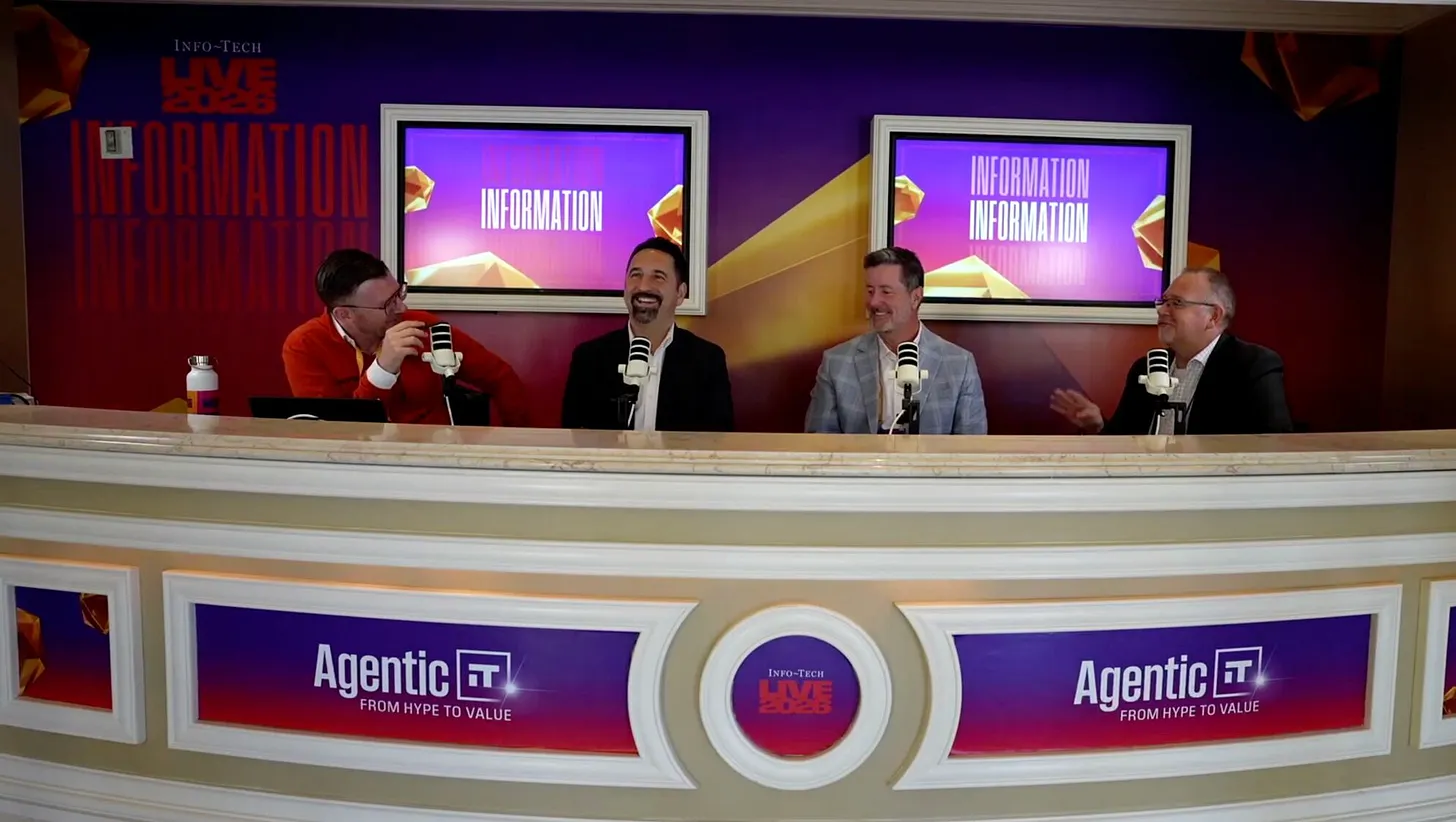
1. 2026 IGNITE Powered by Info-Tech LIVE - Austin, TX - Sept. 17th-18th
If you’re an IT leader in Austin, Houston, or nearby, Info-Tech’s got complimentary tickets with your name on them (just DM me I’ll be there). IGNITE is getting past the AI hype and into the real questions CIOs are wrestling with: how to get your people actually using AI, what the shift from “employee in the loop” to “employee on the loop” looks like, and how to budget when the costs keep moving up.
→ Ready to join the conversation in person? Email joe@techtables.com
2. 2026 EDUCAUSE - Denver, CO - Sept. 30th - Oct. 1st
Returning for a third year in partnership with Carahsoft, and we could not be more excited. TechTables heads to Denver to celebrate the leaders, the stories, and the work shaping the future of higher education!
→ Ready to join the conversation in person? Email joe@techtables.com
3. 2026 TechTables Austin Live Podcast Tour - November 4th
We’re coming back to Texas for a live podcast stop in Austin, TX and we could not be more excited. TechTables heads to Austin to celebrate the leaders, the stories, and the work shaping the future of public sector!
→ Ready to join the conversation in person? Email joe@techtables.com

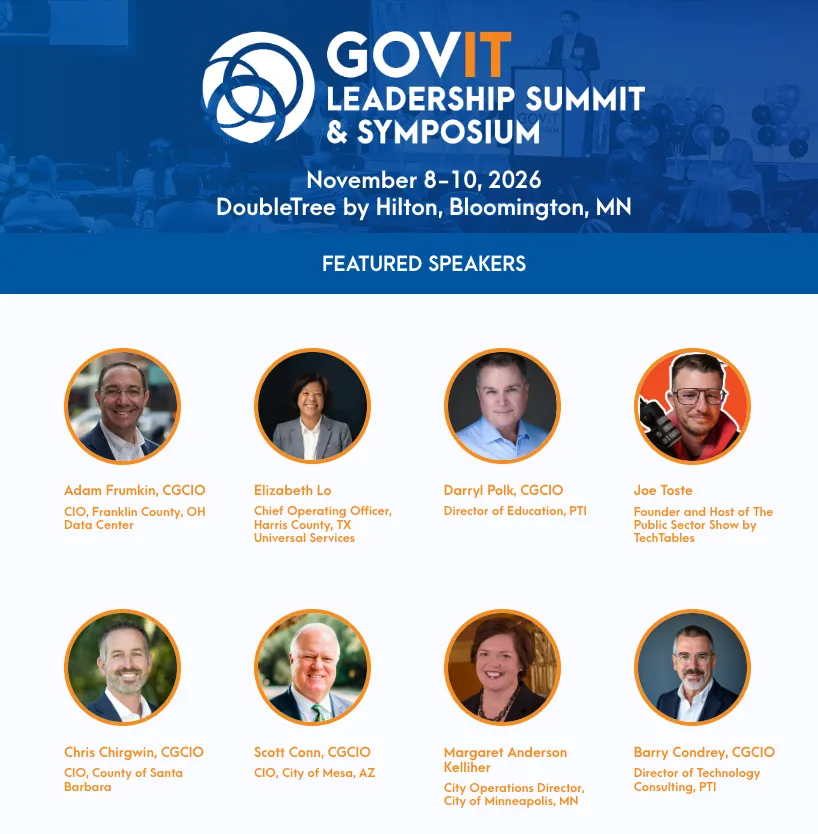
4. 2026 GOVIT Leadership Summit - Bloomington, MN - November 8th - 10th, 2026
We’re heading to the GOVIT Leadership Summit & Symposium in Bloomington, MN and we could not be more excited to celebrate the leaders, the stories, and the work shaping the future of public sector!
→ See the program & mainstage speakers: click here.
→ Attending? Let's record while you're there. Email: joe@techtables.com
Whenever you’re ready, there are 3 ways you can connect with TechTables:
1. 📬 The TechTables Newsletter
Thanks for reading TechTables! Get early access to new episodes, insights, upcoming events, and more — straight to your inbox.
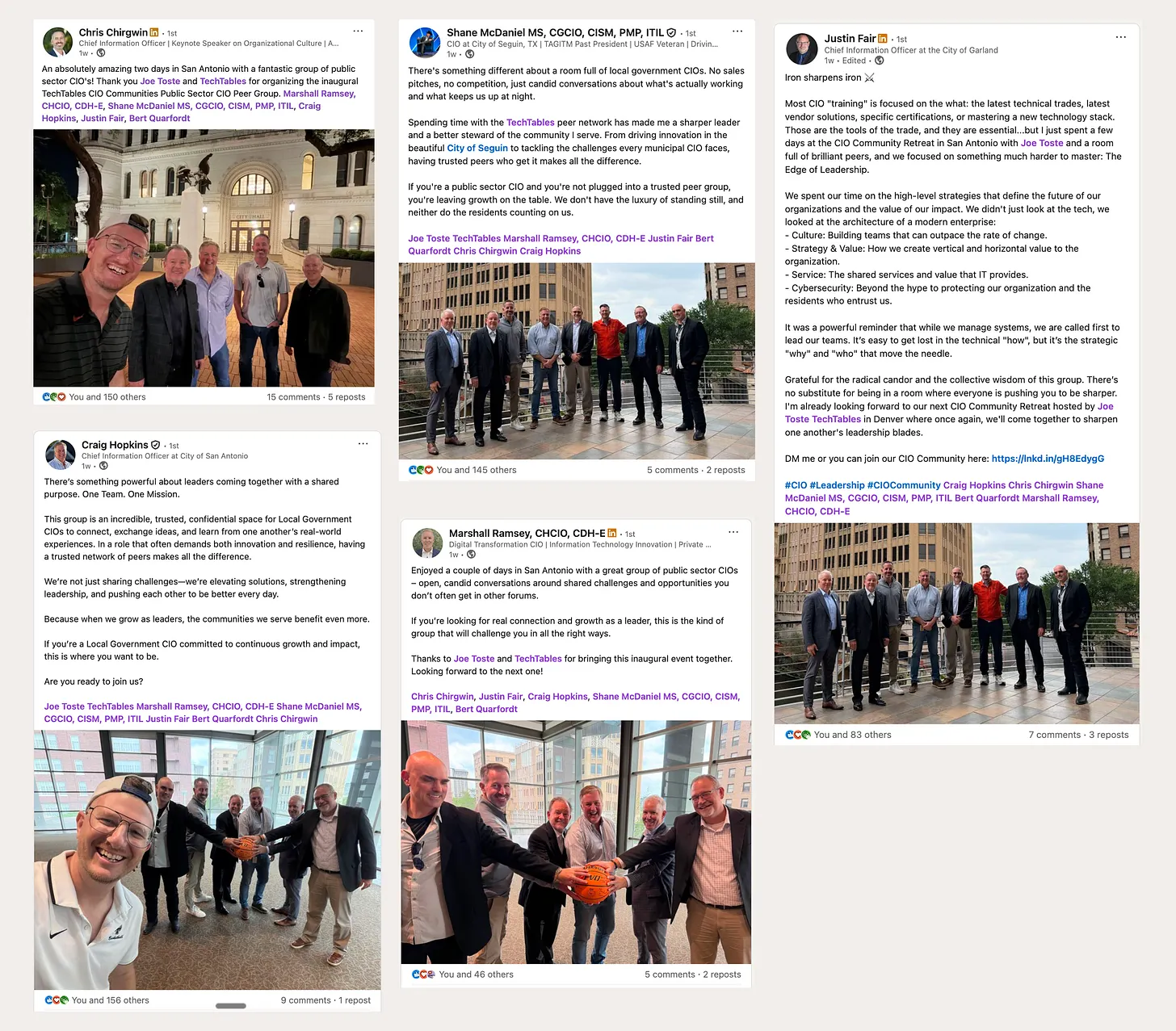
2. 🤝 You shouldn't make the hardest calls alone.
A peer advisory board of local government CIOs. Vendor-free, application only, twice a year in person — with 4x private forums in between.
See if you're a fit → https://techtables.com/communities-local-government
3. 🤝 The Better Together Series
The narrative-driven series bringing together industry partners and public sector CXOs. Discover the compelling stories that unfold when we stop working in silos and start building together.
»»» Email joe@techtables.com to learn more.
Joe Toste: Welcome to the public sector show by Tech Table. Super excited to have Rob Reynolds on the show today. Rob, super excited to have you. for those who don't know you, give us a quick intro.
Rob Reynolds: Absolutely. Thank you for having me, Joe. Rob Reynolds, been in IT for about thirty years, came from the corporate side, and then found the public service side a long time ago. And since that time I've worked with state government, I've worked with town government, city government and now county government. I was always the type of person that fell into technology. I didn't start out that way. I w worked in corporate in a more of a sales wholesale environment, but I was always that computer guy, the guy that everyone came to for computers. And I think that was you know, from my introduction to the Commodore Vic twenty when I was twelve years old. So f from there it just was a passion of mine and And it morphed into the public sector side and you know, then public sector's been my passion now for I think twenty three years. I'm losing count, so I'm losing count, so
Joe Toste: so okay, so that was a great intro, although you did skip over a lot of great, fantastic stuff. So we're gonna come back to the public sector in a second, as far as the technology role side of the house. But Navy veteran, multi-generation, Navy family, tell us a little bit more about the service.
Rob Reynolds: Yeah, for sure. So my family is Huge military family, especially on the Navy side. I think we go back two or three generations. going back recently as my f my my was my dad who's no longer with us, he was one of the first Navy SEALs that were was that back at that time called UDT. And what their job was was at that time in the night in the sixties, they used to pick up the space capsules when they used to land. They were the first ones out there to get the astronauts off. And they got some really, really cool pictures of. I'll share with you one day. Gemini and all that and coming down. So I followed his footsteps. I was very ambitious when I was young and wanted to get into the military as soon as I can. And I did. I went in as a listed at that time. wanted to get that service in front of me and had an enjoyable time in the in the military, learned a lot, worked in a lot of different roles, including intelligence and special operations, and learned a lot about technology and a lot about teamwork and leading. leadership and that to me was extremely extremely valuable definitely would recommend it did some reserve time as well and and so yeah that was a really memorable part of my of my growing informing into you know who I am today so I was glad to carry that legacy for my family for sure
Joe Toste: That's that's fantastic. We talk about leadership a lot on the podcast, because I I always say the same quote, but I love it. When Lear gets better, everyone gets better from Craig Rochelle and I coaching high school basketball. The amount of times that I've seen the same team go from being basically mediocre to being exponentially better is kind of it blows my mind. It's kind of incredible. And it comes, I think a lot of it comes down to leadership and then out of leadership, right? Communication, all that kind of stuff. And so thank you one, thank you for serving. Two, I love and I'm sure you've got so many of those great lessons that you've then pulled into on the technology side as as a leader. So let's get a an overview for Orange County, North Carolina. Now, this isn't like if you know Bob Leek, he's like there's 12 Clark counties. in the country. I know of three Orange Counties. I don't know. There there might be more. you know, living in Southern California, there's Orange County down here. You got Orange County in Florida, where I was just at traveling through. But we're in Orange County, North Carolina. Rob, first before and you gave me some great notes when we met, just kind of give us a thirty thousand foot overview where is Orange County today in its journey in North Carolina.
Rob Reynolds: So in Orange County, North Carolina, and there's approximately five Orange Counties in in the country, right? The other one is New York, and there's one that escapes me right now, but if I think about it, I'll let you know. we're in the s pretty much central part of North Carolina, north central, right? We're near Durham, very close to Wake County. population's around a hundred and fifty thousand. our county seat is in Hillsborough, North Carolina. And that's where my office is. And my staff currently is about eighteen. We're we're trying to grow that now as as we make inroads to do that. and so that's Orange County, a very rapidly growing county. we have some areas that are rural. If if you know where UNC Chapel Hill, a lot of people know that. And that or university is in Orange County. North Carolina. So that's what a lot of people know us by, right? So we're people say, Well where is Orange County? If we always give them that university to reference, they could easily find us on the map, right? Basketball and all that. Great university, great organization for sure.
Joe Toste: That's great. Fun fact, I've actually interviewed the CIO for UNC Chapel Hill last year when I came to Wake County. Thank you, Jonathan Feldman, for hosting us. Always, always great. Also, shout out to my other friend Mark Wickenberg and all of the other fantastic folks out in in North Carolina. Okay, so we got a lay of land. That's fantastic. So now when we met, you talked about a number of things. Let's just kind of unpack these one at a time. Let's go with legacy technical debt. I'm I'm thinking about data. and where where is Orange County in its in its journey there as it's leading to AI?
Rob Reynolds: That that's a very that's a hot topic, right? So it's one that I speak a lot about in in a few conferences. And so we're talking about data. I mean, everyone has this accumulation of of data that, you know, it no matter what organization you're in, whether it's public sector or private sector, if it's at the federal level, state level, nobody really wants to get rid of anything, right? They wanna keep data forever and, you know, put it somewhere just in case that day we need it. And that's not a you know Not a bad strategy, but not a not a good strategy either, right? Because it s that data becomes stale after a while. So we need to have a action plan and understand what are we doing with this data? Where are we going to put it? Who's going to access it? so what we've been trying to do here in Orange County is really getting our hands around what data do we actually have, right? And what are we going to do with that data? What is our most recent data? How are we going to categorize that data? And what are we gonna do with our older data that, you know, maybe we don't want to get rid of according to records retention policies and things like that, but we do wanna we do wanna have it accessible should it be required, right? And so that would be more of a archiving type of thing. But I think, you know, the most more important Part of this is you I think you have to have a strategy, right? You have to have a strategy and understand what problem are we trying to solve for, right? Do we are we trying to keep the data but also reduce cost and storage? Or are we trying to make data more accessible so that you have that data should you need it? Understanding the problem that we're trying to solve and then having the strategy to really look at that goal and then action on you know, I I bring it into action and and get that to a point where the data's available if needed, but it's not in main production. So that's where we are now with that on our journey through our last piece of Microsoft 365. We're bringing a lot of our data into SharePoint online right now. that project's getting ready to kick off in a few weeks. But it you know, bes besides the data part, we also, you know, there's also the hardware part piece of it, right? That that's legacy. And I think that's that's also an important part that, you know, one shouldn't forget about when we're talking about legacy. You know, you've got data, you've you've got hardware, those types of things also lead to security risks, right? And and other items like that. So the county right now we're on that journey. we're gonna really wrap our hands around getting data into a better place, and and then we'll go from there and have that strategy going forward.
Joe Toste: So that was fantastic. So okay, so what problem are we trying to solve? I really like that. You rolled it up to, you know, what is our strategy? And I think this is a lot of times when I interview folks, it it sounds so simple. And I know running my own business, everything that sounds simple is very difficult. Like I hear it all the time, Joe. Gosh, I could just hop on the mic. It would just be so easy. I could just do your job. And I'm like, if you only knew. so the strategy piece, I really like that. when you unpack the strategy, right? It means you really have to take time to process what the strategy is. What is the goal? What I like, what problem are we trying to solve? And underneath that, it it could be cost savings, it could be migration. It could be, I like what you you mentioned, you know, hardware. It could be the aging hardware, the security piece. and then I think also wrapped within the data is priorities from the county, maybe the county CEO. I don't know, Orange County, maybe they have a CEO, maybe they don't, but what are their priority? They might have different priorities in projects. And so I think coming up with a strategy that's aligned that aligns the IT team with the executive team, super smart, and very beneficial. yeah.
Rob Reynolds: Now don't forget about the AI part of it, right? Because AI is going to feed and scrape off your data. So if your data is vastly out of date or maybe not relevant, right, it's y that AI is going to be pulling from data and possibly giving wrong answers or incorrect data. So that's another piece of it that would be a catalyst for change and making sure that you're managing that data correctly. But yeah, you know exactly right. you know, this all has to be done in a collaboration with departments, with county leadership. Everyone needs to have a a voice in how this data is going to be handled and what that strategy looks like for sure.
Joe Toste: Yeah. you are you were jumping ahead, Rob. I will get to AI. Everyone know we will get to we will get to AI.
Rob Reynolds: Yeah.
Joe Toste: I was, you know, I was at InfoTech Live. I recorded 10 podcasts there at the Bellagio, and it was from hype to value. So I've got all the AI in my head right now. we will not let it go by. so Something that you had mentioned was that you had like when we had met, you had talked about standing up an AI innovation lab. and you talked about you know consolidating the SharePoint. I'm sure there's gonna be benefits there. talk about the crawl, walk, run story as far as your AI journey right now with the county.
Rob Reynolds: Right. So I've been with the county be going on three years in October and when I came into the county we weren't really, at least officially using AI, right? so that was not a part of our roadmap. But I knew that, you know, we would have users using it for sure. it's a new tool, you know, there's a lot of hype around it. People want to experiment, they're gonna go out and they're gonna see what they can do. And and that is fine. I you know, I I think that nurturing that curiosity, extremely important, right? We don't wanna be the department of no for sure. We want to be the department of yes and yes and we have a strategy for that and a plan, right? So what I did immediately is worked with my management team and we came up with a with a plan of how are we going to introduce AI, generative AI, we've got be clear about that, to our our users, right? And so the one because one things we were concerned about was security, you know, maybe, you know, dis dissemination of personal information, all those types of risks, right? Because if you if you have all these different platforms out there, it's gonna be like the Wild West. And we didn't we didn't want to entertain that type of situation. So what we did is we worked with OpenAI and we purchased a Teams subscription And what we did with that is we branded that as as our AI innovation lab. And we offered that to departments that would want to participate. They could sign up for this lab for their employees, for their staff. bring their use cases, experiment in the AI innovation lab, which was a closed instance, right? So any information that would be put in there, like let's say somebody made a mistake and put some PII in there and things like that, it wouldn't be disseminated to to the model, right? along with this process, they had to take training, get department approval, but also each department paid for their own monthly license because we wanted to have that buy-in, right? And make sure that people were really serious about doing this. that was a tremendous program. before we did that, we also rolled out our AI guidelines for the county that clearly spelled out you know. being using AI responsibly. What is generative AI? How should it be used? What is a prompt? Very basic stuff. That led into the training and then eventually you get to the AI innovation lab. so fast forward, what happened, right? We had tremendous traction on that. We had about total about fifty employees that were doing really interesting work and running different use cases in the platform. now knowing talking, you know, working with my team, knowing that was not going to be the end all, right? Because then you're gonna have employees that are gonna say, okay, Rob, that's great. We've been using this for a year and a half. What's next? Where do we go from there and how can we use AI to add value, to improve you know, government services, the delivery of government services and all this type of thing. So we immediately Began working with a few of our partners to understand what are we going to do next and how are we going to do it. So, where we went from there is Microsoft Co-Pilot Chat. And we worked with our partners at Microsoft and we transitioned the AI innovation lab to Microsoft Copilot Chat. with training and that is in production today for every Orange County user. people are using it. we're we're on the verge right now of setting up some learning circles so that we could further Really extract value out of using AI. AI is not the going to be the end all to everything, right? It's more about the people, the processes of technology. But we need to give the people the tools, right? And that that is how I like to frame it. It's not something that's going to replace your job, but it's going to be something that you're going to be able to use as a tool to make you work faster, better, smarter, be more productive, and help you in your day-to-day tasks, right? And so it's been very successful. successful so far and looking really looking forward to see what what comes out of these learning circles and and what these use cases look like. So it's been it's been really good, Joe.
Joe Toste: That's great. One of the related episodes I recently had was when I went to LA County, the CIO there, Peter Liu, and he talked about this whole thesis around pushing aid AI down the organization as far as possible while setting up the guardrails. They I love what you said to the, you know, yes and you know, we don't wanna be the we don't wanna be the shop of no. And so I think that was Really, really great. and then you mentioned the people, process, and technology. I think you know there's a reason it starts with people. and then the part you talked about too is like the training piece. I think that piece is probably underrated. it's I think, you know, everyone wants to get it into their hands, but then once you get in there, are you just creating a bunch of like Bloat, do you actually have a strategy, which we talked about in the beginning, which I I love that you guys basically have a sandbox where you can go and experiment, try this out. you know, you can make as many mistakes as possible or learnings. I I think kind of giving folks that option. It reminds me a lot of like when I was younger and you're kind of experimenting on like. At least like when I was a kid, you g we got the new computer in elementary school and I'm like reading the manual on on helping them like set up the computer. and so, you know, it's like putting the chords in isn't gonna blow up the computer. And it's kind of the same thing right now. you can experiment around, figure out different use cases, which leads me to what were some of your favorite use cases? What did you learn from from from the innovation lab that you hosted there?
Rob Reynolds: So well one of the use cases that comes to mind is a use case that was being done and looked at actually that just came came out of it it grew organically from a need, right? And those are usually the best use cases, right? because it's like spur to moment thing. Someone decides, Let's try to use AI with this and let's get the let's go solve a problem, right? And so last year On our tax department, there was a need for a tax reevaluation calculator, right? And so that request came into IT and IT was ready. We're, you know, we're gonna see what we can do, what do we need to develop and all that. A few meetings later, one of Now IT people, that used to be in tax, came up with a great idea. Would this be a good use case for AI to go ahead and develop it this way? And so we we tried it. We did it, and we were able to put that that calculator into production within a day, and with a hundred percent accuracy. Now, could could we have done that, could the team have done that without generative AI? Yes. Could it have been a day? No. Right? It's just not possible, right? So that was one of the really interesting use cases that was really, really helpful and beneficial to the county. other use cases that I've seen in the past is legal with contracts and you know looking at contracts summarizing, you know, basic stuff like that. But the one the one that stands out to me most was the the tax calculator. That was tremendous. The teamwork, the collaboration, and that's exactly what what we wanted to accomplish. That was an outcome of our strategy that we wanted to accomplish from the sandbox, right? We wanted people to roll up their sleeves, jump in and see what they could do and critically think on how can this help us, right? And so I don't know without the sandbox and being exposed to the technology, they may have came up with that same idea, right? So it was it was it was definitely interesting. Yeah.
Joe Toste: Yeah, so this is I I I I really geek out on this kind of stuff because there's a everything that like counties are doing, I'm doing just on a smaller level, right? Like for finance, it's like QuickBooks for me, right? But it's the same process. And like for AI too, we have love me some Claude. We also have a team Chat GPT instance with me and my wife. And it's so fascinating to see her, because you can see what with Chat GBT team, you like you can go in and see the questions the person is asking. It is fascinating. I'm like, I'm looking at what she's asking, and I'm like, this is so good. Cause then you can extract all the questions to make the training even better, to surface what are the use cases. and it's my which is funny because my wife's gonna edit this episode. She's gonna listen back and laugh. But it's I think such a great use case across I mean, I'm just imagining you said you've got 18 people on your team. If you start to get a number of folks, plus you've got maybe other business units throughout the county, you can start to really surface a number of use cases, even if it was just in a sandbox. Like, okay, here's the top 100 use cases that we just that we have. Maybe we whack the bottom. fifty, but now at least we've got fifty use cases that are probably pretty good. and so I think it's probably a you know a pretty fun time going back to the strategy, the outcome, and just like saving time, right? Like there's always there's always areas where people don't like parts of their job. I'll give you an example. I don't like scanning receipts for my job, for my business. I have to scan them. It's a tedious task, but now with AI, let me tell you. And OCR got way better, but now there's also routing and workflows and all kinds of stuff. It's a great lift off of what I need to be doing. I would rather hang out with you on camera, Rob, than I would be scanning receipts. So seriously. and so there's like, you know, I'm sure there's just a a a bunch of those, but I love the tax calculator that you that you brought up. so going back earlier, you talked about the accumulat accumulation of data. That's a big one. a lot of times, yeah, either we personally want to keep it forever, or maybe there's some guidelines we need to keep around forever. but it brings up what we had talked about offline with the cyber hygiene. And so we've got the data, we've got the AI piece and now we need to talk about and unpack the security concerns there. There are a lot. and so yeah, I think I'd just love to hear first like the general posture of the county's cyber security and then the AI piece in relation to cyber.
Rob Reynolds: Right. So we've made tremendous inroads in the last few years in our cybersecurity posture. We do a lot of internal testing, we've revamped some of our policies, and we also provided guardrails for you know responsible AI use, right? around around data. so moving forward, I think what's gonna happen next is looking back at this data we've been speaking about Data needs to be managed, whether you know, d regardless of its age, it needs to be managed, it needs to be categorized, and we need to know what we're going to do with it and what that strategy looks like. any cyber attack on any organization, they're gonna be looking at either disruption. or data to steal data and to get data, right? and a lot of what, you know, governments do, it's, you know, for the most part, all most all of it available via, you know, records requests, right? We don't have IP to worry about or any trade secrets or things like that. But we do have data that needs to be protected. It may not, you know, be we don't want data to fall in the wrong hands. So having those proper security controls all starts with what do we have, right? And that and then that that question, ironically, is very simple. But it's a very difficult for a lot of organizations to answer, right? Whether it's you know hardware or data, what do you have in your environment and can you classify it? And then once you do, how do you protect it? What needs to be protected? Who needs to access it? Those are the questions that we have to ask. and through the years with organizations, people leave, people go, but the data somehow stays behind. And it that mountain gets bigger and bigger and bigger and older and older. and older, and then nobody really has a good understanding of do we even need it? You know, should we how what do we do with it and things like that. so that's what our process is we'll be going through is really understanding the data, categorizing it, having that strategy to make sure that we're protecting that data for our residents and, you know, moving the county forward in a data management lifecycle methodology. Because that's that is so, so important. Legacy hardware or or data needs to be managed. With legacy hardware, that really needs to go away if you can, but sometimes you can't, just like data, right? that may need to be saved, it may need to be cataloged. Truth is, you know, it probably has some value and it probably be needs to be retained, but it it needs to be retained for the county, not for the adversary, right? And we want to discover it first by catalog cataloging it, identifying it, classifying it. We don't want our adversaries to to discover our data. So, you know, having those that strategy in place is extremely important.
Joe Toste: Talk about that was great. Talk about, you know, we talked about, you know, MFA, password, which brings up, you know, identity for example. on the on the cyber side, I think it's I think right now it's very like there's the technology piece of cyber where you've got, I mean, just AI attacking AI, which is crazy. And you know, mythos and everybody's there's that piece of it. Then there's just the human piece, which I feel like it are more and more stories. I just read an article in the Wall Street Journal. I think it's in Georgia. Sorry if it's the wrong state, but I'm pretty sure it's in Georgia. Where, it might have been in Maine. I can't even remember at this point. But basically what happened was, you know, they lost five hundred and fifty thousand dollars because a local government wired the wrong amount of money. Orange County protecting just across across the portfolio.
Rob Reynolds: Absolutely, absolutely. And and th this is another one of my passion topics, right? I was a two time CISO before I was CIO. and you'll ha y many, many times you'll hear y you know, people are the weakest link, humans are the weakest link. It's not entirely true, right? I I don't I don't look at it that way. It's not the way I would tend to frame it. I would tend to frame it that our people are our strongest resource, right? if they are properly trained in knowing what to look for. I always equate it back to like neighborhood watch type of thing. You know, see something, say something, right? and if you have a good security awareness program and you're educating your staff on what to look for. If you see something, you know, report it. That will outlast and outperform most every type of security tool that you could purchase today, right? Because that is really they're at the front door. Somebody knocks on your door at two o'clock in the morning, I don't think we open it and say who's there, right? And if you don't know that, then you would do that, right? And so you know you translate that to cyber. If you see something that doesn't look right, you know, hey, Rob's asking for gift cards. Is is does that does that sound unusual? Right? Things like this. Raise your hand, let IT know, that will probably stop, you know, my in my experience, you know, nine times out of ten, any type of attack. Now, of course, there's ones that are tricky that get through, right? And you need all your other security controls, but I think the really the base basic fundamentals is what we have to get back to, right? And that is providing user training. You know, any organization that I work with, either in government, federal government or or corporate, we hire someone, we give them a keyboard and we send them to do their job. But you know, have you know, what is their level of proficiency in terms of cyber hy hygiene? Do they even know what what threats what is a threat? W what does a threat look like, right? So what we did this will be second year running what we've been doing is sending a survey out to all of our users and we do a cybersecurity proficiency assessment. and we do that annually. We we try to time it with October's which is Cybersecurity Awareness Month. And that brings back metrics across several domains so we could see where where our users are strong and where our users need training. And then what we do is we target our quarterly training to the deficiencies. So we could bring that level of awareness up and educate more and have our users really understand what I what is it that I should be looking for. That has been really tr tremendous. You know, that in conjunction with our fish reporting in Outlook and all that, we have seen good engagement from our user base saying, hey IT, is this something that should be worried about? And and usually it is, right? So they'll report it and you know it that's extremely helpful. Now when you take that and you combine that just that that's just one piece of your program, right? But if you take that and you combine it with your other pieces of your program, your MFA, your single sign on you know, your f your firewalls, all of this, now you have that, you know, sure you heard the term before, your layered onion approach, right? Which is so, so important. Because you want to make it very difficult for the adversary that where it's, you know, this is not worth worth it, right? But now, you know, you introduce another another thing to the equation here is AI. AI is gonna get to the point where the attacks are just so fast, so sophisticated, that maybe current tool sets, right, that may be in place, maybe they can't keep up with that. And what is that going to look like? So I think it'll it'll eventually get to a point and it's already there in most cases where we're gonna have to use AI to battle AI. So it's gonna be, you know, it's the battle of the machines, if you will. But I will say that no matter how advanced that gets on that side, it's all gonna go back to the people, right? The people and when we talk about people, processes, technology, people are your most important asset, your most important resource. But you also need training and that's that's our responsibility to make sure they have that training to know what to look for. So that that is my our stance on that's been my mantra for years with with cybersecurity.
Joe Toste: Yeah, that's fantastic. A couple other episodes to call back. Had a great episode with actually with InfoTech randomly and the state of Nevada on their cyber attack last year. Recapping that and their recovery. Link to that in the show notes. And from a governor's perspective, interviewed governor at the time, Doug Ducey, former governor Doug Ducey. And on how Arizona became a world-class cybersecurity. state and it was great to hear just the perspective from someone who was in the chair getting buy-in across at that level. There's just so many levels from funding and kind of everything in in between and that kind of whole of state approach I thought was really great to to recap. And you know, I think folks I don't know how to solve this problem, but Other than like mainstream awareness. But a lot of times in cybersecurity and really anything, this is so normal for me and you. Rob, we we talk, you talk about this, I'm sure, all the time with your team. I'm interviewing folks, but then I go to a coffee shop and there are QR codes. And I'm like telling people do not scan that QR code. And they're like, What are you talking about? Why not? And I'm like, you cannot verify. The intent, purpose, identity of whoever they say they are on that flyer is somebody who is actually helpful for you. I'm I'm guilty of this. there's been places where it's like, you know, I'm on the road. I have not done it, but I have thought about it. I'm like, I'll scan that QR code real. I shouldn't do that. I just talked about this. I educate myself on the podcast. People ask me, they're like, Joe. How do you get to know so many things? I'm like, well, I ask people questions. And a lot of times I actually don't know the I don't I I've never heard this story before. But I was in Miami. I'm in a parking garage. And someone I'd interviewed, I was just telling somebody, a scan the QR code on the parking. And they're like, Joe, you gotta be careful because in some garages, they'll place something over it.
Rob Reynolds: Great.
Joe Toste: And I was like, What? No way. That's crazy. So I'm learning all the time. and so if, you know. I host the podcast and I've got almost three hundred episodes recorded. I don't know how a normal person who's not thinking about MFA, not thinking about this is QR code evil. and so I just think you have to kind of just keep promoting it. But I do think there's like a general awareness training, and there's like the IT team, but in public sector, you have folks who are in parks and rec, the library. I mean, they're not in the technical piece of it on a day-to-day basis. So I think the training piece is underrated. That's my POB
Rob Reynolds: Yeah. No, completely. And that and that's why you have to keep it you have to keep it interesting. You have to keep it short. You know, no one hour, you know, fifty pound videos that nobody's gonna watch in its entirety. Keep it short, keep a good cadence, but you know, don't limit it also just to videos. Like work with your partners and like for us in and Orange County and you know, a lot of our other, you know, government colleagues, CISA DHS. will come out and do a lunch and learn for folks and you know, really keep it interesting, engaging. I think that is that's how you make this type of content interesting to everyone. Leave the tech jargon out of it. Just talk about, you know, how to protect yourself and at home and at your workplace. And I think that people find that very useful and that will educate folks and you know, hopefully keep us out of you know, keep us out of trouble, right, for the most part. Or hope to keep us out of trouble. No guarantees, but every every little bit counts.
Joe Toste: Yeah. All right, so we still have two areas we gotta cover before we end this podcast, Rob. First area is the ten million dollar ARPA broadband initiative. we talked about this offline. tell tell us tell us more about that.
Rob Reynolds: So this was a project that was started before I was with the county. and so back in twenty two I believe, the county entered into a contract with Lumos and was a county a p private public partnership. to expand broadband throughout Orange County. And so that project now is almost complete. right we're extremely proud of of the outcome. the I think at the end of this contract we will have served about six thousand homes that were previously were unserved. so it took a few years to get here. We're working on the last leg of it now, which should be complete within the next ninety days or so, barring any, you know, unseen issues that we may not know about. but we would have utilized the entire ten million dollars in ARPA funds. we've also been working with our federal and state partners and North Carolina Department of Information Technology. we also have beat awards that are helping to fill some more gaps in in the county and also Stopgap, which is a fair state program for funding. And Lumos has been awarded that contract too from the state. So we're trying to get you know, as many addresses within the county fiber as possible. And it's it's a journey. It's a journey, but it is a it is a very important journey, one of which that I'm I'm proud of. It's this has been a a passion project project for me. I've gotten so many calls, Joe, over the last few years, people thanking me and you know, now my kids could, you know do classes online. We had nothing. We had no service. And that's just, you know, it's it's a fulfilling thing. something that you don't get on the corporate side, right? but we're able to make these changes and and and provide these great outcomes in in public service, right? so that's what that project is right now. So we're again we're excited about that and thank you for bringing it up.
Joe Toste: Yeah, I traveling I just when I was in Florida, I traveled, I went as north as Gainesville and South as Miami. So you kind of hit everything in between. And when you do when you can when there is no internet,
Rob Reynolds: Right.
Joe Toste: it is tough. and then working with high schoolers, coaching high school basketball, you often typically you'll just get a range of of kids and I know that They they have iPads, but they still need service. And so it's always interesting to see like that, you know, kind of on the ground, like you mentioned, you know, getting classes online, and then just just having access is is is super important, especially when you have role parts of of your county. it's just not the same. when there's a you know, there's just farms is just so different than, you know, if you are packed in like me in Southern California. so yeah I think being able to, you know, and whether you know, sometimes that's that's a satellite, sometimes it can be, you know, whatever, but trying to solve those problems and close that digital divide so that folks
Rob Reynolds: Exactly.
Joe Toste: do have that access. is is super important and that requires funding. It requires a lot of different groups to get together. but yeah, I think the, you know, that outcome of, you know, especially like getting the next generation. It used to be kind of like digital literacy, but now it's kind of also like AI literacy. there was a another Wall Street Journal article about I thought it was really fascinating. It was kind of the first round of college kids who graduated college who had first had, you know, kind of ChatGPT and Claude kind of come on the scene a number of years a couple of years ago. And now they're entering the workplace for the first time and how they're interacting with it and what employers are thinking about and and their and their training. And so yeah it's a new, it's kind of just a br it's kind of a brave new world right now. it's just how how fast things are changing. So with that So Rob, you mentioned in the beginning leadership. It is my favorite. I would love to hear from you. What what are Yeah, what would you leave leaders with?
Rob Reynolds: I think that one of the most important things is, you know, be curious. Be curious. Ask the right questions, right? And and even if they're not the right questions, ask questions period. lead by example, for sure. and and put people first, right? I think that is so so important. I you know, I look back at, you know, my thirty years and you know, military, corporate and all of that, and I could I could remember the folks in that really helped me to get pulled up a rung on the ladder, right? And that's the person that I always wanted to be for for my staff, for people that I work with. Maybe I can't do that for you physically, or maybe I don't have the ability to, you know, get you promoted, but maybe I could give you something that you can use that could help you in that in that in your goals and what you're trying to achieve. and those people, you know, even thirty years later I still remember them. I still remember their name. And you know, that to me is is powerful. It it's completely powerful. I I I leading by example is probably one of the best things we can do and putting people first. You know, I mean whether those people are, you know, are the the people that we serve in our community, our staff, treat people the way you would like to be treated, right? And it's so, so important. but, you know, that's been the basis of my of my leadership and, you know, I think what it's gotten me here, I I came, you know, th aga again you mentioned before, you know, through the CISO roles and then and through the CIO role. so I've I've got both sides of of perspective, right? But the one perspective that is my shared vision is, you know, people and you know, working in a collaborative fashion, working together. We're stronger together than we are alone. You know, this is not we don't live on a island, we can't govern on an island, right? We have to work together. put your people first and, you know, lead by example. Those that to me is a recipe for success. And I think, you know, I don't know that much many people would argue that point, right? So for sure. That's been very successful for me, Joe.
Joe Toste: I love that. Okay, to recap, be curious, ask, ask questions. there's a great quote I was reading by Andy Stanley. But basically it's like the leaders who are unwilling to listen are soon gonna be surrounded by people. I'm but kind of butchering this right now, but by basically by people who are never gonna tell them anything. It's just gonna be in their own world, right? So be curious, listen, ask questions. Yeah, lead lead by example. again it's kind of one of those where it's kind of like being a parent. Like more is caught than taught. and so yeah, leading by example. And I think another kind of piece that's underrated about that is a lot of people will never say anything, but they're always watching you. You might not hear it, but a lot of people are always watching you, especially when you're a leader. Probably the thing I've learned the most when just hosting the podcast. especially when I'm at an event. Everybody's watching me. That's that's kind of a weird thing. But you you sh even as a leader, like I think just when if you're a CIO and you're going to an event, like people are watching you, right? And so you kinda have to set the tones at the example and yeah, putting people first, you know, caring for your people, understanding what they're going through. you know. if you've got somebody who's at the help desk, right, they're not just working the help desk, they probably also have another life. So, you know, probably getting to know them or anyone on your leadership team or whatever. So no, I think those are great. and I love that you have the different domains of service. is is awesome. I always love that kind of stuff. So, well, Rob, thank you for coming on the show. We could we could have several other conversations. but hopefully I will see you soon somewhere. we will meet in person at some point. But I really appreciate you coming on the show and we'll have to have you back.
Rob Reynolds: Thank you, Joe. I really appreciate it.