
 Apple Podcasts
 Spotify
 YouTube
 RSS Feed
 #238: 40 CIOs. 40 Different Missions. How LA County's CIO Holds IT Together — with Info-Tech Research Group
Los Angeles County is the largest county in the U.S. serving over 10 million people across 40+ different departments.
They just passed a $46 billion budget. And their CIO, Peter Loo, has to coordinate with 40 other CIOs to get anything done.
That’s not a technology problem. That’s one of the hardest leadership and governance challenges in all of public sector — and Peter has been doing it for over 30 years because, as he put it, “You can see the impact you make directly in the services being delivered.” That stayed with me. I coach high school basketball for the same reason.
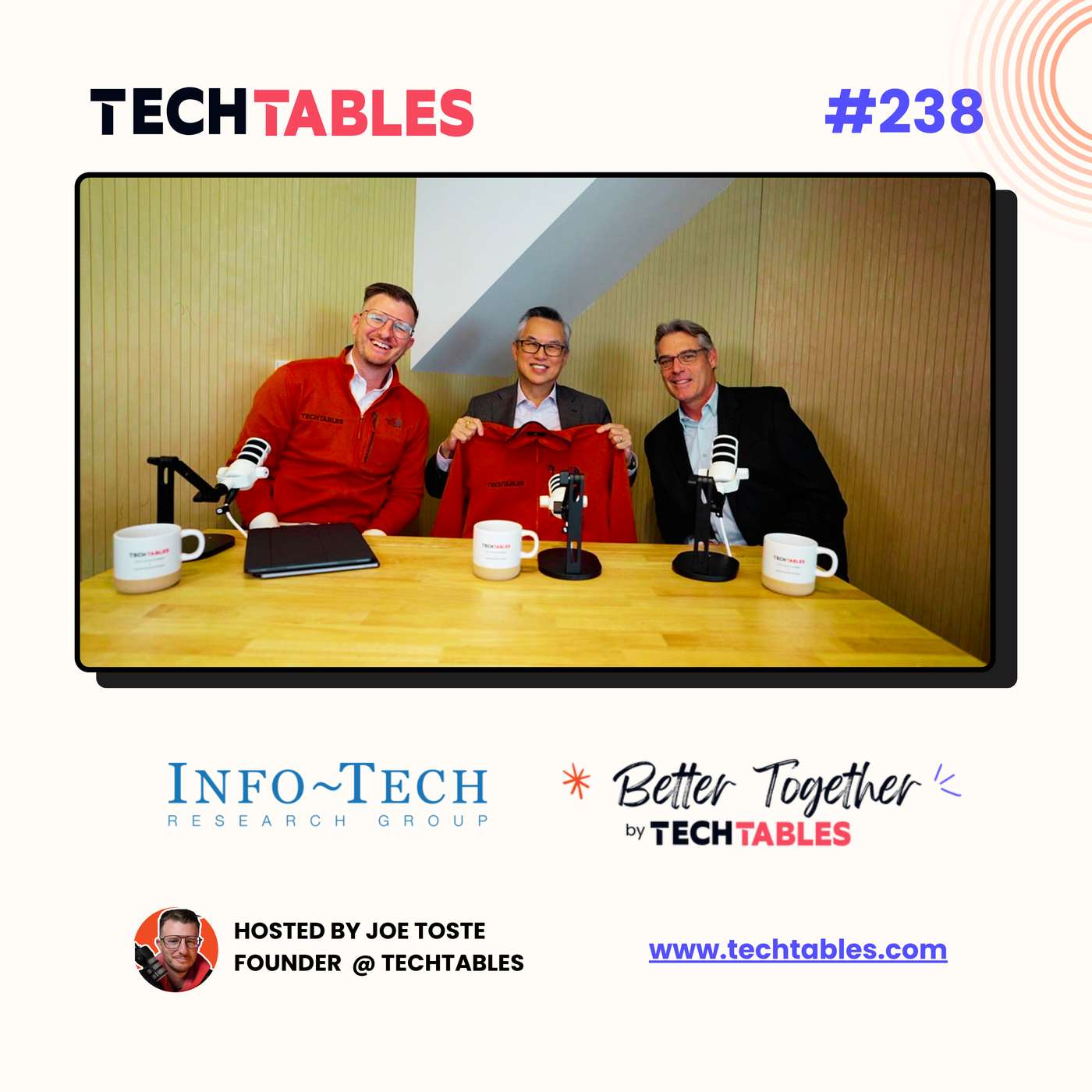
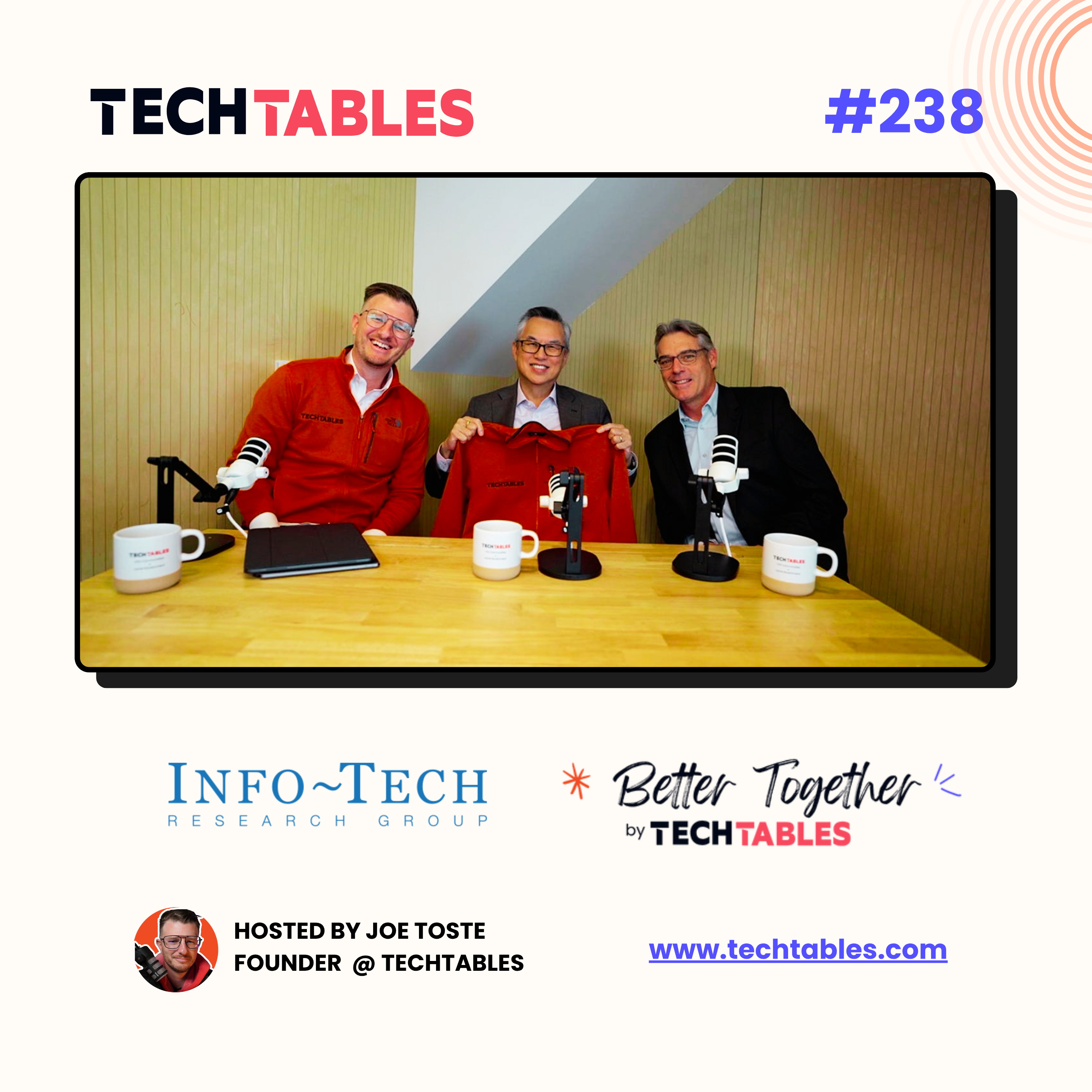
I sat down with Peter and Hannes Scheidegger, Chief Global Services Officer at Info-Tech Research Group, on-site at the 36th floor of The Gas Company Tower in downtown Los Angeles.
Peter and Hannes have been working together since around 2010 — across an EHR implementation at five hospitals, a data center consolidation from 42 facilities down to one T5, a countywide voting system, and more. This is one of the longest, most tested partnerships I’ve seen in public sector. And the lessons transfer far beyond LA.
Guests
Peter Loo, Chief Information Officer, Los Angeles County, CA
Hannes Scheidegger, Chief Global Services Officer, Info-Tech Research Group
Timestamps
(0:00) Peter Loo introduces LA County — 40 departments, 40 CIOs, and a $46 billion budget
(2:00) The EHR origin story — five hospitals, one system, five different implementations
(4:00) What made it succeed — executive commitment, empowered steering committees, and a “not if but how” mindset
(8:00) AI governance lessons — why principles beat prescriptive guidelines, and how LA County worked with GovAI Coalition
(12:00) How Info-Tech engages — blueprints, guided implementations, workshops, and full consulting
(16:00) The data center consolidation — 42 data centers, some were closets, some next to refrigerators
(18:00) How to communicate with executives — the language of value, risk, and constituent services
(22:00) The most contentious meeting of Hannes’ career — CIOs in one room who thought they’d agreed. They hadn’t.
(28:30) “We want you to do what you did for DHS” — the moment that defined the partnership
(33:00) Closing advice — commit to the mission, be patient and persistent, always do it as a “we”

🎥 Upcoming Live Podcast Tours
2026 TechTables Austin Live Podcast Tour - November 4th
We’re coming back to Texas for a live podcast stop in Austin, TX and we could not be more excited. TechTables heads to Austin to celebrate the leaders, the stories, and the work shaping the future of public sector!
→ Ready to join the conversation in person? Email joe@techtables.com
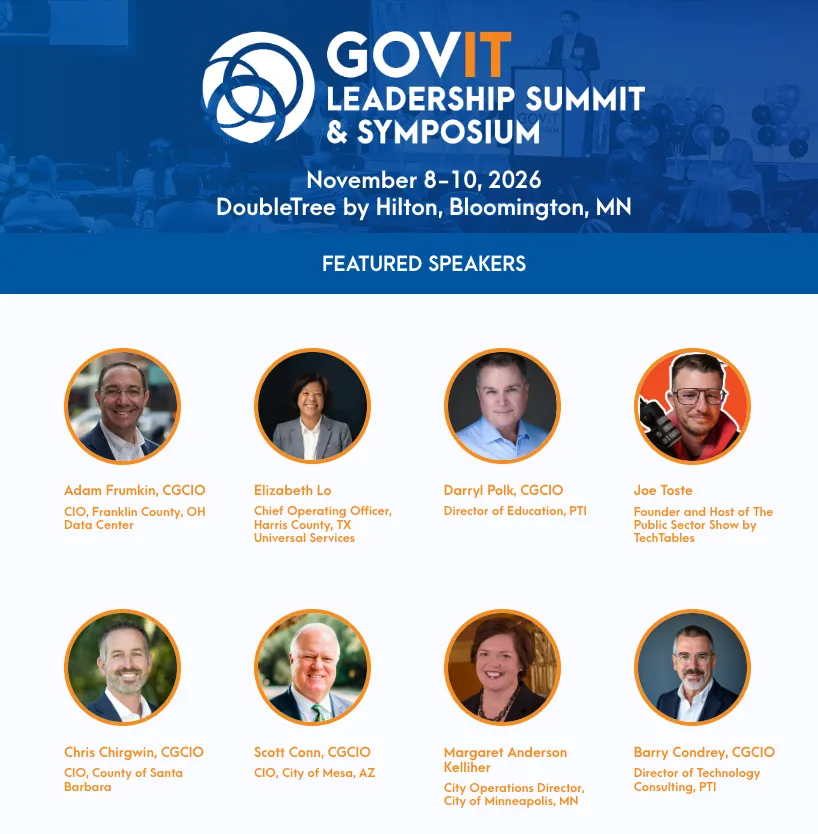
2026 GOVIT Leadership Summit - Bloomington, MN - November 8th - 10th, 2026
We’re heading to the GOVIT Leadership Summit & Symposium in Bloomington, MN and we could not be more excited to celebrate the leaders, the stories, and the work shaping the future of public sector!
→ See the program & mainstage speakers: click here.
→ Attending? Let's record while you're there. Email: joe@techtables.com
Whenever you’re ready, there are 3 ways you can connect with TechTables:
1. 📬 The TechTables Newsletter
Thanks for reading TechTables! Get early access to new episodes, insights, upcoming events, and more — straight to your inbox.
2. 🤝 You shouldn't make the hardest calls alone.
A peer advisory board of local government CIOs. Vendor-free, application only, twice a year in person — with 4x private forums in between.
See if you're a fit → https://techtables.com/communities-local-government
3. 🤝 The Better Together Series
The narrative-driven series bringing together industry partners and public sector CXOs. Discover the compelling stories that unfold when we stop working in silos and start building together.
»»» Email joe@techtables.com to learn more.
Joe Toste: [00:00:00] Welcome to The Public Sector Show by TechTables. Super excited to have you both here. Peter, for those who don't know you, give us a quick intro.
Peter Loo: Peter Loo, Chief Information Officer of Los Angeles County.
Joe Toste: Fantastic. Hannes?
Hannes Scheidegger: I'm Hannes Scheidegger. I'm the Chief Global Services Officer at Info-Tech.
Hannes Scheidegger: I joined Info-Tech five and a half years ago. Prior to that, I spent 15 years as a public sector consultant and did a lot of work with Los Angeles County.
Joe Toste: Which we're gonna cover today. Which is gonna be great. So Peter, for those who don't know you, don't know LA County, first give us the 30,000-foot overview.
Peter Loo: Everybody knows that LA County's big. But, what we are we are we just adopted a $46 billion budget and made up of 40 departments now. When I started with the county, there was only a little bit over 33 departments, so we're continuing to grow.
Peter Loo: And we are in a federated environment decentralized, at least at this time. And so we have 40 departments, have 40 CIOs that I work with. I'm responsible for county direction strategy and planning, [00:01:00] and countywide IT. There is an internal services department that deals with the operations side that manages about a third of IT, and then the rest is out in our various departments.
Joe Toste: That's fantastic. You're right. I think I think LA County is the largest county in America? That's the largest county. 40 departments?
Peter Loo: 40 departments.
Joe Toste: 40 departments, 40 different CIOs. Wow. We're gonna unpack that today. Yes. Which is great. We had met before this, and one of the stories that I really liked was the history of partnership between the two of you.
Joe Toste: Yeah. And, I thought we could start with the Department of Health Services the, you had mentioned the EHR. And I thought, Peter, you could take us back to... Was that the first engagement that the two of you had, or one of the first big ones?
Peter Loo: It's the first big ones, yeah.
Joe Toste: Okay. So ta- take us back.
Joe Toste: H-How many years ago was that?
Peter Loo: Man.
Hannes Scheidegger: I started in 2009. I don't know when you joined the
Peter Loo: county. 2007. Okay. Yeah.
Hannes Scheidegger: So-
Peter Loo: I rejoined the county in 2007. I think it was around the 2010, '11 time period-
Hannes Scheidegger: Yep ...
Peter Loo: [00:02:00] was when DHS was implementing their EHR. So let me give you the s- the kinda little bit of the background on that.
Peter Loo: So prior to, they had a new CIO come in at the Department of Health Services from Florida actually and joined the department. And the charge was prior to his arrival, we run, just to give you a sense, the County Department of Health Services runs five hospitals. And they see about two and a half million clients a year.
Peter Loo: They also run a long-term rehab center out at Rancho Los Amigos. And so every one of those five hospitals was running the same product for an EHR, but implemented five different ways as a department, it was very difficult. And so when this new CIO came on board, there was a need to really re-platform the EHR because of all the things that was happening with the healthcare industry, right?
Peter Loo: With affordable healthcare and everything else, there was a big push and the need to get really ramped up to, to support a system-wide view um, of things. And they partnered with with Hannes' team to begin to look at all the, from the [00:03:00] front end, right? The solicitation, the requirements analysis and putting it out and then the implementation of the EHR.
Peter Loo: And there was this big need for a a industry partner to work with DHS because this is a huge implementation, as you can imagine, across five hospitals, and that's where the partnership came
Joe Toste: up. So Hannes take us back there to 2007 when I graduated high school. And didn't know what a database or anything was or an EHR, any any of that was back in 2007.
Joe Toste: Take us back there, like the early stages.
Hannes Scheidegger: The very early stages was the desire to make something big happen and to get to an enterprise EHR solution. Yeah. And the sentiment that was prevailing was that it had never been done before. There was a history of not being successful. There was the, still the looming shadow of a pretty bad implementation that happened even 10 years prior.
Hannes Scheidegger: Yeah. And so there were not many believers in, this even being possible. And I think what [00:04:00] happened is that a small group of true executive leaders in the county with industry partners said, "No, we're going to make this happen." And we got together and, committed ourselves to the cause and as a result, developed a relationship and a governance model that kept the ball moving.
Hannes Scheidegger: And whenever we hit the snag, we found a solution so we could continue. Yeah. And that was a mindset that, that we put in place very early on at the strategy part, and then continued all the way through the implementation five or six years later, which by the way, happened on schedule and within budget.
Joe Toste: So okay, so we said a couple things that were really great. True executive leadership committed to the cause.
Joe Toste: Talk about, the lessons of getting buy-in, because I think to be really effective in public sector, you need buy-in, you need leaders-
Peter Loo: Yeah ...
Joe Toste: who believe you need to... you're gonna hit snags.
Joe Toste: Talk about how you were able to build those relationships [00:05:00] across so many different silos.
Peter Loo: I think what really... Because it, it starts with the governance and its steering committee, right? And having the right business leadership in each of the areas of and each of the hospitals being on that group, right? So that partnership really worked out because the steering committee recognized the mandate, right?
Peter Loo: And the mission to really have this single platform that needs to be implemented across these five hospitals. That was the vision that really kept that true north, if you will, right? The North Star. And so using that as a North Star as Hannes was recounting, as we went through this project and as we encountered implementation issues and everything else, we always focus back on this is the mission.
Peter Loo: It's not a question of whether we're gonna change the mission, but how do we get there, right? And how do we do that? So it was part of the change management was that this is going to happen. We are gonna work with you on the ground on how to actually make that happen. So it's not a question of if, right?
Peter Loo: And that was a really important point to make because there was no oth- there was no other option. It's a matter of how do we work together and resolve [00:06:00] some of these differences between how things are done at the different hospitals, and so that we can come up with a common set of processes and procedures as a department across these five hospitals to do it.
Peter Loo: So that was a very important part of it of how this buy-in needs to happen because the, of the direction that it's top-down, it has to happen, now we're gonna try to get a buy-in, and how do we make this
Joe Toste: happen? So everything you said, there-- Technology matters. I always ha- People will be like, "Joe, you always say technology."
Joe Toste: No the tech- the technology matters, but there's a lot of, what you said, change management.
Peter Loo: Yes.
Joe Toste: Governance.
Peter Loo: Yes.
Joe Toste: These are not technology issues. That's
Peter Loo: correct.
Joe Toste: Fundamentally, they're human issues, right? And getting the teams to buy in. Yeah. And I love that you said you keep the mission in front of us.
Peter Loo: Yep.
Joe Toste: And it's not a question of if we're gonna get there. And it kinda makes me think of back in the day, Jeff Bezos, when he was running Amazon, would have an empty chair kind of To remind everybody of the end customer. And I just love that 'cause, the end customer of we're serving people who are coming to the [00:07:00] hospital.
Joe Toste: My very first professional job was a technical account manager at Yardi Systems.
Joe Toste: And I did not know anything. First day I walk in, they're talking to me about SQL, and I don't even know if I could spell it. And they sent me to San Francisco, and I did some coding classes, and then soon I was like, it's kinda cool.
Joe Toste: I'm dropping these SQL packages in. I'm updating everything." And then the next thing my boss said, he was really great, he's "Okay, you're gonna go on site, and you're actually gonna learn that there are people behind all of this." And and then that was a really fascinating lesson of actually going on site and implementing the software and understanding, oh, this is not a software issue.
Joe Toste: Actually the executive team over here is disconnected from the end users who are- it was a really important lesson I- Yeah ... always remembered that I was very curious takes us to today when you talked about the steering committees Here we are in the age of AI, right? And same thing.
Joe Toste: What lessons would you give to, other CIOs around the country in making this actually effective?
Peter Loo: I think what also, made this effective was it wa- it started with the [00:08:00] leadership, right? The leadership and the technologists were lockstep. It wasn't the technologists driving the technology and the implementation.
Peter Loo: It was a, this is a business imperative, and this is how technology is required to enable us to get and meet that imperative, right? So that message was very clear. The other thing I think that was also very important is that the steering committee was empowered, right? So they were just not a steering committee to steer things.
Peter Loo: They were also required and were empowered to facilitate and to drive the implementation, right? And that's part of building out that buy-in and and that ownership you're talking about, right? Because they're at the table, they're helping solve these differences and issues, and now they're also owning it and helping drive that.
Peter Loo: That is so important, right? Many co- some of the committees I've attended, it is this committee for committee's sake, right? But this was really an empowered steering committee with the right leaders that were actually part of the solutioning and then also driving the change, right? Not just the technology, the adoption of the technology along with the organizational [00:09:00] change that's required for successful implementation,
Joe Toste: right?
Joe Toste: Y- he nailed it right there.
Hannes Scheidegger: Sorry, I- Go for
Joe Toste: it. Yeah. Can
Hannes Scheidegger: I just add one more piece? Yeah no. Yeah. So we had a guiding principle- Yeah ... that we would move the decisions as far down in the organizations- Yeah ... as we could so that the decisions would be made by the people who actually use the system or provided patient care.
Hannes Scheidegger: And I think to me, that's another parallel- Yeah ... to AI. We can't dictate this top-down, right? We need to create a structure and a system where the people who actually do the work can figure out how they can best leverage-
Peter Loo: Yeah ...
Hannes Scheidegger: these new technologies. Yeah. And so those are parallels. It's the empowerment and then providing the guidelines and the direction.
Hannes Scheidegger: Yeah. And make sure it's safe, right?
Peter Loo: Yep.
Joe Toste: Yeah. So the reason I really like this topic a lot was, So when I hear empowerment, I think resources. Like you, I can't assign my wife a task and not give her the appropriate tools, money, whatever it is that she needs to actually do the task.
Joe Toste: But I was thinking in the age of AI, and I talk to a lot of CIOs, where AI came out first and then there [00:10:00] was a rush for what we'll call governance 1.0.
Hannes Scheidegger: And
Joe Toste: then behind the scenes, I was talking, I was like So do you use anything? Yeah. And this is maybe two years ago at this point- Yeah ... or 18 months ago.
Joe Toste: Yeah. And behind the scenes, I was like, it almost seems like you need more of guidelines before the rush to governance, but I understood the dynamic because I said, " Hey, your boss, they're asking you right now," right? Yeah. And they're like, yeah, the city manager, the county CEO.
Peter Loo: Yeah.
Joe Toste: Yeah.
Peter Loo: So guidelines is important, but we are also very careful, particularly with large projects and transformative projects, and particularly the ones that the AI bring to it is the g- the principles. Because once you start getting into guidelines, some technologies and so forth can get so prescriptive-
Joe Toste: Yeah
Peter Loo: that it's, "This is how it's gonna be done." It, it significantly constrains you, right? So when we establish, for example, the AI governance in our county, we worked with the GovAI Collaborative, understand what's out there so that we don't have to, reinvent the wheel, so to speak, and collaborate with our partners across the state is that, that it was really important that we approach governance as an enabler of the [00:11:00] responsible use of AI, not necessarily the checks and controls.
Peter Loo: You fill out this form and you go through this process and review cycle and everything else. So it, it needs to be viewed when you start establishing governance, especially for a county like ours, where governance is so important because it's so federated. We have to really understand that it has to be done in the context of how do we enable the responsible use of technology and AI, protect our assets, and still be able to deliver the kind of value we need to that AI and technology deliver, deliver for our departments and the missions.
Joe Toste: Yeah. I love that you mentioned Gov, GovAI. Shout out to Khaled Tawfik. Been on the podcast- Yeah ... several times. Randomly went to a Dodger game with him too. But yeah, I think, GovAI great example. I think not so much now, but early on it was like, "Hey, where do I start?" And I'm like, "You should just go to GovAI."
Joe Toste: Yeah. There's templates- Yeah ... resources- Yeah ... other things like that. Hannes I did wanna jump to you. Could you talk a little bit about how Info-Tech partners f- 40 departments, 40 different CIOs, you also have to get buy-in, right? Can you talk about how Info-Tech helps folks get the buy-in [00:12:00] to really make impact?
Hannes Scheidegger: So first and foremost, we want to provide value to our members and clients, and we do that by providing knowledge, templates, and approaches that are immediately implementable, and so when we work with members, we obviously understand the need or the problem, and then we help solution, and we're there during the implementation of the solution.
Peter Loo: No but I was gonna add to that, was that's really important, right? Because where we see particularly partners like like Info-Tech that are helpful for the county is that there are gaps within our resources that are required and knowledge that are required to deliver some of the stuff.
Peter Loo: Less so the subject matter expertise because we have the subject matter experts, but the programmatic side of implementing large, complex systems, right? How do we do that, the change management? How do we do that? What does that look like? Those actionable templates and best practices are really important to help inform us on how we [00:13:00] can leverage that, because this is new to us.
Peter Loo: We've never done and replaced five hospital systems at the same time, for example, right? How do we go about doing that? And what are the best practices that we could infuse into the project to help us get there, right? And that's where the partnership and the expertise comes in to help us
Joe Toste: do that.
Joe Toste: So when you sign up for Info-Tech they don't just give you a bunch of playbooks and then leave you.
Hannes Scheidegger: No, we do these things with you and not to you, right? And we do it in a way that the knowledge and the expertise stays and sticks with you, right? Because we want to systematically improve your IT organization. Yeah. And we want to make sure that if you pick one of the 50 processes and you implement an Info-Tech playbook, that you end up at a higher level of maturity, function more efficiently, and go to the next process that you need to make that same step up.
Hannes Scheidegger: Yeah. That's our philosophy.
Joe Toste: That's great. So Hannes, you have the added advantage of working with a lot of different customers all around, I was gonna say the US, but at this point you, I think you were just in Sydney, so maybe the world the [00:14:00] globe. With kind of that lens, what have you seen from Peter Loo's team and LA County that are some best practices that other CIOs and other counties and local governments, even state agencies, can take back?
Hannes Scheidegger: So I think two aspects. One is at the kind of guidelines and policy side, right? Where it is your role to establish policies that are then followed by all the 40 departments, so that over time you kind of converge on similar technologies or similar ways to apply technology. So I think that's one area where there's a constant struggle,
Hannes Scheidegger: because the more federated you are, the more there's a tendency to diverge and not converge. Yeah. I think the the second part is to really bring people together on a common approach, solution, whatnot, right? And one example that comes to mind is the data center- Yeah ... consolidation here at the county.
Hannes Scheidegger: Yeah. Yeah. Which was, it was a bit of an uphill battle, right? [00:15:00] Yeah ... initially but it was a mandate by the board of supervisors, and it was your office who, implemented that mandate, again, with, facilitation and partnership and- Yeah ... and managing some very divergent viewpoints at times.
Peter Loo: Yeah.
Joe Toste: Okay, so let's take the data center consolidation- Consolidation ... as an example.
Peter Loo: Yeah.
Joe Toste: That's a pretty common one. You probably have a wide spectrum of of leaders who are involved in the decision-making there are other leaders across the US who will probably still go through a data center consolidation.
Joe Toste: Yeah, Hannes- ... when folks come, when CIOs come to Info-Tech and "Hey we've got this complex problem we want to consolidate this," the data center example, what does that look like? How do you kick off that engagement? Give us a little more.
Joe Toste: You said, needs, looking at the problem, your solutioning. Go a step deeper for us.
Hannes Scheidegger: We can do this at different levels. We can- look at the problem and then go find what we call a blueprint and say here's a how-to guide to do [00:16:00] it." And you can take that and say, "Good, I'm good.
Hannes Scheidegger: I'll go do it on my own." Yeah. You can then do that as a guided implementation where you have analyst calls along the way, and this-- these are checkpoints where you have a partner who makes sure you're doing it right. You can then do it as part of as a workshop, right? Where we come to you, we work together over a period of time, and we drive to a solution.
Hannes Scheidegger: That could be for a data center strategy or- Yeah ... for requirements gathering or- Yeah ... a small discrete piece of one of those bigger journeys. Or you can, you can do consulting where we're there with you through the entire process. So our approach is very flexible, but it is very consistent in how we-- what playbook we follow and how we implement it, and it's always outcome-focused.
Peter Loo: Yeah.
Hannes Scheidegger: We're not just there to spend time and, figure things out. We have a plan when we show up.
Peter Loo: Let me kinda add a little bit of a customer's perspective to that. We chose the consulting approach just because of this particular topic, right? We needed a consultant, a partner to to help us [00:17:00] build the why.
Peter Loo: Why are we consolidating 42... We had 42 data centers. Many of them were closets and room, rooms and offices. They were not really data centers, but they were used as data centers, right? So what is the why? Why are we doing this? We were at the point, the county was at a critical point where we had to decide whether we build our data center, which would require we have the space.
Peter Loo: We would have to have su-substantial capital investment to do that. Or at that time, maybe we need to look at alternative ways on how we can provide data center services in a much more managed way and a lower cost way. So we built that business case and it became very apparent to us is we build it around risk.
Peter Loo: What would happen if we don't do this, right? We did a full inventory with, with Info-Tech's help where we went out and we did this survey of all the 42 data centers- We even took pictures with the conditions of some of these data centers. And when we sat down with our board members to explain why we needed to do this, we had a good board sponsor and said, " Here's the risk if we don't do this."
Peter Loo: When they started seeing the conditions of some of our data centers and why [00:18:00] and what and whatnot, it became a now an imperative, right? And so it was a risk-mandated imperative for us to do that. Still took us close to about four years, but now we are-- we don't have those 42 data centers running in closets and in office spaces anymore, and now we have a full T5, data center that is earthquake, knock on wood, earthquake-proof, and now we are much more resilient than we were ever with, and the risks have dramatically been reduced
Joe Toste: so you said pictures. Did you show-- You, did you show up with a stack of photos to sell the business case? Yeah. We had
Peter Loo: slides.
Hannes Scheidegger: There were
Joe Toste: data
Peter Loo: centers
Hannes Scheidegger: in the- Slides ... utility rooms. Refrigerators in there. Yeah. Under desks. Yes. Yeah.
Joe Toste: Yes. Yeah. Yeah. I love that. So again, I think about the question, you've got this business case you wanna make.
Joe Toste: Yep. Again, not a technology thing, but, what advice would you give on either, presenting positioning, structuring? Like, how should CIOs, if they wanna go... You said you had a sponsor, which is great. Probably the sponsor probably didn't happen overnight, right?
Joe Toste: Yeah. There had to be a relationship there. Relationship building. Talk about how you can build those [00:19:00] relationships with the sponsors that you need so that folks just understand "Hey, this isn't just, this kind of vague risk."
Peter Loo: Yeah.
Joe Toste: But so that folks can really understand that, the almost the, like- What's the right word for this?
Joe Toste: It would almost be... Like when you communicate to the technical team, there's certain language there that they would understand. Yeah. But oftentimes it gets lost in translation- Yeah ... when you have to communicate to the executive team. Yeah. What advice would you give communicating to the executive team?
Peter Loo: For the executive team, it's the language of business, and when you talk to executives, they care about value, and what does that value translate to the different things that are important to them. For the board of supervisors in the county, it's our services to our constituents, right?
Peter Loo: How do we provide a better value to the services that we need? And many times, oftentimes also, many of the recipients of our services are safety net services, where they don't have any oth- other place to go. So how do we get proper accessibility to these services and so forth.
Peter Loo: Bridging digital divides and [00:20:00] gaps reaching out and be able to enable the people, the frontline workers that work with these folks the information and assistance and technology they need to do to better deliver those services. That's one area, right? That's what value means to us in public sector and the county.
Peter Loo: The other one that they're also very mindful of is risk, you balance value with risk. If there are things that are at risk for the county and that, that jeopardizes the way and we deliver our services and so forth and so forth, how do we mitigate those risks, and how do we address those risks?
Peter Loo: So if you talk to it in those terms, those business terms, I think it resonates better, and that's how you build that sponsorship and the relationship. The other thing that we also do quite a bit of is listening to them and seeing, understanding what their priorities are. We have five board members, right?
Peter Loo: And each one of them have their own set of priorities. Some of them are the same, and some of them are a little bit different based on the communities they represent. Listening to them and understanding what those pain points are, what are the things that are most important for them, and then making sure that when we bring forth [00:21:00] and develop initiatives, is that it, that's the why of why we're doing this,
Peter Loo: and in connecting those. Those are very important things that we do out of our office.
Joe Toste: I love that. So I heard talk
Hannes Scheidegger: the language of business. Yeah. Just in addition in the use of partnerships. I think you and your predecessor, you've been very mindful and savvy in using partners for certain pieces of the message.
Hannes Scheidegger: To support it with, we had somebody on the team who did a cons- data center consolidation in Hawaii. Or you put the consultant in the front seat when, otherwise it's just getting political for the political- Yeah ... reason, right? Yeah. So I think the good use of partnerships where we're all aligned on where we want to go, but sometimes you have to have somebody else, say it because it just comes across differently.
Peter Loo: Yeah.
Hannes Scheidegger: And I think you- Yeah ... you've used that really well over the years.
Peter Loo: Yeah.
Joe Toste: The talk in business terms, I love what you added about how you communicate the value of the county. I think sometimes that actually gets missed. What does the val- what does the value actually mean to you and the [00:22:00] county?
Joe Toste: I love the value and risk balance is really good. And then the ability to, you mentioned the five board members, so I think understanding the board members. Even in Santa Barbara County there-- We have a local, it's called Noozhawk, i'm usually most curious around it's "Hey, we're gonna pass this budget," and then you get to hear the folks talk about and then which departments are, like, bullish on AI. Yeah. Yeah. Yeah. And so you can kinda hear "Oh, okay, this is what they care about. That makes sense." And so you get the different priorities.
Joe Toste: Some overlap, some don't. But Hannes, so you also talk about the consultant-
...
Joe Toste: Coming in. Have you ever been in that position where you were in the front seat?
Hannes Scheidegger: Yes.
Joe Toste: Absolutely. Yeah give... Tell us more.
Hannes Scheidegger: We had one in the data consolidation process. There was a lot of contention around just certain elements of control in the governance process.
Hannes Scheidegger: And we had one meeting where I think the vast majority of the county CIOs were all in one room, and we had thought that we had agreed on the final roles and [00:23:00] responsibilities- Yeah ... and turned out in the meeting that was not the case. And it was one of the more contentious meetings of my career, and I was front and center just, taking the shots- Yeah
Hannes Scheidegger: Watching the firework. But we worked through it, right? It was important, and I think it would've been it would, it could have had a different outcome or a longer story to it had this been the county CIO kind of as a party in there. Yeah. I was not partial to anything. I was just there to do the right thing.
Peter Loo: Yeah.
Hannes Scheidegger: And so that's that happens, and that's why you sometimes need a third party in the mix.
Peter Loo: Specifically, when you move from 42 data centers to, to a consolidated, set of data centers, you really... A lot of it is about perceived control. Yeah. So a lot of the discussions that we had, to walk through those issues was like, what parts do you really want to control?
Peter Loo: Do you want to control the utility, or do you want to control where it makes sense and where it matters at the application level and at the data level? And yes, and the answer was, yeah, generally that's true. Then let's take out all the other stuff off your plate [00:24:00] so that you don't have to worry about it, so they can do more of that.
Peter Loo: But what are the things now to challenge our internal services department was, what are the things that needs to be there in the transparency and the cost transparency and everything about that, that you would require to provide to the departments that are gonna be consuming this utility- the services? So a lot of these consulting work that we do, and a lot of the work that we do out of the office of the CIO is kinda like bridging those conversations, right? And facilitating it so that we can begin to then say, " This is how we would want to do it, and this is how we're gonna proceed forward."
Joe Toste: So I like what you last said about bridging the conversations.
Joe Toste: I think that's really great. It's one of those phrases that sounds really easy to do. Leadership is very hard. Communication is very hard with lots of different organizations, folks. Craig Groeschel, he'd say this a lot, but he'll say, "When the leader gets better, everyone gets better."
Joe Toste: And I think so much of really everything rests and falls on the leadership. And so I love the bridging the conversations. That's another really great phrase. I'm gonna go [00:25:00] steal that and I should say borrow it. And and give that over to some CIOs that I know. But I did wanna transition.
Joe Toste: I, I love the partnership. This long-term partnership between, that you have with Hannes, with Info-Tech. I think one of the benefits of long-term partnerships that often doesn't get talked about a lot is the compounding effect of trust. And you c- your ability to move faster because you have that trust.
Joe Toste: Yeah. And recently recorded an interview with Tim Galuzzi- ... the state CIO of Nevada. L- he was recounting last year about the largest ransomware attack in state history. I actually recorded an episode the day before that happened with Tim and Alan Fuller at the state of Utah and and Bill at the state of Washington.
Joe Toste: Yeah. And so the four of us we have this conversation, this podcast and the next day I get an email. They're like, "Do not release this episode yet." It's just all caps red- Totally ... emergency- Yeah ... emojis. Yeah. The whole thing. Yeah. So then eventually I released the episode, and so following that, [00:26:00] almost a year later, we have Tim back on the show and with Mark Hellbusch from Info-Tech recounting how Info-Tech really showed up, not just as a vendor, but as a partner.
Hannes Scheidegger: Yeah.
Joe Toste: And we actually recounted some of those, really intense moments. Yeah. And yeah I'd love to hear I'd love to hear from you first on, I think generally, what you look for in the difference between a vendor and a partner.
Peter Loo: Certainly, the more obvious things is a partner is long term, right?
Peter Loo: And that long term is not just because of just the time that you guys work together, but that, that, that duration also allows the partner to really understand the county, and our pain points and our challenges and the things, and more importantly, our strategies and what we're trying to accomplish,
Peter Loo: that partnership and that trust, is really important because of that longevity of that relationship. New partners that come on board, we have new vendors and new partners that, that we begin to build those partnerships is one, coming into the door demonstrating that you're not, selling a product or a service, but [00:27:00] more, " Here's how we're gonna work with you to help address this particular initiative and execute on some of these things."
Peter Loo: Partnerships happens in different levels, in different levels of engagement, and so you have to almost kind of be sustained, and then if you're new, be able to really come in with a understanding of where we are and what we are challenged with and what we're trying to accomplish, and then truly partner with us because no project will go, as planned, right?
Peter Loo: Adjustments need to be made, things have to be done. We try to, county being county and public sector, we have a statement of work, deliverables, and tasks and so forth. When we get into a plan, reality hits, things need to be adjusted, plans need to be adjusted, deliverables need to be reconfigured, and so forth.
Peter Loo: So that partnership is how many change orders do you put into us, and how do we work with you to accommodate some of these adjustments that are-- we know are inherent in any large, complex projects without having to say, "Oh, that's change order number 26, and this is what it means and this is what..." So what does that partnership look like,
Peter Loo: and how do you execute? And that's what [00:28:00] build trust, right? And that's build, that's what builds commitment and true partnership
Joe Toste: Oh, there was so many good things you said right
Peter Loo: there.
Joe Toste: I think, you nail it. First, you don't start where you are, when you've had that time to build that relationship.
Joe Toste: Yeah. So you gotta start different- you said different levels, right? I love that. So you start, I think, how do you build that trust? You show up.
Joe Toste: You listen. Exactly. Challenges, pain points and then over time when, like you said, no project ever goes according to- No
Joe Toste: It's just kind of fantasy land to think- Yeah ... everything just goes perfectly. Yeah. But you're showing up. You're probably having a good attitude. You're probably willing to do inconvenient ... You're probably willing to take calls inconvenient hours. All the kind of things that build trust.
Joe Toste: So but Hannes I'd love to hear, from you, as you started to make that jump, was there a specific project where you were like, "Hey, now I feel like we're really having that really strong partnership"?
Hannes Scheidegger: Yes. One specific moment comes to mind. When I was asked to meet [00:29:00] with with the CIOs Rich Sanchez then at the time, and Dean Logan the head of the Department of the Registrar Recorder and County Clerk, and they said we want to build a new voting system."
Joe Toste: Yeah. "
Hannes Scheidegger: And we need you to do what you did for DHS."
Hannes Scheidegger: That was the extent of- ... the initial ask. And to me, that is- That's difficult ... that's that expression of we want to do something impossible that's never been done before, and we are asking you to be the partner through this. And I think what it shows is there's a professional respect, right?
Hannes Scheidegger: Which I think would add, ... to your list. There is a belief that, you have a partner who will commit to the cause and kinda stick it out with you. And then I think there's also then there's the element of, being honest, right? We- I've walked away from projects- or asks, right? Yep. When you think you cannot do it or the time has come where you no longer add value.
Hannes Scheidegger: I think that all goes into that.
Peter Loo: That is really important, right? Because [00:30:00] it helps build credibility, right? Commitment to the cause and know when the value is not there and to have those honest conversations with your client and say, "You know what?
Peter Loo: I know we're trying to do this. I understand. I'm committed to your mission, but, maybe we need to do a reset," right? And be able to have those frank, candid conversations and to know when to do that. The other thing that Hannes didn't mention, and he's done this multiple times in our partnership with the different projects that we worked on, is he would be sitting next to me like this in front of the folks that would be the issues and work with us, right?
Peter Loo: Be the lightning rod for a lot of the concerns and the feedback and the, and so forth, and how do we work together, right? Me with the messaging and them and then the collaboration to work right in the trenches to execute these projects. That's what commitment means, right? It has its ups and downs.
Peter Loo: Sometimes you take more heat than you need to, but you just sit there and just work through it, right? And that's what builds that trust and that relationship.
Joe Toste: I love the frank and and it's... I'm laughing because
Domenic
Joe Toste: DiLullo he's been on the podcast before in Broward County, and he's an avid listener.
Joe Toste: [00:31:00] He messages me and goes, "Do you know how many times you say 'love it' on a podcast?" And every time I say it now, I just can't stop thinking about it. Cracks me up. I'm like, "You listen to this podcast too much." But the frank, candid, can- candid conversations I think that's where you really build, where you build in that trust, that you're willing to have those hard...
Joe Toste: It doesn't happen at first, but whether it's in marriage or in business being able to have those honest conversations is when things actually get stronger. I coach high school basketball. Every year on the JV team, you get the best freshmen go up to JV, and then every year you lose most of your team to varsity.
Joe Toste: Yeah. So you're constantly getting reloaded. And what's interesting is at the beginning of the season with the new players, There isn't that trust. There isn't that buy-in. And then I started noticing something. We would go on the van rides, we'd go to away games, and then soon, we'd stop at Chick-fil-A or the kids love Cane's, and you'd stop, and suddenly you could see the team coming together.
Joe Toste: And I was like, "Oh, interesting." We run the [00:32:00] same plays. Yeah. But now there's buy-in. Now there's trust. The turnovers go down. There's less miscommunication. Yeah. You can start to have those conversations and even start to push "Hey I noticed that, here's where you are right now, but here's where I actually think you could be in the future."
Joe Toste: Yeah. Which I think is an important part of leadership. But, and being able to have those honest conversations. And I know it can be uncomfortable 'cause there are different personalities. My wife, she would probably run away. I'm like, "Hey, we should have a..." Jamie? And she's gone. And so I'm very different.
Joe Toste: If like Hannes wants to get hyped up on me, for example, I would probably get hyped up too, like in a good way just 'cause I'm into sports and all that kind of stuff. Yeah. But, and everyone's a little bit different, but I love the regardless of how you communicate, the... At some point, there'll need to be a conversation that needs to be honest of "Hey, here's where we're at."
Joe Toste: Yeah. "Here are the blockers. This is a red flag." Yeah. "How can we," like just what does it take to move past?
Peter Loo: Yeah.
Joe Toste: I just love the language. Love the language there. So as we start to turn the corner on the [00:33:00] podcast, we wrap this up. Love to hear from you Peter, and then Hannes.
Joe Toste: What's one piece of advice that you would leave the audience with of, I really want this partnership, but it takes a while to get to.
Joe Toste: Where should I start or what should I look for? Maybe they're younger. There are a lot of up-and-coming new CIOs in public sector.
Peter Loo: Yeah.
Joe Toste: What piece of advice would you give to them?
Joe Toste: Building partnerships and being an effective CIO in public sector.
Peter Loo: Care for the county's mission. Care for the public sector mission that you're in, right? I'm doing public sector, been doing it for over 30 years because I love it, right?
Peter Loo: You can see the impact that you make. Even though we're working on IT and technology, you can see the impact you make directly in the services that are being enabled by what you're doing that's what excites me. That what's keeps me going.
Peter Loo: The other thing, in public sector especially, what also keeps me excited, is that oftentimes there is this gap between what the leaders wants to accomplish and the people that needs to be part and understand that. That's why in our projects and in our [00:34:00] major initiatives , " Let's make sure we understand why we are doing this," right?
Peter Loo: So 'cause as we go through challenges, as challenges will always come up in large initiatives, in strategy, implementing strategies, we can always go back, " Remember why we're doing this, and how do we then get there?" And so forth. And so that helps us anchors it, and being able to bridge that gap between the executive vision,
Peter Loo: and be able to translate that in terms of here are the things that could enable us achieving that vision. That's what's, that's what's really important, and that's what I think a role of a of a CIO is very important to be that.
Joe Toste: Love that. You ever read " Start With Why" by Simon Sinek?
Peter Loo: Yeah.
Joe Toste: Probably. Yeah. One of those, very easy phrases, right? But what I love is when you start getting into or projects start to become tough, things start happening, going back up to that why level-
Peter Loo: Yeah ...
Joe Toste: so crucial.
Peter Loo: Yeah.
Joe Toste: So crucial. I love that. Yeah. I said it again.
Peter Loo: What's really cool is when you start seeing, steering committee members saying the same thing, right?
Peter Loo: "Remember why we're doing this," right? "And let's focus on on, let's figuring out how to get there," right? [00:35:00] Then you know it's starting to kinda propagate. So it's really important for us to anchor to that mission.
Joe Toste: Fantastic. Hannes?
Hannes Scheidegger: Three things I would point out.
Hannes Scheidegger: So the first one you mentioned, it's commitment to the cause. Yeah. You can't have a partnership if not both partners are committed to, the greater good and the why. The second one is, as a partner in public, with public sector organizations, you have to be patient and persistent.
Hannes Scheidegger: It takes time, right? And there's often things that happen that you wonder why, and you have to understand, and there's usually a reason or a process or something. And the third point, I think, is the make sure that- We work together as a we. We, we have a contractual relationships, right?
Hannes Scheidegger: And that alone is sometimes not easy to actually get to. But if we go through then the engagement as an us versus them, it's usually not a good ending. Yeah. So it, it is what it is, what we've contracted for, but now we have to do the project and we're committed to do that together.
Hannes Scheidegger: And I think that's what then allows us to, offer all these other things to happen, and that's how you build the partnership and you start to [00:36:00] navigate challenges together- Yeah ... because you're committed to the cause, you have the right patience and understanding for the process, and you really do it together.
Joe Toste: I love that. With that, thank you for coming on- Of course ... the Public Sector Show by Tech Tables.
Hannes Scheidegger: Thank you for having me. Yeah. Thank you. Thank you.
Joe Toste: Thank you for having me.