
 Apple Podcasts
 Spotify
 YouTube
 RSS Feed
 #240: Cut 2% Now — or 15% Later: How Local Government CIOs Win Funding
Recorded at the inaugural WRITA spring conference, this episode brings together Scott Conn (CIO, City of Mesa and WRITA chair), Mary Wynne (CEO, Fusion Learning Partners/PTI), and returning guest Chris Stewart (CRO, Freeit Data Solutions, former City of Austin CIO). They unpack how WRITA was built as an all-hands regional alternative to CIO-only clubs, and how leaders are handling local government IT budget cuts — through tools-first strategy, real partnerships over transactional vendors, transparent communication, and continued investment in professional development.
Guests
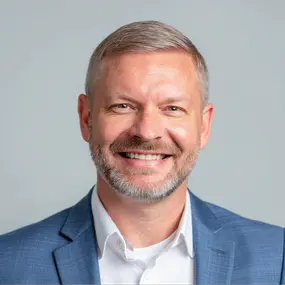
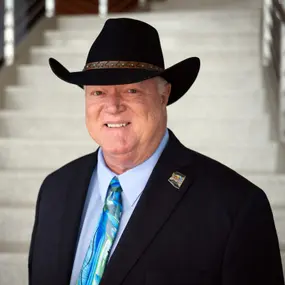
Scott Conn, Chief Information Officer, City of Mesa, Arizona; Founder, WRITA
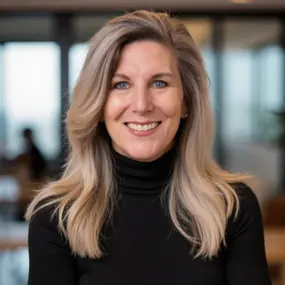
Mary Wynne CEO, Fusion Learning Partners (Public Technology Institute)
Chris Stewart Chief Revenue Officer, Freeit Data Solutions (former CIO, City of Austin)
Timestamps
(05:45) Scott’s problem with “CIOs-only clubs”—and the idea that became WRITA
(09:17) Four sponsors, one rule: bring an implementation—not a sales pitch
(15:36) Flat budgets, higher quotes—and why doing the same with less is now hard
(17:05) Tools first, people second: Mesa’s strategy for keeping services moving
(18:00) Two sentences. Fifteen minutes. Why only two vendors in ten earn the full meeting
(19:24) Before you buy another tool, are you using the one you already own?
(26:23) The rumor mill starts before the decision does
(27:00) Mesa’s budget glide path: 2% now instead of a drastic 15% later
(35:00) Accountability overcorrected—and then trust caught up
(37:23) “The best leaders are the best learners”
(42:07) The budget line Mary says leaders should think twice before cutting
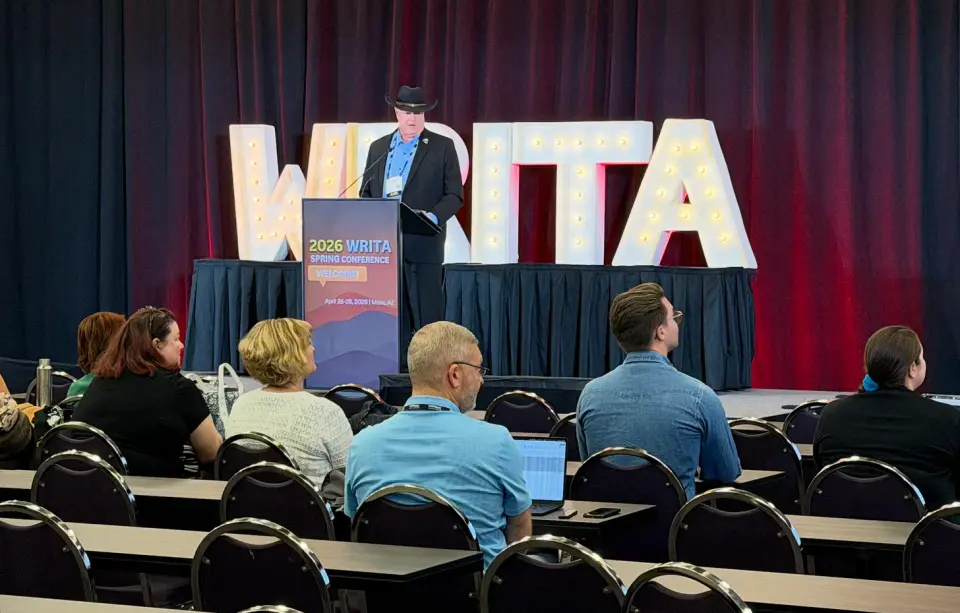
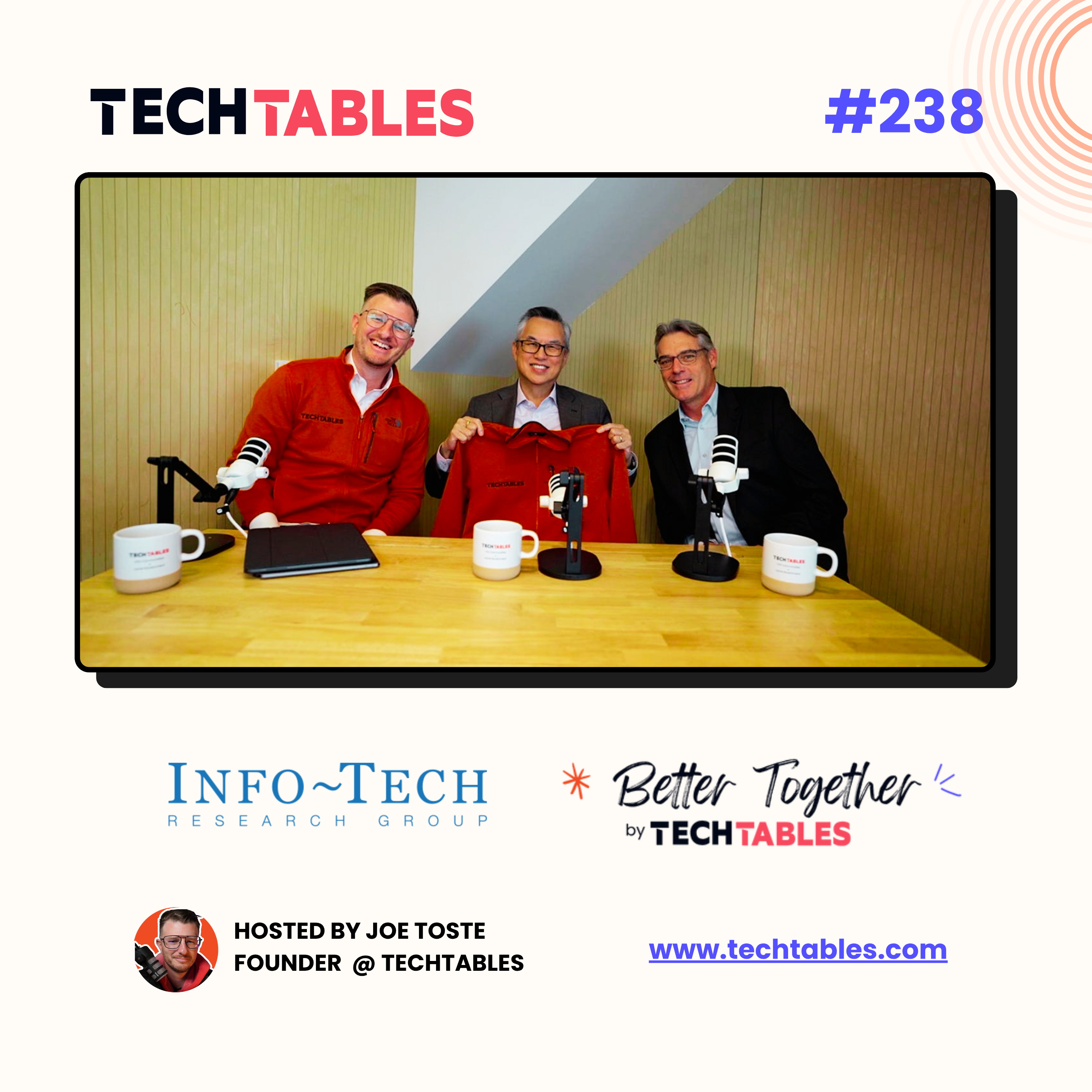
Scott Conn, CIO for the City of Mesa and founder of the Western Regional Innovation and Technology Alliance (WRITA), speaks at the opening ceremony of the inaugural 2026 WRITA Spring Conference at the Mesa Convention Center.
ps: don’t forget to join the 2026 WRITA Fall Summit in Salt Lake City, September 1st-3rd. Learn more here.
🎥 Upcoming Live Podcast Tours
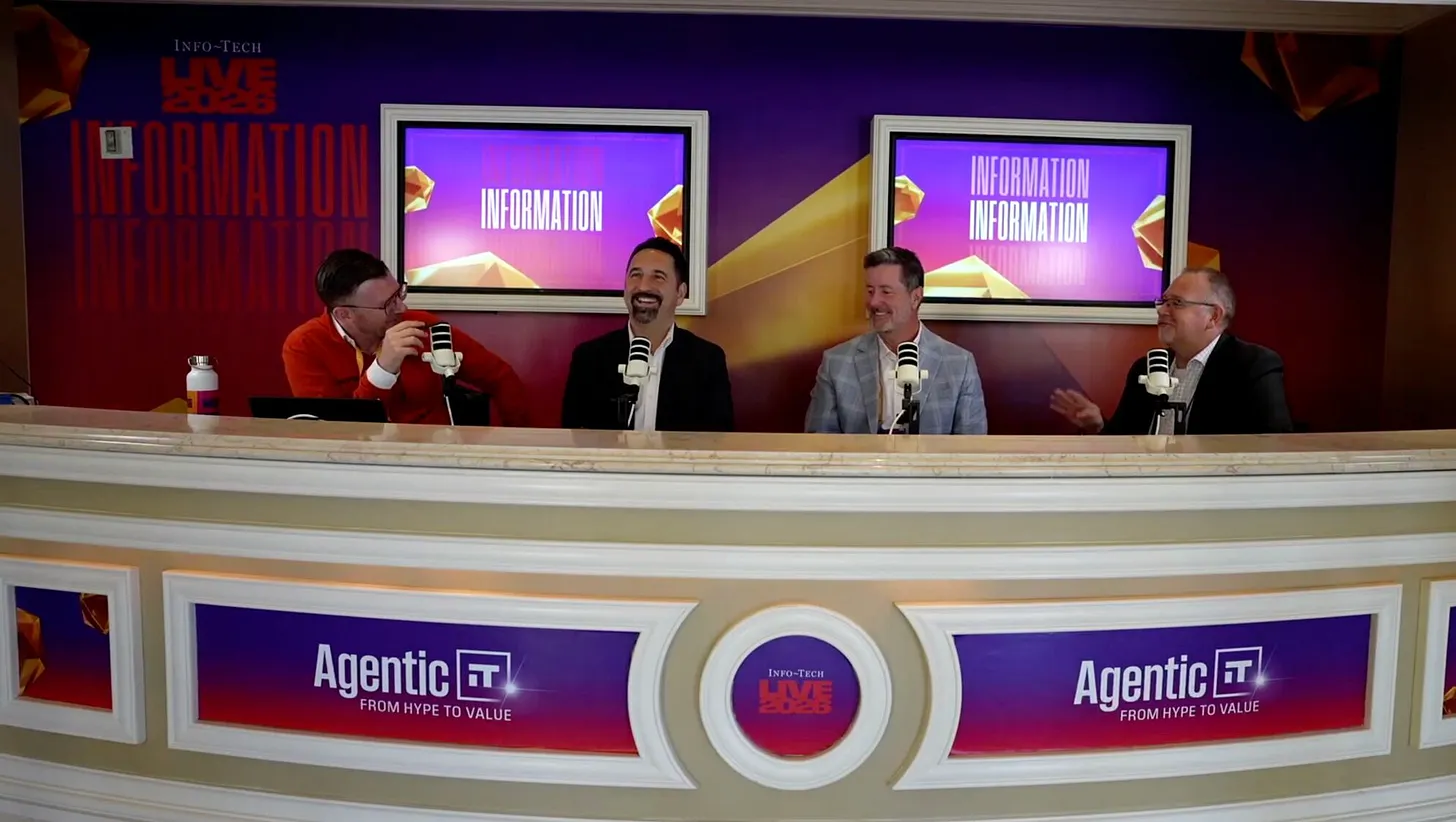
1. 2026 IGNITE Powered by Info-Tech LIVE - Austin, TX - Sept. 17th-18th
If you’re an IT leader in Austin, Houston, or nearby, Info-Tech’s got complimentary tickets with your name on them (just DM me I’ll be there). IGNITE is getting past the AI hype and into the real questions CIOs are wrestling with: how to get your people actually using AI, what the shift from “employee in the loop” to “employee on the loop” looks like, and how to budget when the costs keep moving up.
→ Ready to join the conversation in person? Email joe@techtables.com
2. 2026 EDUCAUSE - Denver, CO - Sept. 30th - Oct. 1st
Returning for a third year in partnership with Carahsoft, and we could not be more excited. TechTables heads to Denver to celebrate the leaders, the stories, and the work shaping the future of higher education!
→ Ready to join the conversation in person? Email joe@techtables.com
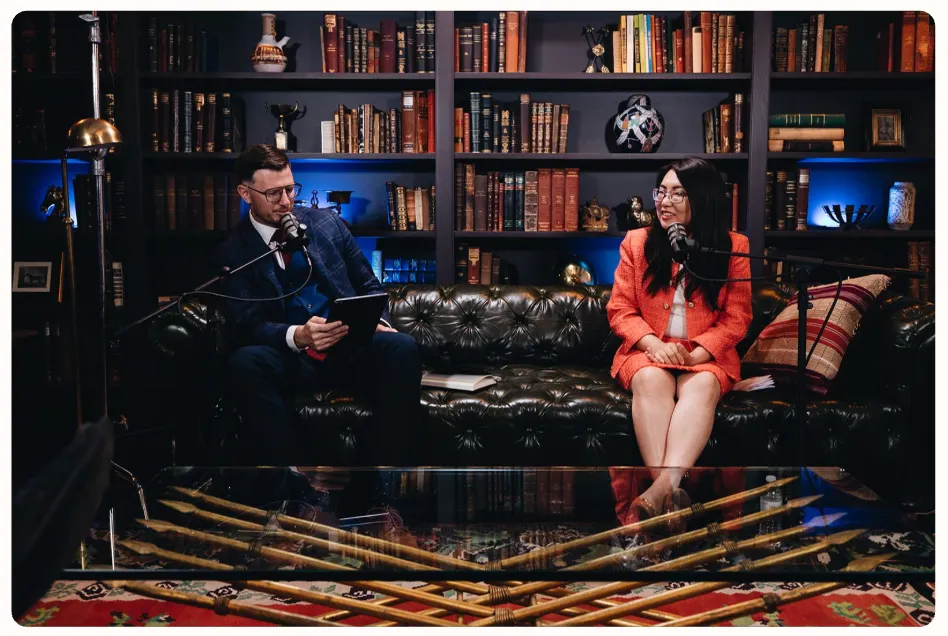
3. 2026 TechTables Austin Live Podcast Tour - November 4th
We’re coming back to Texas for a live podcast stop in Austin, TX and we could not be more excited. TechTables heads to Austin to celebrate the leaders, the stories, and the work shaping the future of public sector!
→ Ready to join the conversation in person? Email joe@techtables.com
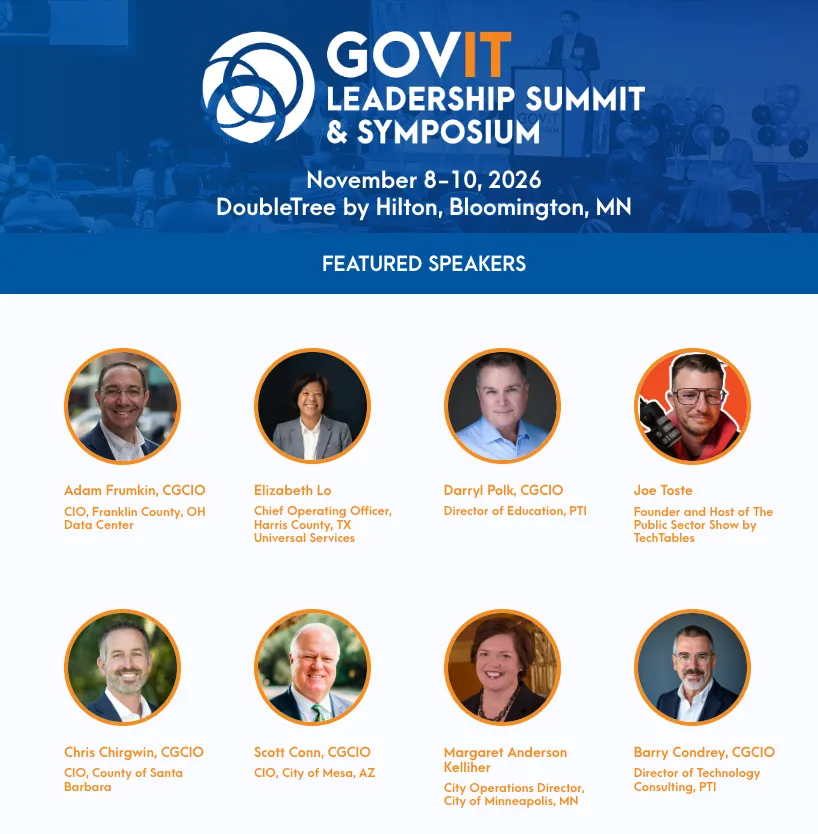
4. 2026 GOVIT Leadership Summit - Bloomington, MN - November 8th - 10th, 2026
We’re heading to the GOVIT Leadership Summit & Symposium in Bloomington, MN and we could not be more excited to celebrate the leaders, the stories, and the work shaping the future of public sector!
→ See the program & mainstage speakers: click here.
→ Attending? Let's record while you're there. Email: joe@techtables.com
Whenever you’re ready, there are 3 ways you can connect with TechTables:
1. 📬 The TechTables Newsletter
Thanks for reading TechTables! Get early access to new episodes, insights, upcoming events, and more — straight to your inbox.
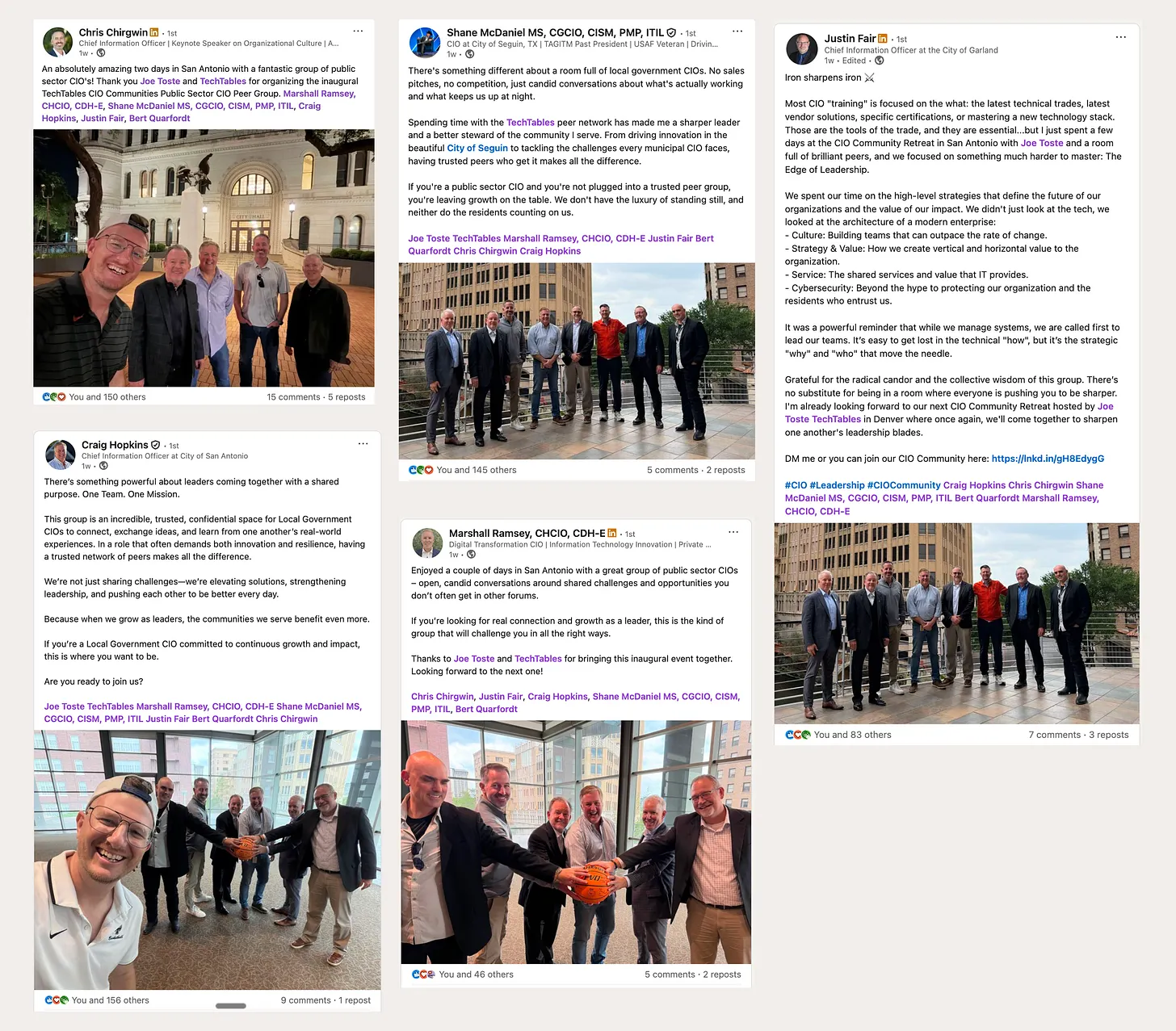
2. 🤝 You shouldn't make the hardest calls alone.
A peer advisory board of local government CIOs. Vendor-free, application only, twice a year in person — with 4x private forums in between.
See if you're a fit → https://techtables.com/communities-local-government
3. 🤝 The Better Together Series
The narrative-driven series bringing together industry partners and public sector CXOs. Discover the compelling stories that unfold when we stop working in silos and start building together.
»»» Email joe@techtables.com to learn more.
[00:00:00] Joe Toste: Welcome to The Public Sector Show by TechTables. Super excited to have you all on the show and returning guest Mr.
Chris Stewart. Chris, last time you were on the podcast Oh, I was gonna say Big Sky, but no, you, we actually do one in Texas.
[00:00:11] Chris Stewart: Good.
[00:00:12] Joe Toste: I won't spoil your intro, but give us a short intro.
[00:00:14] Chris Stewart: I'm Chris Stewart. I'm the Chief Revenue Officer now of Freeit Data Solutions. I'm a reseller based out of Austin, Texas formerly a CIO for the city of Austin before that Air Force.
I had a really long and fantastic career in, in service and government and in particular local government. So it's great to be at a another great conference with local governments and out here in the in the West and Southwest. It's been really great.
[00:00:39] Joe Toste: Now we've got two episodes we'll link back to in the show notes with Chris.
One was at in Big Sky, Montana, where we did have a Bear, which is kinda awesome. At the Airbnbs, which I was talking to somebody last night who was like, I still can't believe you pulled that off. I remember when you pitched me this idea and I was like, this is too crazy. And nope, we pulled it off.
Two seven bedroom Airbnbs and [00:01:00] Big Sky Montana. I actually forgot to record the podcast. You remember that? I forgot to record. We started recording at 10:00 PM at night and it was like, oh, why did everyone come here? Oops. It was a late night. It was a late night, but we got it done. It was great. Great episodes.
I think people were pretty tired, but it was a lot of fun. And then we recorded one at TAG ITM, which is great.
[00:01:17] Chris Stewart: A lot different. That was out in the open in the public.
[00:01:19] Joe Toste: Yeah.
[00:01:19] Chris Stewart: It was a lot of fun though.
[00:01:20] Joe Toste: Yeah. Lot of
[00:01:21] Chris Stewart: attention.
[00:01:21] Joe Toste: Yeah. Out in the wild. It was, yeah. There were a lot of people walking by.
It would almost be like if we did this like on a main floor and people were like, oh, Scott, like while the camera's rolling, they're giving you hugs and
[00:01:30] Chris Stewart: weird
[00:01:31] Joe Toste: looks. A lot of weird, looks, a lot of weird, looks like what's going on. Mary, give us a quick intro.
[00:01:34] Mary Wynne: Hi. Thanks Joe. Thanks for having me on. It's super exciting.
My name is Mary Wynne. I am the CEO of Fusion Learning Partners. We are a nonprofit organization based in Minneapolis, but we have staff across the country. We have two main divisions for Fusion Learning Partners. One is our Catalyst Solutions Group. That group serves organizations like WRITA, supports them with their organizational needs, their events, their membership marketing,
[00:02:00] financials, all of those kinds of things. So we support public sector in that way. And then our other division also supports the public sector. It's the Public Technology Institute. And just as the name implies, we serve public technology leaders like Scott and folks here at WRITA with educational services.
We do consultation. We are also a membership based organization, so a national membership group. So we really lean into creating community, creating events like this that really bring people together, help people to learn, help people to grow, connect them with wonderful private sector partners. So yeah, we're really a connector and a convener organization.
Love doing it.
[00:02:37] Joe Toste: Love it. So you also have a conference, right?
[00:02:39] Mary Wynne: We do,
[00:02:39] Joe Toste: yeah. You wanna tell me a little bit more about that?
[00:02:40] Mary Wynne: Yeah, for sure. So the Public Technology Institute, as I said, it is a national membership based organization, so we also do a conference for PTI called the GOVIT Leadership Summit and Symposium, and unless somebody tells me otherwise out there in the world, I do believe it is the longest running.
Public technology [00:03:00] conference in the country. We're celebrating 45 years this year of that event. It also happens to be our 50th anniversary as an organization. And PTI has been around for 55 years, so this is a really fun year for us anniversary year. But yeah, that event takes place in November in Minneapolis Bloomington, actually a suburb in November.
So we're really looking forward. We have about five, 600 people that come together for that. And hope to see you all there.
[00:03:24] Joe Toste: That was a great overview. I had never heard of GOVIT until I think last fall when a friend of mine, Chris Chirgwin, who's the CIO for the county of Santa Barbara,
[00:03:32] Mary Wynne: good friend of ours.
[00:03:33] Joe Toste: Yeah. Told me, he was like, Hey, have you ever heard of the, or he was asking me, had coffee, have you ever heard of this? No, I never heard of it. And he was like, I think it would be really, I think it would be really cool. So then I actually texted him. I was like, Hey, do you know Mary? And he was like, yeah.
And I was like, so I'm gonna be coming. He's oh yeah, another. Plane ride together. We've taken, I think maybe six or seven plane rides to the same events that we've been at. And I will be there.
[00:03:53] Mary Wynne: So happy. We're excited to have you.
[00:03:55] Joe Toste: Super excited. Mary sold me on the fact that there was like a Lego land [00:04:00] there, and so Jack, my 7-year-old
[00:04:01] Mary Wynne: I did, I shamelessly baited him with a Lego land.
Yeah.
[00:04:04] Joe Toste: Lego land the way to a man's heart, Lego land. Scott, give us a quick intro.
[00:04:08] Scott Conn: So I'm Scott Conn. I'm the current CIO and IT director for the City of Mesa, Arizona, and also the the chairperson of the Western Regional Innovation and Technology Alliance, better known as WRITA. Which is this conference.
And I gotta tell you, Joe, it's absolute honor to be on your podcast, even bigger honor, to have you accept our invitation to come on out here and check out the conference for yourself. The fact that you're doing that impressed everybody that, oh, Joe Toste's coming out to do this. This is very cool.
Thank you for having me on your podcast. And as I think I've mentioned to you in earlier conversations, this is my third career. Starting out in the private sector then becoming an overpriced executive consultant for 20 years selling that company. And now here I am in the middle of government service.
[00:04:55] Joe Toste: When we met for the intro call that we had I think just hearing your background and, reflecting on some of the [00:05:00] emails. I think people had mentioned, WRITA before. And and I think a lot of times like this is not for WRITA or for PTI, but I've just found there are so many nonprofits in in public sector.
And so I tend to get a little bit jaded where I'm like, but do you actually care? Do you have any heart behind the organization? Because I care. And and I travel all around the country. And but it was cool to hear you care so much about this.
And I was like, Hey, you know what? I think this would be really cool if we make this happen. So I didn't even fly here. I rented a Tahoe and loaded up everything and nice cruised on out. It was, it was a lot of fun. Not the nine hour drive. Actually, it was a little fun, but, the Tahoe made it nice. So anyways I do wanna kick off specifically with WRITA. There are a lot of folks who don't know about this. I didn't know about this, he didn't even know about this till I posted it. So Scott, let's start with you. What's the origin story?
[00:05:45] Scott Conn: I started out in the public sector in California at the city of Concord and then at the city of Modesto. And. California has an organization known as MISAC Municipal Information Systems Association of California, and it was a completely unique concept [00:06:00] because most organizations you join in the IT world and the public sector are very specific on who they let in and who they don't let in.
I've never been a fan of CIOs only clubs. They tend to sit around a conference table eat a Jersey Mike's sub, pat each other on the back and tell each other how great they are. And you really don't get much value out of that. Obviously you've done good things in your career to even get to that position to begin with.
I don't need anybody telling me, Hey, nice job. What I valued was in MISAC's case, they let everybody in your IT organization, whether it's your help desk person or your GIS person, or your engineer, or the person in charge of desktop replacement, they let them all in on this club so that they could collaborate with one another.
They can talk, a help desk person can talk to a help desk person in different geographic locations. So when I first got to Arizona. At Mesa two and a half years ago I was invited into the Arizona CIO club, AZ CIO, and it's a [00:07:00] worthwhile organization and it's fit, filled with a lot of great individuals.
But it was sitting in a conference room eating Jersey Mike Subs, telling each other how great we were and I simply asked them all, Hey, wouldn't it be cool if we did an organization that let all of us collaborate, all of your team members so Mesa can collaborate with Phoenix or Flagstaff or Tucson, or.
And everybody unanimously said, that is brilliant. We should do that. And then they turned around and went, okay, Scott, go make it happen. And that's when I realized my mistake. And then I was now on the hook to, to go and build this thing. So it started with that and then something unique happened once the folks in Arizona started going to other conferences and talking to their peers.
Next thing I know, I get a call from Aaron Bentley in Salt Lake City and he says, Hey Scott, I heard about this WRITA thing. Can we be a member? I said, don't you have anything like this in Utah? And he goes, no. I said, yeah, sure, why not? And then Provo called, and then West Valley City called, and then we get calls from Las Cruces, New [00:08:00] Mexico, Albuquerque, Boise, Idaho, Great Falls, Montana.
And before we knew it, we had seven states that did not have any kind of, full organization collaboration in place that wanted to be members. And so we opened it up to all of the above. And we've got 850 members in the database right now. We've got the seven states engaged and we're growing like a weed and this is just amazing.
[00:08:25] Joe Toste: Yeah. And I think that, that was a really great that was a really great opening and description. I think like I, I've been to so many conferences. Where I've been really thinking about like the biggest value for a lot of the team members is just like the encouragement of, keep going back year after year.
'cause I think you, if you just go once a year or skip or you're just so busy, even for leaders talking about, the Jersey Mike Subs just funny. It's a lot of leaders, I think the risk is they're so busy, they're on off, they're never off their phone, their laptop, they can't actually engage with anybody.
And can actually do the strategic work that they should be doing [00:09:00] as a leader. As they're so far in the weeds. And so I really liked that. It's like bringing everyone together and yeah, that would be my encouragement to folks too. You came this year, but then, don't come back two years from now, come back.
In this case, whenever the, I think you just posted, I was like walking, I was snapping a photo, so September 1st or the third. Did I get that right?
[00:09:17] Scott Conn: Yeah. So we're doing, we're planning two events a year. Okay. One's called the Fall Summit and it's a much smaller more intimate. Situation with 60 to 70 c-level people attending. And again, you don't have to be a C-level to attend, but we only allow four vendors to sponsor the event. And each of those vendors get a chance to, they get an hour in front of a captured audience, so to speak, to present a solution. We don't let them sell, you can't come in with your top-notch salespeople.
It's gotta be something you've implemented. Hopefully for a WRITA member that you are now sharing with the other WRITA members and saying, this really worked and here's why. That's what people will come and listen to and be engaged with. So we do that as a smaller event and that will happen [00:10:00] in Salt Lake City, September 1st through the 3rd.
This coming fall. And then we do the spring conference and we chose Spring 'cause we didn't want to compete with all the other conferences. Seemed to go late summer. And in the case of GOVIT they're into November, which is one of the last conferences of the year. Smart on their part.
And I attend that one every year too. It's a great conference. Really well done. But that same team is the one that's putting on this inaugural spring conference for WRITA. And I gotta tell you, I've been thoroughly impressed with the professionalism. And as you point out, CIOs and, and Chris will attest to this, we don't have time to do the day to day, right?
We're the strategic vision and here's where we want to head and how do we make this happen? And then you hire people to implement that. And what I want to point out is Mary's company, Fusion Learning Partners. Won a competitive bid to become WRITA's day-to-day operator. So she has her team here running this thing and it's so far running like a Swiss watch.
[00:10:58] Mary Wynne: Oh, thank you. And we're real pleased for that. [00:11:00] Thank you very much. I'll be very happy to hear that.
[00:11:02] Joe Toste: So now I'm curious, how did this relationship between the two of you happen? For, WRITA was there a coffee, an email? W what's like the behind the scenes story?
[00:11:11] Scott Conn: So I'll start, I'll let you finish. Yeah. Okay. Okay. Dr. Alan Shark was one of the founders I believe of Public Technology Institute, PTI. And
[00:11:20] Joe Toste: this guy,
[00:11:21] Scott Conn: that guy.
[00:11:21] Joe Toste: There's
[00:11:21] Mary Wynne: our
[00:11:21] Joe Toste: book guy.
[00:11:22] Scott Conn: Yeah. And Alan really was the founder of what was known as the certified government CIO program.
A year long program where you are engaged every month for 12 months and being taught 12 different disciplines of being a legitimate leader, CIO in a government agency. And he did this in cooperation with Rutgers University in the beginning and has since, had several other partners since then.
But I was told about the program from a friend and I, so I went and I enrolled myself to become a certified government CIO and I got to meet Dr. Shark and we just hit [00:12:00] it off. And the guy is absolute ACEs. He's brilliant. Beyond belief, has done so many great things in his career and. We just engaged and we started figuring out how could you expand that program.
And Mesa, I have put five people through the CGCIO program already. And they all come back. It's still as valid as it was when I took it. They all come back just saying, holy smokes. That was the greatest thing I ever went to.
[00:12:26] Mary Wynne: I talked to a few more yesterday, so you might be getting some more requests.
Sorry about your budget, but
[00:12:30] Scott Conn: Yeah. That's okay. It's all good. But Mary's company went and actually acquired PTI and that's how Mary and I linked up. And the first interactions we had were at the GOV IT leadership.
So I, I go just to listen to the content. It's awesome. But that's how Mary and I got to meet,
[00:12:47] Mary Wynne: and it was right as you were. Conceiving the idea of WRITA. You were really putting the ideas together and you were starting to think about an operating partner. So the timing was just perfect
[00:12:57] Scott Conn: and there were, three, three folks that were in the running, and I didn't [00:13:00] even realize that Fusion Learning Partners was doing this, but they were doing it for other associations.
Until I had met her. She said, Hey, we do this. I said, okay, I'm sending you an RFP, and then lo and behold, they won it. And for all the right reasons and we're so happy. Have not been disappointed.
[00:13:14] Mary Wynne: And I think if I could say I think one of the reasons that we edged out the others, I don't know who there were, but is because of our Public Technology Institute.
So we're not just an association management company. There's a million of those. They're very capable, they would've done a great job too, but we bring that extra piece of our Public Technology Institute to the table. So our book, for instance, that you just held up. WRITA members are PTI members as well.
They can get a discount on the book. They can be invited to write a chapter in the next book, right? Or our learning programs as as Scott just mentioned, the C-G-C-I-O, they get the discounts now. So we bring that extra, I think, to the table and we're just really pleased to do that, right?
We're all in this together. So yeah, we just we're [00:14:00] very pleased to be supporting public sector technology leaders.
[00:14:03] Joe Toste: I love it. My last plug, I, people ask me all the time and start calling me out. Hey, you talk about a lot of books. You read 'em all. And so I'm gonna just be fully transparent. I've only read Chris Chirgwin's organizational culture piece.
I don't even know what chapter it is. I'm sorry, Chris. Oh, I think I found it too. But. The reason, I mean I love what Chris had. I'm sure there are many other great stories in there. Scott, did you write one in here that I should go read?
[00:14:25] Scott Conn: You know what, I don't think so.
[00:14:26] Mary Wynne: This time
[00:14:27] Scott Conn: it would've been, numerous years ago.
[00:14:29] Joe Toste: Yeah.
[00:14:29] Scott Conn: Okay. What I'm curious is if my assistant CIO, Paul Poledna has his in there 'cause. He gave his last year before this was published, before it was put together, and they were so engaged. They usually limit you when you present your final thing, they limit you to 10, 15 minutes. Paul was going for a half hour until Dr.
Shark finally said, okay, I wanna know the end of that story, but we gotta stop you. So I'll bet you his might be in there. I'm gonna have to look.
[00:14:55] Joe Toste: Love it. Okay, so we're gonna link to the organizations in the show [00:15:00] notes, but one topic that I was ruminating on that is just all around public sector that I keep hearing is just doing more with less.
This is a common theme, doing more with less. And a lot of folks will say we don't have budget. We don't, times are lean, but they were saying the same thing when times are good I was like, huh, interesting. I think I don't have any survey data.
I don't have any quantitative data, but just qualitative data, just talking to people around the country, CIOs in particular about just, where they're at. So I just wanna first get the landscape. So Chris, you were at the city of Austin, so you've got a pretty good perspective. Could give us the lay of the land of where you think we are today.
[00:15:36] Chris Stewart: Yeah, we see a lot of folks with Freeit Data. We're all around Texas and we're around the country as well, and we're, I think we're seeing a lot of, is, it is more with less right now. And you're right, I don't think anybody ever yells, I have too many resources. Too much money. But right now it is very lean. I think at best we're seeing flat budgets, but more often than not, it's budget cuts right now. And on, on the other side of it, what the real problem is the increased [00:16:00] costs. I think in particular around hardware and technology. We had folks that budgeted a year ago or a year and a half ago.
They've got budgetary quotes and a year later they are much, much higher. So not only do they have a little bit less budget, the cost have gone up so drastically so the agencies that were really pushing things to the breaking point, now is a really awful time for them to say, Hey.
What am I going to cut? What am I going to replace? I need this new system, I need this new hardware. My infrastructure's failing, and now's not a great time for them. It's very tough. So I think we're actually seeing it when they're saying do more with less. Right now, even just doing the same with less is really hard.
[00:16:40] Joe Toste: Yeah, and I think something that I've seen from the vendor partner side, just inflation costs. We're not giving you any additional value. Vendor partners are often not giving additional value. They're just increasing. I'm not gonna name any vendors. I don't wanna get cooked, but but yeah, they're just increasing, I need an extra million dollars for this or, whatever.
And so I think exploring like what do leaders do in that, in this [00:17:00] situation is pretty hard. Scott I'd love to hear from you. How are you handling, mid 2026 of where we're at right now?
[00:17:05] Scott Conn: It comes down to your philosophy. When the budget's getting tightened and you're in tight times.
Here in Mesa we're in year three of 2% budget cuts. And it's not just the IT department, it is across the board, all departments. So you adapt your philosophy to deal with it so that you can hopefully keep the level of services you're delivering to the residents of the city at the same level or, minimal disruption, right?
So in our case, it's a philosophy of tools first, people second. So how can we leverage technology tools? The advent of artificial intelligence coming in, how do we control that? Leverage it in a way that allows us to be more efficient with less human resources involved. And so far we've hatched a successful formula than where we are doing that at here in Mesa.
And and sharing what we're doing with all the other agencies. Hey, have you guys tried this? Have you tried that? And it seems to be taking hold. [00:18:00] But it's not just, let's throw tools at, it was pointed out in one of the sessions here at the conference, you have to have your tool strategy. Okay. So we seek out the vendors that have the tools that enable us to do more with less, and that's their value proposition. So I am sure all of us here get a hundred plus emails a day, even, Chris, even vendors get emails from vendors and I'm getting a hundred plus, and unless they give me a value proposition in those first two sentences of the email, here's how we can help you meet this strategic initiative that your mayor said he wanted to do, and here's the success rate we've had.
It's the delete button. Okay. I'm not paying attention to 'em, it's noise. Give me a proposition of value. Show me how you can make me do more with less in two sentences. Now I'm gonna read it and it might get you a 15 minute meeting, and that's what I tell 'em. And the vendors hate it. Hey, we have a one hour presentation, a demo we want to do for you, and you need this person and this person in the room.
It's no, I [00:19:00] give giving you 15 minutes of my time. And if you don't convince me the value is there in 15, you don't get to go to the one hour meeting. If you do, then I will put the right people in the room and now you're on stage and show me what you got. And right now the ratios probably two out of 10, get to the one hour.
It's sad. They don't know how to capture what they're gonna do specifically for my city.
[00:19:24] Chris Stewart: And you said the right word, I think it's partner. Yeah. That's one thing I really talk to a lot of IT organizations. You have vendors, you have resellers, but you have partners and there's a big difference.
And your partner should be coming to you proactively. Costs are going sky high. How can we help? One of the things you mentioned is the tools. How do people have these great, wonderful tools and don't realize they're not using the full value of them? So the first thing we do before we sell you something is, hey.
Are you actually using the tools that you have? I know you've got this tool set that does many more things. You're using the primary function. Maybe there's a better tool that can do this thing over here, but do you need to go spend that [00:20:00] money? Can you just utilize what you've already?
You've already purchased, you've already have this in-house. So we really try to help people in that. And to me that's a partnership. It's a long strategy. It's years of relationship building. But your vendors tend to a lot of 'em are just very transactional. And I'd love to sell you a new product, Scott I'd love to say some AI tools and you don't get the other side where well
[00:20:21] Scott Conn: especially hit the nail on the head with the, your partner.
Knows what your initiatives are. They know what the city council said. These are our three things this year. And your partner knows that and can come and offer solutions, and that's when we are open and we will listen. But a lot of the other ones, it's just they're casting a wide net, just it's a theory of numbers for them. Wrong way to approach it in today's market.
[00:20:42] Mary Wynne: I love that I'm sitting in the middle right now because honestly, this is a big part of what our organization does. We are an agnostic, right convener of both the private sector and the public sector. So at events like this or our event, this is what we do.
We bring, and we [00:21:00] don't call 'em vendors, we call them. It's our business partnership program. We want to elevate private sector to that partnership role, come to our event. Talk about your partnership, talk about the things that you do, learn from the public sector folks about what their pain points are, what their needs are.
This is, these kinds of events are a great opportunity for those discussions to happen. So you don't have to worry about getting 15 minutes on his, on his calendar when he's right here in front of you or in a session, right? I love that. I really it because that's when magic happens. When you bring private sector, public sector, and the nonprofit again in the middle.
This is really good seating. That's when the magic happens. Really. We all have our role in this.
[00:21:42] Joe Toste: Yeah I think it's funny. I ever got a couple thoughts. I was talking to a CIO who said, Joe, I found $1.7 million in unused cell phones I was like, wow, that money can you write me that check?
And there's a lot of I think another one was like, Hey, we found another $3 million in unused like software licenses. We just turned it off. He [00:22:00] said, he told me that. I think only one person came back and said, Hey, I need this. Okay, cool. There is so much savings and I think about this as like a small business owner.
Constantly, like software bloat it always happens. And unless you are willing to, constrain it it, it will keep just expanding. And so it's the same thing. It's every quarter it's okay, what am I using? What am I not using? And, everything scales right?
And so if you have bloat, it's gonna scale across the organization. And so going back to the lean times, it's not necessarily a bad thing that you've gotta trim some stuff down. Sometimes it means, Hey, how can we get more creative with the resources that we have? And I gotta do this all the time.
I remind folks, they'll go, oh yeah, you're in the private sector. And I'm like, I'm not Amazon, right? This is we have different stages of business. I am a small business owner, so you know, I gotta get, I gotta get super creative. And i'll just, I'll just give one right off the top of my head.
I'm thinking about this right now. I remember I went to Houston and I rented for the first time we did this at a Hotel Zaza. It was super bougie. It was incredible. It looked magnificent. Next year they came back and they [00:23:00] were like, the price is tripled. And I was like. And after I'd already signed a contract and they were not like, willing to honor, I was like, okay, fine, we're pulling out, we're not, no way.
We're paying triple. And last minute, my wife's you should just eat the costs. There's no way everyone's gonna move. I moved everyone to a coworking spot and it was epic. It was like a totally epic thing. And so I just learned, like the creativity piece can actually be a huge benefit.
And
[00:23:22] Scott Conn: did they ever come back to you and try and get you to come back or when they realized what they had just done?
[00:23:27] Joe Toste: No, I think they just said goodbye.
[00:23:28] Scott Conn: Wow.
[00:23:29] Joe Toste: Yeah. Yeah. It was just a goodbye. And different places, so you talk about building partnerships is really great. Like I'm got a partnership with Grand Canyon University and they're like, we would love to have you come. I'm like, okay, great. I'm gonna host that event. At GCU next month. And just finding creative ways. I think sometimes we think this is the box of like how we're supposed to do stuff, but you can actually think outside the box which helps your constituents, the residents.
Anyways, so wanna, I wanna keep going on this. Just this theme of so now you've gotta make these hard decisions. So you have to [00:24:00] communicate this which is not a technical aspect, right? So there's a leadership aspect, right? Chris, we'll go with you and we'll go down.
In your experience and also what you're seeing from leaders right now, how are leaders communicating this today? Because I know that if you talk, go down the line, there are folks who are like, Ooh, am I gonna get laid off? All I see in the news are people getting laid off. So how should leaders handle that conversation today?
[00:24:22] Chris Stewart: I actually had a conversation with a CIO this morning in a quite a large city in Texas, and he had talked a lot about expectation setting. And so that's a big part of his job is just setting expectations properly so that people are aware and you're being transparent, I think, in that if you're properly setting expectations, so don't make it seem grandiose or make it seem the opposite Hey, we're all.
They'll feed into
[00:24:47] Mary Wynne: fear.
[00:24:47] Chris Stewart: You gotta be afraid and budget cuts. So you guys better, you better cut your budgets or bad things will happen. So I think that's that was really great. I liked that he was dedicated to this idea of you really have to be able to set expectations [00:25:00] clearly, inappropriately, appropriately.
So again, we're, we're not setting people up for that fear or this success. That may never happen. We don't always succeed at some of our projects. Our, our hearts get too big for what we can actually accomplish in a given year or with a given budget. But yeah, I think beyond that, it's just really good communication.
Making sure that it's coming from the right place. I've seen some really great leaders that make sure they're the voice and they want to be, that it doesn't come from a communications team. They want to come from their leadership perspective instead of maybe even higher up. Some organizations, your council or mayor, your city manager, your judges may wanna be that voice.
It's really, I think, important for IT leaders to make sure that. They are talking to their organization and all leaders, frankly, not just IT, but they want to make sure that they have that voice. And it's, it's coming down from above that this is the strategy. I want you to know how we fit in to that strategy.
[00:25:54] Joe Toste: Yeah, and I think one of the leaders I heard this from, I, I can't even remember what, who, what CIO said it, but it was really [00:26:00] good. Part of the CIO job is to protect the people, your tribe below. Because there's a lot of noise that's happening up here, and if you let that filter down the team, the morale is just gonna go.
That's what I think. What also makes it a really tough job is you are that you said that you're that layer. Did you say that? I see. I've heard him say that for sure.
See, it was somewhere in my brain. Maybe it was in the podcast intro call just floated into my head right now. At this point.
So you said, okay. Yeah. So tell me more.
[00:26:23] Scott Conn: It's a matter of the look you, you need to protect, as you called it, your tribe. The fun part is figuring out what's noise versus what is pertinent and things that they should know so that they can be effective in their positions and in their jobs. When we've got folks determining above the department how they're going to manage the budget, how they're going to make cuts, how they're going to be fiscally responsible they throw out all kinds of different possibilities.
And people hear that, and the rumors start. And if you leave people to their own devices talking about, oh, I heard that they're gonna do this, and they're gonna lay people off and [00:27:00] they're gonna do that. The other thing it's important as the leader to get in there and get in there frequently and get in there before any of that gets decided and say, look, these are the options.
These are the things being discussed. And just be transparent about, so that it helps belay people's fears. And in our case our city management has been excellent at outlining what our fiscally conservative strategy's gonna be. And they DoIT with a long-term lens. They don't do it.
Okay, this year it's gonna be this. Okay? They say, look, we project over the next three years that this is what's gonna happen to us financially. And they have data behind it. It's not just a, my gut feel is, there's legitimate data behind it. In Mesa's case the state of Arizona used to have a rental tax.
If you were renting a property, an apartment for a home, there was a 2% rental tax. And the state legislature voted several years ago to take that away and give the money back to the residents. So being a renter at the [00:28:00] time, I thought that was a great thing, right? But being a city employee, that was going to impact our budget by, many tens of millions of dollars.
And it just shed a light on, okay, now we gotta take a look. Tighten the belt 'cause we're losing that money. So we did, and the city management did a spectacular job at saying, we're gonna start now, even though we don't have to, we're gonna start now trimming the budget at 2% this year, 2% next year, 2% the year after, as opposed to doing the Big Bang theory.
Okay, we've hit the wall, we're gonna cut 15%. And that's when you really feel the impact. At 2%, yes, it hurts, but it's recoverable. But it. 15% in a year. That is, that is drastic, right? So our team was told the strategy and they understood we were facing those times ahead. So in the case of the Department of Innovation and Technology,
and Joe, I want to point out on this podcast, Mesa was the first to use the Do IT term. Everybody else is jumping on this now. Okay. Everybody calling themselves Do IT, but Mesa was the first. [00:29:00] And we're proud of that obviously but my team understands. Where we are, where we're headed, and we are hoping that this next fiscal year is the last year where we're gonna have to do this and we may just get into a sustained mode.
No cuts, but keeping where we are, again, being fiscally conservative and smart. And hopefully things turn out better. And current projections, the tax revenues coming in for the city are better than what we were originally projecting, but they're not gonna just open the doors and say, okay, departments go spend now.
They're gonna be very smart about it. And, being a business person I appreciate that and so does my team.
[00:29:36] Joe Toste: That's really great. Yeah. I think a lot of the agencies I've talked to who, who are doing the best right now had some form of reserves and their city or county. And then the other question actually follow up question I had for you, I was thinking about was there is this trend right now where there are younger CIOs coming in a lot of 'em from the private sector and they've actually have done nothing in public sector before.
And so I was curious like what advice would you give [00:30:00] to some younger that kind of next generation CIOs specifically around, they get this job and now they're like, I gotta handle budget cuts. This is crazy.
[00:30:08] Scott Conn: Wow. Multiple ways to go with that one. But the first thing that came to mind was trust your people.
Okay. If you're coming in from the private sector, usually you are, you have, you are used to working at a certain pace and it's fast. Now make a decision. I don't have to get approvals elsewhere. I can just make the decision, move the team forward, and let's get into action. When you're working in the government, there are many other considerations and there's compliance.
Policy regulations and management regulations. You need to be very aware that there are many other people you need to inform other than just making a decision and going forward with your team and make sure you've got their buy-in before you make that happen. Now does that mean you have to slow down to the traditional government crawl?
Absolutely not. Very first thing I told my team in an all hands meeting when I came on board was, someone asked me what would your previous team say [00:31:00] about you? And I said, they would say that Scott Conn works at a different speed than other people and you will learn to work at that same speed.
And what occurred was in the first year, little bit of turmoil in my department. I admit, 'cause I am pushing them and I'm challenging them. I'm trying to get them to speed up a little bit and let's go help our customers. And our customers are really the internal departments. We have a little bit to do with the general public and the residents, but mainly the internal departments of the city, supplying them with the technology they need to deliver the services to the residents.
But after the first year, they're now at speed and they look back on it and they tell me, we look around at other entities. That are doing something similar to what we did, and we're going, why aren't you done yet? So they truly have made that jump to the next gear, and it's something that all of us as a team are very proud of.
[00:31:53] Joe Toste: Okay. So talk about just a little bit. You had said, it was a little bumpy, a little rocky in the beginning.
[00:31:58] Scott Conn: Yeah.
[00:31:59] Joe Toste: Which I don't think is a [00:32:00] bad thing. So you've got change. There are, new humans, new expectations. Just talk a little bit on, how did you go about getting their buy-in, like really tactically getting their buy-in, because I think it's easy to say, Hey, I got your buy-in.
And I mentioned this on the podcast a lot. When I coach high school basketball, especially like the JV basketball team, every year you lose your best players to varsity and then players get cut. And so you're left with only a few returning. And so you get new incoming freshman class, the best players go to JV and then you are trying to get their buy-in to believe in the system.
And so like I have something called like the van ride, right? So kids hop in the van, you go to an away game. I started seeing the team dynamic change when they're eating, Canes, Chick-fil-A, whatever. So what did you do to tactically get buy-in for your team?
[00:32:47] Scott Conn: I'm a big believer of team building.
I coached 12 years of high school football and won some championships. I coached 18 years of women's varsity basketball and won some championships. And [00:33:00] exactly like you say, Joe, every year there's a rotation of the players. New ones and old ones departing. It's always different, but the way you get the buy-in is you gotta walk the talk.
Okay? I have known CIOs from other entities and talk with them at tables and on, no, I'm not gonna name names, but you sit there and your first thought is, how the heck did you get that job? Because they will tell you point, blank, look. My team's job is to make me look good so I can get promoted to the next level.
If you want to, if you want me to disrespect you immediately, you just tell me that, right? It should be. My job is to take my team and do everything I can to give them a growth opportunity and a chance at the future, and then walk that talk, make sure they know that this is for their good. I want you to go make the speech.
I've made enough speeches in my life. I want you to be the one getting the award. I want you standing up on stage. I want you going into this training course. That's what does it. And in the beginning my team is looking at me [00:34:00] going, I'm not sure this guy's real. He's saying all the right stuff, but is it really happening?
And right now, I think if you were to ask most of them, not all of them, there's always, you can't please everybody. That would be another advice to a young CIO. Trust me, you cannot make everybody happy. You're not gonna do it. Focus on the good performers and really make them happy and give them the opportunity, but then walk the talk.
Okay. Be authentic.
[00:34:23] Chris Stewart: And I really appreciate you saying that, Scott. That was the word. It's authenticity. That was huge for me, was just being authentic person and governments were, one of the things that's a bit different is these long career cycles. Typically government, you're there for a very long time.
Many times we have pensions and you're, you've got decades of folks who've been there and you're taking over. You're brand new, they've been doing their job for 20 years. Who were you? So the, that change is a little slower. Whenever I hired managers from public sector, that was one of the hard things was getting them to slow down a bit.
But push. Push where you can, but don't run into walls and let me help you not run into those [00:35:00] walls. And they can get very frustrated at the pace because they want to make a change. They see where they can do it. And I try to redirect them into things that, where they can add and they can make a change and kind of steer them away from the things where you're just gonna be, you're not gonna succeed.
Do the things to succeed. Same thing when I had taken over with the city of Austin, we were going through a lot of change. It was more cultural at that point. There was some mistrust, but luckily I'd been with the city long enough where I came in with a little bit of trust and then knowing I had done many of the jobs before, but I was just myself.
That's just who I am. And that was seen as something that was very positive. It built that trust, but also gave it some time. And, one of the things I wanted to right away was accountability was really big for, it's one of my core values, and that goes both ways. That term can be deemed negative that it's always a negative thing and it's absolutely not.
And when I hold you accountable to something, it's 'cause I trust you can do it. So to me it is a trust mechanism. To hold people accountable. And funny story, when I first got in there, we just done a round of performance reviews and I had just showed up and I [00:36:00] looked at them and I was like, wow. I ran an organization of about 330 people and we didn't have one person that didn't meet expectations that year.
That's amazing. But I'm hearing the opposite from the teams that, there's some things we're not doing well, and we had a bunch of people who were as successful as you can be, all the way to the top. Wow. This organization, what I'm hearing and seeing doesn't match. And so I talked to the leadership, Hey, we're going to really set appropriate levels of expectations and hold people to them.
Accountability. And that next midyear. We had nobody exceeding expectations. Okay. So there's some overcorrecting here. We have to to build that trust again. It's a process, but by the third one, and we do 'em every six months, it looked much better.
Okay. We have some people who need some help. We have some people that are doing wonderful things. There's a lot of folks somewhere in the middle. That made a lot more sense. So that's when I knew that, okay, there's some buy-in that, at first it was some mistrust at first. They take it a little too literally and go a little too [00:37:00] far.
But, eventually it does, it equals out and they actually trust you and follow the path that you've set.
[00:37:05] Scott Conn: Yeah. And I will say, you're right Chris, and one of the things that attracted me to Fusion and to Mary in particular is I. I'm always watching. I would go to the conferences and I'd watch her in action and what she did with her team and I'd go, okay, that person knows what they're doing.
I can get in league with Mary. And that, that's just built the relationship even further.
[00:37:23] Mary Wynne: And obviously not a CIO, but a CEO. And I would say that what I'm hearing from both of these gentlemen and what I observe and hopefully play out in my own life is that the best leaders are the best learners, right?
The minute you stop learning, you say I know it all. My team is just here to make me look good. You're not a leader. Leaders continually learn and they continually give back, and so when I'm looking at a young leader, the first thing I wanna say is, what are you learning? What do you need to learn? And then who do you need to learn it from and how can we connect you?
And I think that's one of the things Scott does so brilliantly too, as a leader. He [00:38:00] himself sought out coaching, right? Hired an executive coach. I've had an executive coach. I look for mentors. And it's a, again, a big reason why I'm passionate about what we do at Fusion. We provide ongoing learning, right?
We have a CG CIO course for CIOs, right? Not because necessarily to tell 'em exactly how to do their job, but so that they have a cohort, a group that they can continue to learn from and share with. That's really where the magic happens. Thank you, Scott, for
[00:38:29] Scott Conn: truth. It was fun. It's been fun to watch.
[00:38:31] Mary Wynne: Thank you.
[00:38:32] Scott Conn: I'm still watching.
[00:38:33] Mary Wynne: Yeah, I know.
[00:38:33] Joe Toste: Literally live. Yeah, literally live. So I love, this is a whole other podcast. I'm not gonna dive into it, but the accountability piece I think a lot of folks think it's negative is actually really good. I love that you mentioned like the cohorts.
I think that's actually probably the biggest gap in public sector leadership right now is actual CIOs wanting to be held accountable. I sat last year I think I was telling you about this in Nashville with Chris and Craig Hopkins, who is [00:39:00] the outgoing CIO for the city of San Antonio.
And they said, we really want to create this group. It's gotta be small. It's, like a tight band, no more than 12. That's it. That's the cap of CIOs. But the deal is they want to, we want to hold each other accountable and we wanna become better leaders. And that was the kind of what formed this.
And then we had our first, there's like we, I think we had eight. Eight CIOs majority just 'cause Texas, I dunno why Texas is such a large market for me. I think like 30% of my audience is in Texas. But
[00:39:29] Chris Stewart: it's a big state, Joe.
[00:39:30] Joe Toste: It's a big state. Yeah, it's a big state. Everything's
[00:39:32] Mary Wynne: big in Texas.
[00:39:32] Joe Toste: It was a big state.
Everything is big in Texas and we was just like really having the concept of do you really want to become a better leader or are you doing it for an award? And it's like actually a tough question 'cause a lot of people actually want the award. And I realized, okay. And then the flip side was I was resistant to having an advisory board and I was like, why do I have an advisory board?
Most advisory boards aren't real. It's just like a scam. And then they're like, no, we wanna hold you accountable. And I was like, [00:40:00] okay. So now we're, now, now we're in business. So we meet once a month and someone like Chris, for example, is really helpful because he ran a business, right?
If you've never run a business, you cannot comprehend that piece of it. I talk about humility on the podcast a lot, and I'm open to hearing , Hey, how are you doing this? Could we do it better? What are the gaps that I have? What do you see as you guys get to know me more?
And and I think, there are a million groups out there, but like you should be in something that is a true group, not like a fluffy award group, you should be in a real group. Yeah. To get better with that. One of my favorite quotes, I say this on the podcast a lot, it's not mine, comes from a guy named Craig Groeschel.
But when the leader gets better, everyone gets better. Firmly believe that. We're gonna end, we're gonna end. Any closing thoughts, Chris, as we close out this podcast?
[00:40:44] Chris Stewart: I just wanted to thank everybody for, for WRITA. Scott, I just heard about it. I appreciate your organization for letting me join and absolutely come here with.
With Joe. It's been a been great
[00:40:52] Scott Conn: and Texas has something similar. They have a very strong group in Texas.
[00:40:56] Chris Stewart: We
[00:40:56] Scott Conn: do that it, that lets everybody collaborate together.
[00:40:59] Joe Toste: So you should come to that [00:41:00] one just to see it.
[00:41:00] Scott Conn: No, I would love to.
[00:41:01] Joe Toste: Yeah. Shane we both know Shane McDaniel. He was the president before.
And there's a few other folks who are really great. But anyways, I'll let you,
[00:41:07] Chris Stewart: they're fantastic. It's TAGITM. It is. It's very similar. It's been around for a little while, so they've been doing this a bit. But it's similar thing, it's the same issue, same topics that we're all going through.
So it's really great. But even in Texas, it's hard to get folks from all over Texas into one spot.
[00:41:23] Scott Conn: Yeah.
[00:41:23] Chris Stewart: Like here, it's, with the seven states, it's, it can be a little tough to get around, but
[00:41:28] Scott Conn: it's a challenge, but if you have the value there and people understand it and that's what we're facing is because none of these states have ever had this kind of collaboration across the board before.
A lot of 'em are sitting on the fence going, Hey, I hear you're going to the WRITA thing. You come back, tell me whether that was good, bad, or ugly. So they're kinda waiting before they jump in the water, so to speak. So we're hoping we put on a good enough value proposition here
[00:41:51] Chris Stewart: and keep up the the goal of it not being a sales pitch in every
[00:41:55] Scott Conn: audit session.
Oh, yeah. And the vendors have been tremendous. I gotta hand them all credit, I walk the [00:42:00] hall and I shake their hands and I say hi, and I say, you're not selling anybody. So we emphasize the message and they get it. They get it.
[00:42:06] Chris Stewart: that's what the expo hall's for.
[00:42:07] Scott Conn: Yeah,
[00:42:07] Mary Wynne: exactly.
Exactly. I would just like to say thank you again for doing this and for what you do, because these conversations are just as important as sitting in a session and learning. The informal learning and peer learning is huge. And tying it back to the budget issues. One of the things I get concerned about when I hear about budget cuts is one of the first things that companies or governments do is they cut the professional development line, right?
They cut that, and I would just really plead with CIOs and leaders out there, really think twice about that because this is so important for not only the continuous learning of your staff and yourself, but for that comradery for that feeling of inspiration of why you're doing your job. When you can get people to come to an event like this just for a couple of days, it can really boost morale, really boost that inspiration.
And again, we're just, we're very [00:43:00] pleased to do what we do to help WRITA do what they do. Our conference, our events, our learning programs. Yeah, just everybody keep coming, hanging in there.
[00:43:09] Joe Toste: Yeah, you can't cut to zero. Yeah's the first thing, you can't cut to zero and if you don't invest in yourself and you're not getting better, you don't actually stay stagnant.
You actually go backwards. Backwards. You go backwards. Yeah.
[00:43:21] Scott Conn: So I've got an observation with a short story and then a quote for you to wind up here, Joe. The observation is, okay, here are the three of us are sitting here and the guy from Texas, 30% of your audience doesn't have a hat on. And the guy from Mesa does.
Okay. So I'm shocked. Chris shocked,
[00:43:38] Chris Stewart: my apologies
[00:43:39] Mary Wynne: on behalf of Texas. He apologizes
[00:43:41] Scott Conn: to Texas so it's funny, and I was in Texas last week at another conference and I wore my hat and I said, I said I had to wear it 'cause I'm in Texas, but people in Mesa do as well. Matter of fact, our mayor's signature.
Is he wears his cowboy hat and he wears his bolo tie. And the short story is [00:44:00] we hadn't had a mayor come and visit do it in 22 years, I've been told. And he requested to get a presentation about what we're doing with AI. And so I had my team all set up and we had a presentation all done and I told everybody, go out and get yourself a cowboy hat.
Everybody in the room had a cowboy hat on and he gets out of his truck and people are looking out the window going, does he have his hat on? Does he have his hat on? Yeah, he just put his hat on. So he came in and he was almost in tears laughing about, oh my God, it's the best meeting I've ever been to.
And you haven't even said a word yet, we're big on hats out here, although I tend not to wear mine unless he's out of town, which he is. 'cause I don't wanna steal his trademark.
[00:44:40] Mary Wynne: Sure.
[00:44:41] Scott Conn: And then the quote, and it goes back to the speed, comment, speed of business. We're very big and do it.
Everybody knows the saying, other people wait for the storm to pass. We prefer to learn how to dance in the rain.
[00:44:53] Mary Wynne: Ooh,
[00:44:53] Scott Conn: okay. We don't wait. If we, it's, if that's a good idea, it's a good idea. And we go, okay, there's never a perfect time. [00:45:00] Just go.
[00:45:00] Joe Toste: Still love about basketball. Why? Why Let the defense set up their press.
Get the ball out and run.
[00:45:05] Mary Wynne: There you go.
[00:45:05] Joe Toste: With that, thank you for coming on the Public Sector Show by TechTables. Thank you guys.