
 Apple Podcasts
 Spotify
 YouTube
 RSS Feed
 #239: The AI Bill Nobody Can Budget For | Broward County, NC Courts & Dell Technologies
Broward County has 31 cities, 67+ lines of business, and 14 IT managers that CIO Domenic DiLullo has to keep in sync - while a property tax measure heading to the ballot could reshape his entire budget.
Glenn Mack just took over as CTO of the North Carolina courts: 100 counties, 105 courthouses, from Murphy to Manteo. He walked in from 17 years in public safety and found the AI policy was… non-existent.
And Jon Minshew spent 30 years in North Carolina state government - CIO for the governor's office, and later the state's first Chief Customer Officer - before crossing over to Dell Technologies, where he now advises the same CIOs he used to sit alongside.
We put all three on one recording, and the conversation went somewhere most AI conversations never go: the invoice.
At one point I said I was hoping market forces would bring AI prices down over time. Dom cut me off mid-sentence: "I disagree. I wholeheartedly disagree." When a county CIO pushes back that hard on air, you listen to why.
Guests
Domenic DiLullo CIO, Broward County, Florida
Glenn Mack CTO, North Carolina Administrative Office of the Courts
Jon Minshew Chief Strategist, Dell Technologies
Timestamps
(03:38) NC Courts overview: 100 counties, 105 courthouses, Odyssey eCourts
(05:05) Broward overview: 31 cities, 67–70 lines of business, AI investment
(08:43) Courts' AI readiness: "the policy was there was none"
(11:50) Legislative pressure, "just do AI"
(12:39) Broward's data foundation + two-year CAP policy, 30 use cases
(15:00) Token uncertainty vs budgets: "nobody wants that surprise bill
(18:54) The cab with no meter
(23:41) $40K server now $75K; no relief until 2030
(28:24) Jon's advising playbook: outcome-first workshops, quick wins
(30:31) Buy-in: directors, CFOs, chief justices - and lobbying for funding
(31:19) The skill-set gap; vendors working themselves out of a job
(36:36) "You can buy the car - but can you afford the car?"
🎥 Upcoming Live Podcast Tours
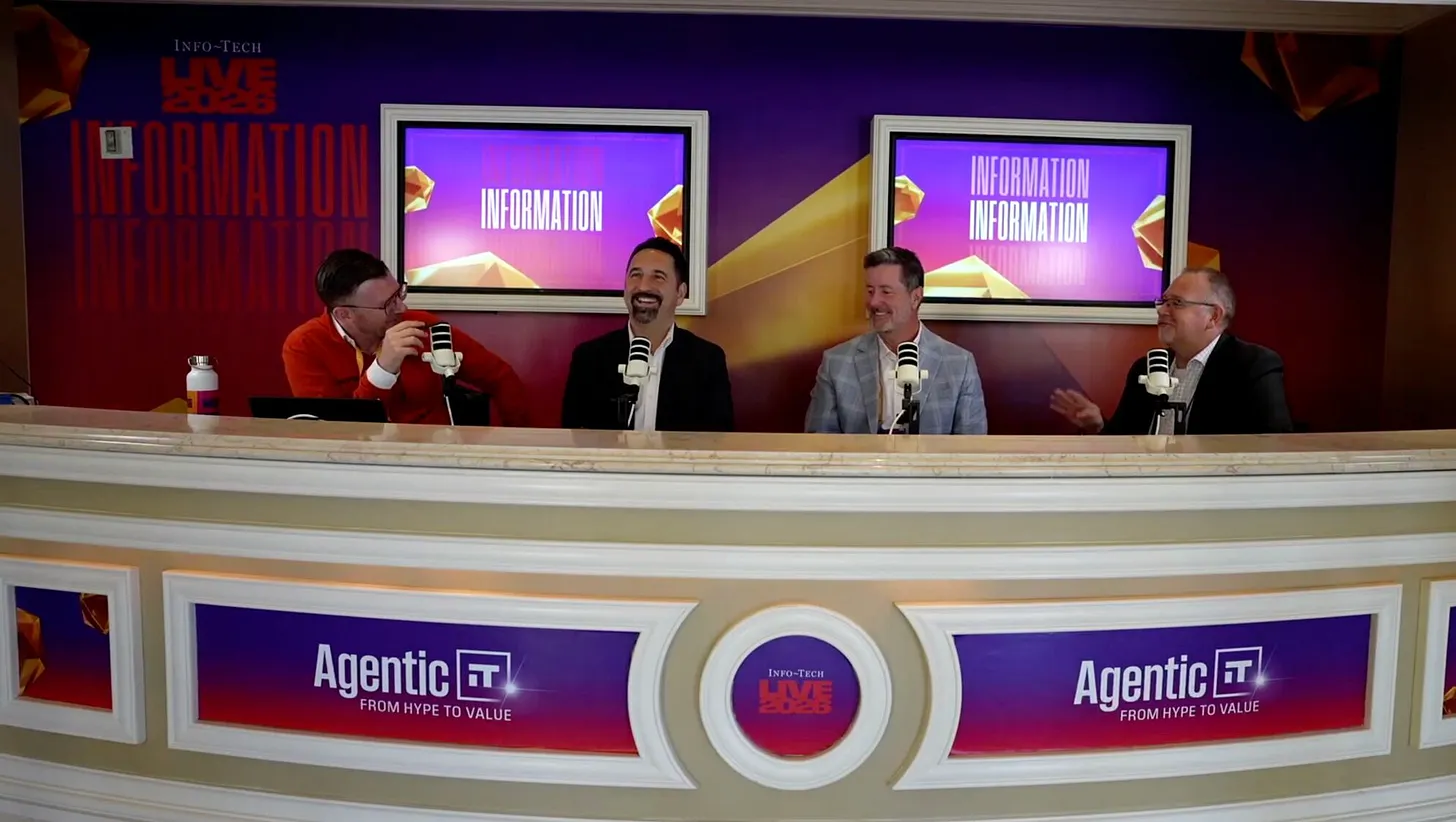
1. 2026 IGNITE Powered by Info-Tech LIVE - Austin, TX - Sept. 17th-18th
If you’re an IT leader in Austin, Houston, or nearby, Info-Tech’s got complimentary tickets with your name on them (just DM me I’ll be there). IGNITE is getting past the AI hype and into the real questions CIOs are wrestling with: how to get your people actually using AI, what the shift from “employee in the loop” to “employee on the loop” looks like, and how to budget when the costs keep moving up.
→ Ready to join the conversation in person? Email joe@techtables.com
2. 2026 EDUCAUSE - Denver, CO - Sept. 30th - Oct. 1st
Returning for a third year in partnership with Carahsoft, and we could not be more excited. TechTables heads to Denver to celebrate the leaders, the stories, and the work shaping the future of higher education!
→ Ready to join the conversation in person? Email joe@techtables.com
3. 2026 TechTables Austin Live Podcast Tour - November 4th
We’re coming back to Texas for a live podcast stop in Austin, TX and we could not be more excited. TechTables heads to Austin to celebrate the leaders, the stories, and the work shaping the future of public sector!
→ Ready to join the conversation in person? Email joe@techtables.com
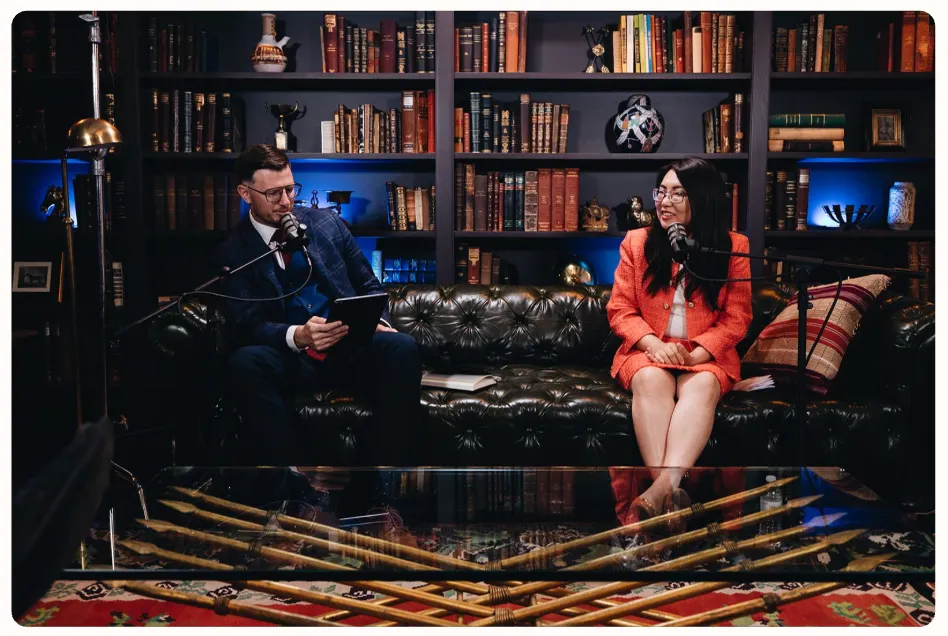
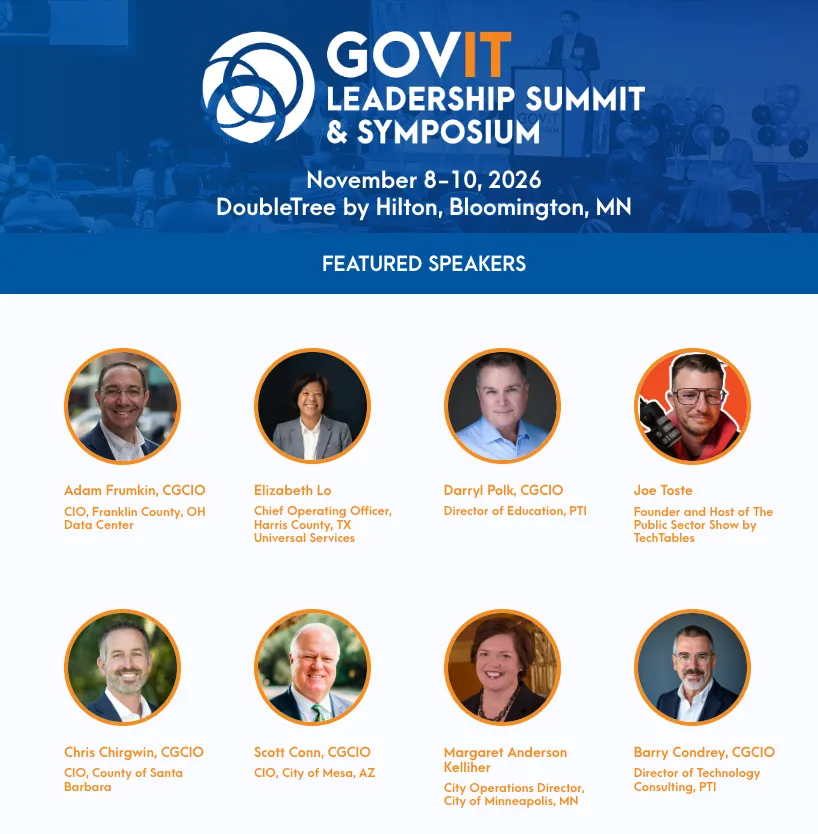
4. 2026 GOVIT Leadership Summit - Bloomington, MN - November 8th - 10th, 2026
We’re heading to the GOVIT Leadership Summit & Symposium in Bloomington, MN and we could not be more excited to celebrate the leaders, the stories, and the work shaping the future of public sector!
→ See the program & mainstage speakers: click here.
→ Attending? Let's record while you're there. Email: joe@techtables.com
Whenever you’re ready, there are 3 ways you can connect with TechTables:
1. 📬 The TechTables Newsletter
Thanks for reading TechTables! Get early access to new episodes, insights, upcoming events, and more — straight to your inbox.
2. 🤝 You shouldn't make the hardest calls alone.
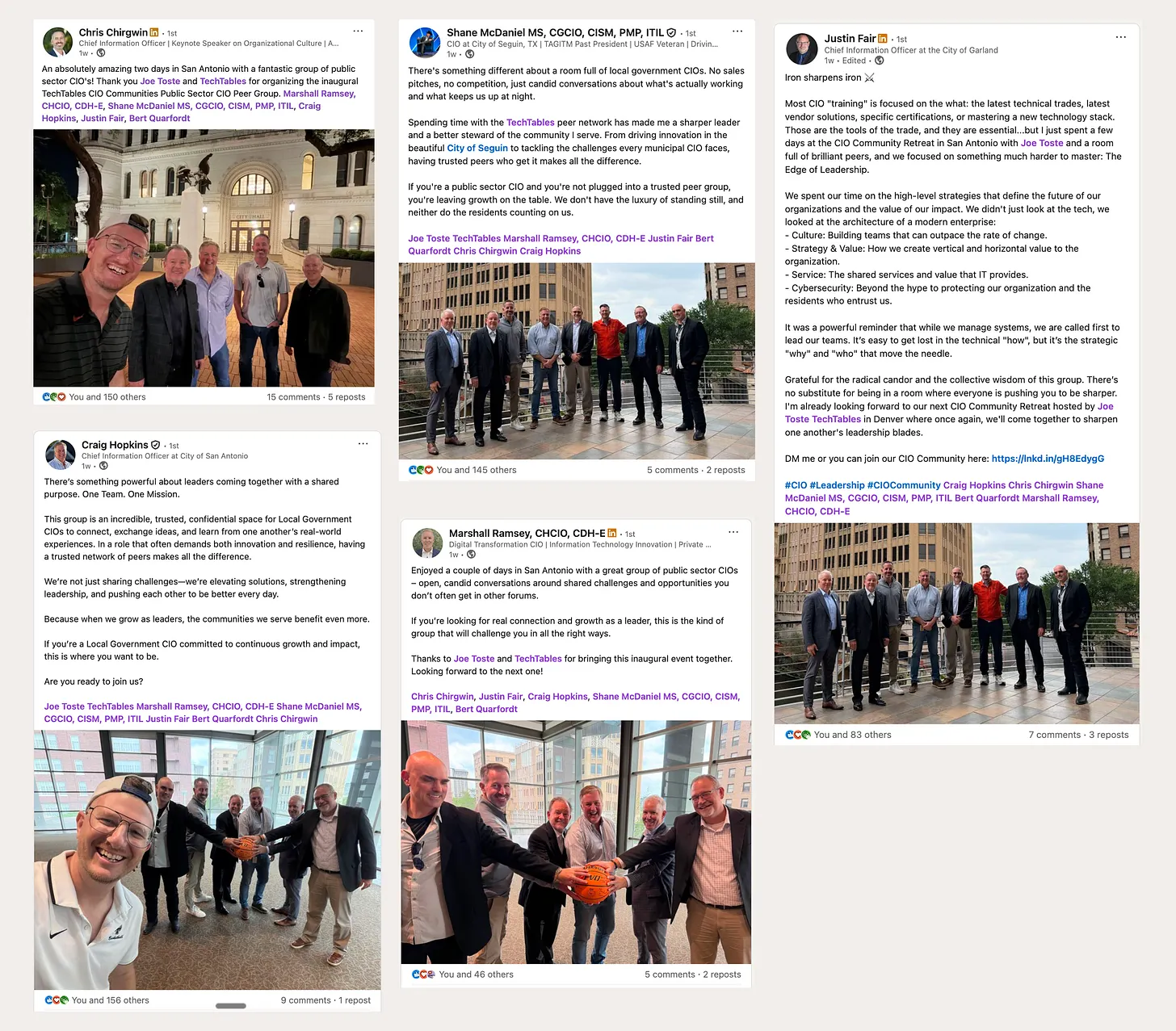
A peer advisory board of local government CIOs. Vendor-free, application only, twice a year in person — with 4x private forums in between.
See if you're a fit → https://techtables.com/communities-local-government
3. 🤝 The Better Together Series
The narrative-driven series bringing together industry partners and public sector CXOs. Discover the compelling stories that unfold when we stop working in silos and start building together.
»»» Email joe@techtables.com to learn more.
[00:00:00] Joe Toste: Welcome to the Public Sector Show by TechTables. Super excited to have three amazing, fantastic guests on the show today. Glenn, for those who don't know you, give us a short intro.
[00:00:09] Glenn Mack: Glenn Mack Chief Technology Officer for the North Carolina Administrative Office of the Courts. Been involved in state government for a little over 20-plus years.
Before that did my tour of duty in the private sector, and happy to be here with these esteemed gentlemen here today.
[00:00:25] Joe Toste: Fantastic. Dom, you're a returning guest. I'm a veteran ... but give us a short, give us a quick intro.
[00:00:30] Dom DiLullo: This is my second podcast with you. The first one was, like, five months ago, I think, down in Coral Springs.
So I'm Dominic. I'm the CIO here in Broward County. Been with the county now two years. Prior to that I was the CTO at State of Florida for one of the governor's agencies. Like yourself, Glenn, I did my tour of duty in both private sector and public sector. I think I'm half between each. Did three tours in federal sector, so I lived a third of my life in DC, Fairfax County.
Do not miss that traffic. Do not miss those commutes. Those were [00:01:00] days of greener pastures to say in terms of things to do and cool stuff. But it was a fun time to be down in DC at those areas. But happy to be with such esteemed colleagues such as yourselves and looking forward to having a fun conversation.
So thanks for having me, Joe. Thank you for having me, Glenn and Jon as well.
[00:01:14] Joe Toste: Fantastic. Jon, you wanna give us a short intro?
[00:01:16] Jon Minshew: All right. Jon Minshew. I am the chief strategist for the Southeast at Dell Technologies. Before that I was 30 years with North Carolina state government, where I retired as a CIO for the governor's office, CIO for lieutenant governor's office, and the state's first chief customer officer over at NCDIT.
I did a nice 30-year career. Glen and I worked together many nights, many long weekends, and transferred over to the private sector in 2021 and been loving it ever since.
[00:01:45] Joe Toste: Fantastic. It's a reoccurring theme, Jon, that I hear from people at Dell who've been on the, who've been on the show.
They left the public sector and they just love Dell. So I'm still waiting for my invite. No, I'm kidding. I love running my small business. Ah.
[00:01:55] Jon Minshew: It's awesome, I can tell you.
[00:01:57] Dom DiLullo: We're a huge Dell shop. We've been Dell for many years, Jon. [00:02:00] So I don't know if Steve LaBouef and those guys. Oh, yeah. I know him. Yeah. We call... He's- we learned about him. He's a pretty cool guy. He's recently married his daughter off, so if, the next time you see him, ask him how his newly-wed's doing and how the new husband's doing.
We like Steve. Steve's a good egg. He's a good person. Very customer-focused, very let's just get the stuff done, roll the sleeves back and get things accomplished. There's no fluff with that guy, so we appreciate that.
[00:02:22] Jon Minshew: Yeah, he actually speaks highly, very highly of you also.
He's the one actually turned me on to you, and Joe said, "Oh, I know that guy. Yeah, let's do it."
[00:02:31] Dom DiLullo: All right. I'll be sure to give Steve a thanks and a checks in the mail for him. There
[00:02:35] Jon Minshew: you go.
[00:02:35] Dom DiLullo: Some Dell servers probably, right?
[00:02:37] Joe Toste: That's great. I was the, what I was gonna comment Jon, was when we had Derek come on the show we had a whole mini segment where... And it was Derek came on with Lisa Kent, the, she just retired for- now former CIO for the City of Houston, and Melissa Craft, the CIO for the City of Frisco in Texas.
And Derek just had this segment where he was just like, "This is how much I love Dell. Let me just tell you." And we're like, "Yes," "Keep [00:03:00] going." Lisa's Derek, I'm so glad you're feeling so much better." Just, we're, I'm glad. It was pretty funny.
[00:03:05] Jon Minshew: As everyone on this call knows, it's amazing when you transfer from 24 by
[00:03:11] Joe Toste: 7-
[00:03:11] Jon Minshew: dozens and hundreds of emails to a normal corporate, life where you're not 24 by 7 and you're not answering 400 emails a day and you're not getting called on the weekends, it's really awesome.
[00:03:23] Joe Toste: That sounds great. I actually can't empathize as a small business owner. I have 24 of my-- I, I don't even know what that, I don't even know what that's like.
But for our audience, it's like, all right, hey Joe, we gotta get this going. Glenn, so for those who, don't know the landscape give us a 30,000-foot overview in North Carolina and the courts.
[00:03:38] Glenn Mack: Yeah, sure. We have 100 counties. Each county has at least one courthouse. 105, I believe, to be exact.
And what my agency does is oversees all of the technical areas and administrative functions for all of the courthouses and court system for North Carolina. So it's a pretty broad stretch from Murphy [00:04:00] to Manteo. For those of you that aren't familiar with geography, that's from the mountains to the coast.
And it's just an exciting time for me. I'm recently in this role, less than a year.
[00:04:10] Dom DiLullo: Oh, congratulations.
[00:04:11] Glenn Mack: Spent the last 17 years with public safety and adult correction. And so what I like to share with folks is I know what happens before you go to court, and I know what happens after you go to court, so it was a seamless transition for me to move into courts.
And it's just been a phenomenal experience thus far. A really strong group of folks that work there, not only that I oversee, but just my peers. And just an exciting time for North Carolina as we've implemented our Odyssey eCourts solution which allows for we've basically digitized the court system.
And so we're just excited about the future of the court system in North Carolina and go from there. See what things I can add to the mix to make it even better.
[00:04:56] Joe Toste: I love that. We're gonna go... There you go, Dom. I love that. We're gonna [00:05:00] go-- we're gonna come back to you in a second. I just wanna give Dom the opportunity to kinda lay the 30,000-foot overview in Broward.
[00:05:05] Dom DiLullo: Yeah. Yeah. So first, congrats, Glenn on transition. That's, it's a great opportunity for you. It's almost like a seamless moving over for you. It's you're going from one house to the next, and you're just continuing to building out the foundation. Here in Broward County, we have 31 cities in Broward.
We have 67 to 70 lines of businesses. The cook of the course for us is the constitutional, so my role as the CIO for the county is to oversee cyber applications, policy artificial intelligence infrastructure, endpoint security, the usual things we do on the front and the back end, and collaboration with across of our 14 IT managers across all of our lines of businesses.
So our port, our aviation, our water , are our enterprise capability pieces. Our constitutionals are like the cores, the sheriff's offices, secretaries of elections. But there's a lot of collaboration and a lot of communication and building of synergies of technologies, and it's been a good two-year journey.
So we've been heavily investing in [00:06:00] AI in terms of what we can do, in terms of capabilities, product automation. I'm very happy we have a full authorized CAP policy. We have a full authorized governance strategy with an intake process. So as we're learning and culturally learning how to use these tool sets it's very different from the private sector where you have, scale and speed.
And I've been in both sides of the equation, so I-- you gotta figure out where you pick your battles in terms of what's the need versus the want, ask the question. It's a lot of communications, bring the group along, a lot of consultation. But it's been a fun two years, and we've got a significant challenge ahead with some of the property taxes coming up on the ballot.
I'm excited for it because I still think automation is the key to everything. Technology drives all these innovations we hope to be a chance to partner and provide solutions and scalability to whoever the voters put out in November. So that's the kinda high-level view. But my day is a mix of collaboration, strategic coach.
I have 165 people that work for me. But every day it's a new challenge, [00:07:00] and I'm just happy to be in the role that I am. And last thing, I'll close, Joe. I still think, as I shared with you, it is a great time to be a CIO. You couldn't ask for more capabilities, opportunities, platforms, software.
But with every great innovation, there's always the other side of the coin. The threat landscape becomes more open, more challenging, so you're always battling the scale. So for us, it's, it's what our customers want, but also do right by the entities and have the right security balances, but also from the revenue side, if you're public sector, protect, defend the citizens.
If you're in private sector, grow revenue shareholder value. It's a great time to be in our space.
[00:07:35] Glenn Mack: Exactly what Dominic just said for me as well. That wa- that was a good summary. Yeah, very well. Thanks, man. Appreciate it. Thank you. Very well stated.
[00:07:42] Dom DiLullo: Thank you
[00:07:42] Joe Toste: That, yeah, that is great.
We're actually gonna go a little bit deeper. Okay. So- All right ... when I was at InfoTech Live, the big theme of their conference was, that I thought it was kinda timely as I was thinking about this, was from hype to value for AI and Dom kinda hit it on the head of talking about AI, [00:08:00] automation.
Some of the stuff that, that comes to mind right now for me that I'm thinking about is daty- data readiness before AI. This is a big one I think off camera, right? There's a lot of conversations around, "Hey, actually I'm not ready yet. Here's the process we're kinda going through," different agencies or at different landscapes.
So Glenn, yeah, I'd love to hear from you first. You're just kinda, I think you said under a year and getting your feet wet- Yeah ... at the agency. What is the landscape and how are you preparing for for AI, which is just constantly evolving? And when I say AI, I know in public sector a lot of times I refer to generative AI.
I know there's other types of AI, like the Waymos I love to ride in and all that kind of fun jazz and robotics and all that stuff. But I'm using this as general and you know that, but I'd just love to hear from you, like, where's the readiness? Where's the landscape for you?
[00:08:43] Glenn Mack: Yeah, that's a great question.
I'll tell you, in my previous job, we were well into AI. We were using facial recognition, we were building code. We were doing a lot of behind-the-scenes techy things with AI. I transitioned over to the courts, and I'll just say they had a [00:09:00] much more conservative approach to AI, meaning the policy was there was none.
We're starting to shift the narrative on that. I think the, there's recognition of the value that AI can bring. And with that, we're playing some catch up, to be honest with you. We've gotta prepare our environment. The data modeling piece had never been accomplished in prior years, so we're looking at how do we model our data- to prepare it for the world of AI related solutions and initiatives. We are doing some pilots today. I'm very thankful for that. The director has seen the light, and we're starting to embark on a more of a crawl, walk, run approach to AI. We're looking at how it could be leveraged for the use of the judges.
Some back end office administrative functionalities and efficiencies created there. So I'm just, I'm really excited about it. As I mentioned, when we were getting started, I was at Cisco Live a [00:10:00] couple of weeks ago, and obviously, AI is the talk of the town. And the ability for Cisco to leverage things like Mythos- and implement it into their software that they run their network equipment on to, for lack of a better way, self-heal the network, right? So they can able to... They're touting the ability to pinpoint where network problems are. And so I'm excited about that. We're a huge Cisco shop w- at AOC, and so I'm excited about the opportunities for AI to make our jobs better, faster, smarter, more secure.
[00:10:34] Joe Toste: That's so great, Glenn. I love that. No, actually, I just had she was fantastic Jeannette Vannoy, who is the CIO for the San Bernardino Courts out here in California. She came on the podcast, and it was a very similar...
The court's much different than maybe s- as far as let's call it AI maturity. And there's a little bit more of that caution.
[00:10:53] Glenn Mack: Yeah it's definitely a much more conservative- ... approach to it. I know that there's been some legal [00:11:00] proceedings already or some decisions where some judges have leveraged AI in, in formulating some of their decisions, and those were deemed admissible.
And so there's those concerns of how much retention of AI prompting and results do we need to retain? So those things we're trying to wrap our heads around-
[00:11:18] Jon Minshew: Yeah ...
[00:11:18] Glenn Mack: so that we can enter this fully prepared, fully knowledgeable so that we don't get caught in any type of situation when it comes to AI you know- All the way around really.
There's just a lot to ingest especially since AI really was never really allowed into the agency. So we got a lot of work to do, prep work to do and really knowledge transfer- Yeah ... knowledge education on our own part from administration, from the technology piece from the leadership to understand what the benefits or what the risks are.
[00:11:50] Jon Minshew: Here's what, I'm sorta glad that I'm on this side of the fence versus in Dom's and Glenn's shoes is due to the fact that the legislative [00:12:00] pressure. Could you imagine, because AI is really a tool you use to accomplish something, right? But because of all the hype, legislators are saying, "We want, Glenn and Dominic, we want you to do AI."
Okay, what do you want me to do with it? I don't matter. Just do. Just do it. 'Cause you imagine 50 years ago if they would say, " Hey, guys, we want you to do COBOL. We want you to do this programming language." No outcomes just do it because it's so hypey. So what we're seeing all over is that, CIO's under legislative pressure, but and the CIO's can't really say, "We're not ready.
You gotta get the data ready." So that is a lot of work behind the scene.
[00:12:39] Dom DiLullo: Yeah. And to Glenn's point, I think he keyed on a lot of key themes. You gotta crawl before you run, before you walk, right? Those are the most important principles you gotta do at first. But I take a different tact to it, and this is where I go back to the themes I've had a few years back.
We went down this path with data catalog, mass data management, how good your data is and classification. So I think if you've done those [00:13:00] underlying pinnings already, you've got a good foundational piece. AI's gonna use that existing data to do prompting on top of it. So if you've already got a good catalog of what you've already built, you've got 90% of the work already there.
Doesn't have to be perfect. It has to be properly classified, identified and retrievable And then also on the hype side, Joe, this is where I get really excited. I can start consolidating some of my data warehouses, my data lakes, and my SaaS environments, because all I have to tell the data is it's over there, it's over there.
It's in my batch, it's in my CRM, it's in my data, it's in my SQL, it's in my Azure, and give it the instructions to learn. So that's the good side of it. The other side that Glenn was saying earlier is that is the education piece and some of the challenges and the policy. It took us two years to get our CAP policy approved because we want to be very targeted, only generative first, basically, right?
And that means no conversational AI, mostly Copilot, Grammarly, ChatGPT. So we've got those in place, and we're gonna be adding probably either Claude to it for [00:14:00] coding. We might go down the Perplexity route for research, for analysis, as a tool to use, basically. And the second part is, we wanna make sure that who uses it has...
You were saying, Glenn, is what's the outcome? What's the points, Jon, right? We have a very specific policy. If you're gonna do X with something, you gotta tell the business, tell us, tell the-- let the business tell us what the outcome is. Do you have the business case identified? And if you do, and if they approve it at that level, then the security piece is easy after that.
So we had about 30 use cases that we identified what the output was gonna be and the outcome. We built those models. And the other thing is, we learned also is that there are very specific use cases for very specific models. So if you're gonna use Copilot, you're gonna use the Copilot ecosystem. If you go to Gemini, you'll use the Gemini ecosystem for those things.
And Glenn, we're a huge, we're a massive Cisco shop just like you. Every vendor we talk to has an AI component to it. But the one last thing, Joe, and I think it's an important question for us going forward on the hype. We're already looking at the [00:15:00] tokenization cost going forward because the hype for us is not living up to the data point.
We're already seeing anecdotal evidence. It talks about budget is already being wiped out because of token use and developer being use cases. So we're taking a re-revaluation across the entire enterprise about how this is gonna be done, and we're forcing our vendors to say, " How many tokens are we getting per AMU, and what additional token cost is per AMU, and how much is gonna be generated for that individual seat that we're buying?"
So we're back-- we're actually putting ourselves back into a corner. Gotta figure that piece out because I can't budget that right now. I have no way to model that right now going forward. So the hype is on the token piece. We're gonna start seeing a price war very soon between all the language models out there
[00:15:45] Glenn Mack: Dominic, you hit the nail on the head with the token uncertainty, right?
Yeah. Nobody wants that surprise bill. And as we learn these tools, there's obviously gonna be more token usage because you're just figuring it out on the fly. Yeah.
[00:15:59] Jon Minshew: Yeah.
[00:15:59] Glenn Mack: And [00:16:00] so there's a lot of concern budgetarily on how is this gonna work. Yeah. How do we meter? How do we audit the usage?
How do we control it so that there's not these unpredicted invoices that- Yeah ... that show up at our doorsteps?
[00:16:13] Dom DiLullo: And Glen, I'll send you something. I have a collaboration with a really good doctor, Dr. Her name is Dr. Carrie Miller. We work very closely on a lot of things. She's got some token calculators that I wanna share with you that we're using as a model.
But we're asking the ChatGPTs, if I buy a $20 seat license per person, how many AMUs am I gonna get out of that seat license? Yeah. Because when you do the token numbers, you get to see how many words are created on that. And then also, if you get a PDF file- Oh, yeah ... that you throw into ChatGPT, if it's not properly rendered, you're gonna waste your tokens as it reads through it before your first prompt comes in, basically, and you're already down your prompt count.
And before you know it, you're saying you've hit the limit of your session. You're timed out, and come back tomorrow, it may recover, basically. Or just pay more money. And also, the last thing, Glenn, for the courts we have here, johan [00:17:00] Johan's a great guy.
He runs the courts. They're doing a lot of great stuff on AI, but they're also coming into those challenges too about the cost factor going forward because they have records or the retention policy. So everything you talked about, we're hitting it too, basically. But I wanna share with you what we have on tokens to help you guys out.
[00:17:15] Glenn Mack: Would love that. I think the more education that I can bring to the table- Yep ... and understand it myself would, it would be just a value for my agency and the state in it and of itself, yep.
[00:17:26] Dom DiLullo: I'll send it out to you after our call today.
[00:17:28] Glenn Mack: Appreciate that. Thank you.
[00:17:29] Dom DiLullo: Absolutely.
[00:17:30] Joe Toste: Can you CC me?
That would be... I would love to see that.
[00:17:32] Glenn Mack: That'd be awesome too No. Yeah. No. It's classified, Joe. Sorry. Man.
[00:17:36] Dom DiLullo: It's... you have to buy- Government official's eye only ... you have to buy Glenn. You have to bring Glenn and give him all new jackets.
[00:17:41] Joe Toste: Yes. I thought it was, I thought it was half a jacket. I thought he was getting half or a sleeve.
No.
[00:17:44] Glenn Mack: No. No. Jon's one jacket is enough for Dom and I. That's right. Off the little material- But for Glenn's team, he needs about
[00:17:47] Dom DiLullo: 15 jackets to cover the cost of the document. Yeah.
[00:17:51] Joe Toste: Okay, that, the tokenization piece In all seriousness, super fascinating. I think a lot of folks are... I think there's a conversation today, and I [00:18:00] think it'll probably rise in the short term.
I think at some point it, that it'll fall. I
[00:18:04] Dom DiLullo: disagree ... I think we're gonna have some- I disagree. I wholeheartedly disagree because you have to have the vendors recount- recoup their investment costs, and the only way you're gonna get that is to use the tool on the token piece. You're gonna see a price war, s- it's already starting, to bring people in, and you're gonna start seeing meter costs.
We have a vendor that already bought a c- a Salesforce, bought a company called Meter, which is gonna be tied to their agents, which is subscription user-based models. It's like your water meter at your home. The more you use it, you're gonna get a monthly bill. The less you use it, so it's gonna be like that, consumption-based, user-based policies.
How do you budget for that? How does Glenn- how do Glenn and I go to our s- our population and say, "Okay, I've got 1,000 agents in the entire enterprise." Are you gonna use all those agents? I have no way to model that on a monthly scale. It's impossible to do that.
[00:18:54] Glenn Mack: So Dom when I was at the executive symposium at Cisco Live my colleagues across the [00:19:00] country, both private and public sector were all discussing these same, the very same thing.
And one of the things that was a common theme was, is we're not buying licenses for everybody in our organization. It needs to be more strategic, more targeted, so that we can almost have some control over the meterization of these tokens.
[00:19:20] Dom DiLullo: Yep.
[00:19:21] Glenn Mack: But really, one, one guy, and I forgot where he was from, said, "Basically, you're hopping in a gypsy cab, and you have no idea what the bill is gonna be when you get to your dest- destination."
That's
[00:19:32] Dom DiLullo: per- that's brilliant. I like that. I like it. I love that. That's really
[00:19:36] Glenn Mack: good. And so really, Joe, it, we don't know how much these tokens- Yeah ... are gonna cost.
[00:19:41] Dom DiLullo: Yeah.
[00:19:41] Glenn Mack: And based on the usage and the compute on the back end. And so that's, there's real concern because some of the questions we've already asked, we've met with Anthropic.
We've had them come in, right? And very promising use cases with them. But how much is asking this question? And they, the representative [00:20:00] really couldn't answer the question. Yeah. Yeah. It depends on how complex it is and what all they have to do prior to spitting out an answer.
Yeah.
[00:20:07] Dom DiLullo: And then Joe, last thing for that. If you go back to Gartner's CIO Summit last year, they're really getting into, agents and bringing agents into your security operations center. Those require tokens. Those are analysis. So wherever you have a business unit that has agents and tokens, let's say I've got, let's say I got 20 strategic lines of businesses that I know I'm gonna use that.
That cost is gonna, is not always ephemeral. It's gonna be changing up and down. There's no way to gauge that on a annual one-year budget basis. It's impossible to justify that. It's impossible to project two years from now. I think there's gonna be a consolidation of all these AI tools at some point because there isn't enough seed money to go around.
So if you're ElevenLabs, if you're Notebook LLM, if you're Perplexity, ChatGPT, OpenAI, Grammarly, if you're in the top 10 sphere, you're gonna be there. But some of the smaller ones like Hygene or Gamma that you use for other things, it's gonna become, fight or flight and survival of the fittest at [00:21:00] some point.
And so I worry about that part. So tokenization cost, the language models, the monetization, the data retention, the metadata we capture we're just getting started in a lot of these things, and no one, and like Glenn said, no one has an answer. But when you ask an executive, they'll say pricing will be fluid.
We'll be close to the customer. We wanna make sure we meet their needs." But in reality, Glenn is a state constitutional court. I'm a county that's gonna go through a significant change in how we allocate our dollars, so that's all gonna change going forward.
[00:21:32] Glenn Mack: This is the newest version of moving to the cloud.
[00:21:35] Jon Minshew: Yeah.
[00:21:36] Glenn Mack: No, that's a great example. Moving to the cloud, it was free. Put your stuff up there, not a big deal. And now the cloud co- the cloud storage costs, whether it's hot storage or cold storage- ... can vary widely and we're seeing some exorbitant expenses around cloud storage now, where we're even contemplating do we bring it back down?
Yeah.
[00:21:55] Dom DiLullo: We have our O365 A plan, but one of the things we're thinking about going [00:22:00] forward is the metadata content that comes from the prompts, and how long do we retain that, right? There's no retention policy for a prompt, but you could be under a public record request for the use of those tool sets.
So how long do we keep it? And so we're fiddling with that too as well. So Joe, I don't think this is gonna go down anytime soon. The hype's gonna keep going up. But what we're gonna be on the other side of that hype coin, right? I still think there's gonna be less on the spend in enterprise because you're gonna hit an inflection point, and we have to start consuming.
I don't know about Glenn, but we're hesitant with Agentic because we wanna figure out regenerative first, right? We wanna fill out GenAI first, get that in place. But we know the Agentic and non-human entities are coming, and I sit on an advisory board where I have a tool that does that stuff, but I gotta redo my infrastructure at that point, right?
So Cisco will come and say, " Start orchestration, segmentation." That's a cost factor. So a lot of this stuff is tied to how much capital I get to do these things, and we tell our public sector vendors, " We don't have an infinite amount of money to do all [00:23:00] these great things." So what's the must must-have I can do right now to ensure that Glenn's courts work well or, and my court works well and my citizens work well, and Human Services does their thing.
So it's gonna be a choice at some point
[00:23:14] Joe Toste: Yeah,
[00:23:14] Glenn Mack: Dom you're right. I'm looking to modernization of my court systems. But oh, by the way, we've got a refresh-
[00:23:21] Dom DiLullo: Yeah ...
[00:23:22] Glenn Mack: that's due. And things will become unsupported, they'll be out of warranty, et cetera, et cetera.
[00:23:28] Jon Minshew: Yeah.
[00:23:28] Glenn Mack: And so how do you balance those CapEx expenses that you need to have just to keep what you have the lights on, but also continuing to modernize-
[00:23:36] Jon Minshew: Yeah ...
[00:23:37] Glenn Mack: leveraging AI. So it is a balancing act with what funding is available.
[00:23:41] Dom DiLullo: Yeah. And I'm doing my, and I'm doing my three-year projection right now.
I gotta think three years out. I can't do it year to year because Dell has said it to us as well as Cisco the compute cost is not gonna change in another three or four years. You won't see a price reduction until 2030 at the earliest. And that's everywhere. So [00:24:00] whether it be a GPU, a compute cost, and I can give you a good example.
The server I bought from Dell last year was about 40,000. That same server is now 75,000 just for the mid-tier Gen AI GPU, not with the high end, but enough to get me some level of compute power in that space. So I can't buy a Cadillac. Even if I could, I wouldn't because I would blow out my budget, basically.
[00:24:22] Jon Minshew: So do either one of you would you think about more in the future of consumption models? For example, Dell has a pay-as-you-go,
[00:24:30] Dom DiLullo: See, I, yeah I hesitate because my budgets aren't always guaranteed every year in my operating budget. So it's very difficult to sign up for pay-as-you-go because I don't know what population's gonna use that stuff going forward.
It's impossible for me to be that, that crystal ball. If I had that, I think Glenn and I probably wouldn't be on this podcast. We'd be trading stocks in a boat somewhere, probably. Making a lot of money, it's not gonna happen. And we can't rely on the vendors to do it because from their side it'll be if you do it this way, it's a [00:25:00] flat rate."
Amazon will tell you come into our, capability and spend this much money per year, you'll have this great stuff." I can't even guarantee that spend. It's impossible to do that. We have to get super creative in a lot of things without, sacrificing the investment and the quality and the protection we have to do.
[00:25:15] Jon Minshew: So-
[00:25:15] Glenn Mack: Yeah. Yeah. I agree with that. Jon, you, Jon, you know how it is. We need to have our numbers fleshed out. DIT was probably an exception. You guys had a lot more fun money to do different e- exploratory, projects with, but we need to be able to forecast that out.
We can't have these surprise invoices coming in or use. If at a, to Dom's point, if something explodes in use and popularity and we see a spike in- Yeah ... in usage which results in a spike in the bill that would be hard to to ingest because we didn't predict that. Yeah. Just don't have it in our budget.
[00:25:52] Dom DiLullo: And we... I know I've asked a couple of my strategic vendors, let's start thinking about, you know- A best swag model because we wanna [00:26:00] put the county, and I know Glenn is probably thinking this too as well, how do you make his court system the best in the United States, right? To be forward-thinking, you gotta have forward-thinking budgets to also have those scenarios.
And we're asking these hard questions, but they have to be asked now because if you don't ask them now, we'll never get the answers until it's too late, basically. And so we are in a kind of this unique, in, in this unique bubble of we have to innovate, we have to do these great things, but there's also the fiscal reality part.
I go back to, all... You guys remember the dot-com days. I was a Cisco guy in late 1999, 2000. Jon Chambers' famous line, "It's a 100-year flood." We're getting to that saturation point where the spigot turns off on some of the generative AI and the investment spend, the data center spend.
You're starting to seeing some hesitation there. But going forward, we gotta use what we have. And I'm, I keep telling our vendors, "We'll use what we have, but if I can't get X, I can't buy Y because the oversight has to be there. And if I can't oversight it, I'm not gonna implement a tool or a piece of AI tool."
And those are the realities that are gonna have to come to face, and that's just the [00:27:00] expectations going forward. So on your hype question, Joe, I think the hype is still there, but it's in different areas now. The concerns are in different areas too. Gen AI was three years ago. We're already in Agentic and non-HIs and, massive agents everywhere and full autonomous.
I know Glenn, I don't know about you, but I'm not going full autonomous. I don't have a use case for it. We'll just do assist models and semi-autonomous and call it a day, basically.
[00:27:21] Glenn Mack: I don't have the budget, the skill set, or the manpower or probably the support for that right now. So- Yeah ... I think we're, we're always what?
N minus two, minus three-
[00:27:32] Dom DiLullo: Yep ...
[00:27:32] Glenn Mack: from the private sector. We'll figure it out. But it's gonna be interesting to see how it shakes out in the public sector with the way that the industry is going full steam ahead. It's moving faster than we can even- Yeah
comprehend- Yeah ... in the public sector.
[00:27:47] Dom DiLullo: Oh, God yeah. That's the hard part. Yep.
[00:27:49] Joe Toste: So just to round out, I think this is actually a really great topic that a lot of folks are struggling with. I'm in the boat of hoping market forces actually lower prices long-term on the curb, [00:28:00] but I might be wrong.
But Jon, I wanna Jon, I'd love to hear from you. How are you advising clients right now, right? If you just kinda put Agentic to the side everything from data lake houses to just in general we talk about kind of data readiness. Dom's budgeting three years out.
Yeah. How are you working... With 30 years in, in public sector, how are you both empath- empathizing and then guiding at the same time?
[00:28:24] Jon Minshew: A couple things there. One thing that I love that Dell has is we go in and talk with customers. We have a day fee-waived workshop where we sit down with the leaders and their trusted advisors and their directors, and we go in and say, "Okay, what is it that you wanna do with AI?
What outcomes?" And we say, "Okay, let's prioritize these with you." And it's a chance to see, with our AI experts to see, some of the hard answers that, some of the hard questions, hard answers that you want. I think that's awesome, especially when it's no cost to you. And that way you get to sit down and not...
It's n- nothing to [00:29:00] do with sales. It's a pure business outcome. How can we help you? How can we be a partner? I love that part. We also realize that s- from my experience and our experience in North Carolina, you're being asked to predict and project two or three years out for sure, right? But, a lot of legislative bodies and a lot of legislative sessions are saying, "How can we cut?
How can we cut taxes?" So the agencies across the United States that we deal with are saying, "I had to cut 10%. I had to cut 15%. I had to do this." And now with the market the way it is and we're at the mercy of the market also just any state government out there. The demand is so high right now we have to ride out this, somehow ride out this wave for two or three years.
It's a fact. So how can we sit down and go over, okay, what are some quick wins? 'Cause you need quick wins for your legislators. You need to see you're doing something. You need something that's really beneficial to your constituents, right? And just sitting down [00:30:00] and seeing the business side, and I love working with the business side of the folks to see how we can work backwards.
That's really what you gotta do, is, okay, this is what we wanna accomplish. How do we get there and how do we get there at least with a decent budget?
[00:30:14] Joe Toste: Okay, so Kind of rounding this to, make, making the business case up, up the level, right? So I'm thinking about Dom I'm thinking about Glenn.
You gotta make this case to the CFO, the CEO. I don't even know who else you report to. You gotta get buy-in from, you know- ... if there's legislatures, you gotta get you gotta get all kinds of buy-in.
[00:30:31] Dom DiLullo: It's Glenn's, it's Glenn's president and it's, and actually hi- it's his emperor- ... we have to go talk to as well.
[00:30:36] Glenn Mack: Yeah. I've got a, I've got a director and the- there's an assistant director that has a lot of, Yeah ... voice impact, the CFO and then the chief justice, the gentleman that oversees the c- the court system for North Carolina. He's over the North Carolina Supreme Court.
[00:30:52] Dom DiLullo: Yeah.
[00:30:52] Glenn Mack: And so-
[00:30:52] Dom DiLullo: How
[00:30:53] Glenn Mack: many here- there's a lot of buy-in.
And then all of this costs money which we don't have, so then we have to lobby for it.
[00:30:59] Dom DiLullo: Yeah.
[00:30:59] Glenn Mack: And whether it's [00:31:00] one time or recurring. So there's just a, You've gotta prime the pump, and you've gotta g- really put in the effort for the justification- Yeah ... and and see if the money's and funding's available.
And then I'll just toss this in as well. What I'm c- running across is lack of skill set, expertise as we move into this arena.
[00:31:19] Jon Minshew: Yeah.
[00:31:19] Glenn Mack: And so the leadership has been around long enough where they understand if you bring a vendor in to help you, then what? Are they here forever?
[00:31:27] Jon Minshew: Yep.
[00:31:27] Glenn Mack: How do we obtain the necessary in-house skill sets to do whatever it is that we're doing now, right?
Yeah. The shift is faster than the traditional state employee career growth life cycle.
[00:31:40] Jon Minshew: Yeah. But we love to come in and provide services. And at the very beginning, we love... we'll be up front. We love to work ourself out of a job, right? Over time, no matter how long it takes, we l- you know, come in, stand it up, so you have the latest, greatest, but then train your staff.
You go hire staff o- you know- ... over the years. We [00:32:00] provide staff. And then slowly you'll be able to take it over. I think that's a great approach. And if it just so happens, you say, "Hey, we love you guys being in here," and we can just extend that contract we can do the dirty work and you can concentrate on, the bigger- Yeah
bigger fish.
[00:32:15] Dom DiLullo: Yeah. And here in the county, so I work for a CFO. We have agenda reviews. We have, anything above a certain dollar, it goes to the board for approval. But a lot of our stuff, a lot of our big capital stuff is, are like standardized and the contracts are just like either renewals or new capital or they're just, ref- refresh cycles.
But one of the things that Glenn mentioned was about the budget. On the vendor side, of course, we have to educate the, the commissioners and the board and our staff members and our executives that these prices weren't the same five years ago. So for example- ... when you replace an end-of-life product with a new one, there's a massive sticker shock.
They go, "What happened?" I said that product was 10 years old. Now we're buying something that's 10 years newer." And so there's that education process, that market survey piece. We use, we're a Dell shop, we're a Cisco shop. Glenn made it very clear, we do a lot of, [00:33:00] in-house stuff.
Talent's hard to find, of course, when you're a public sector. But our rule is, we implementers for a year, and we maintain it ourselves. We have technical account managers for all of our reps. We do a lot of Cisco stuff, Microsoft, Dell services for that. But we try to make the county an employer of choice, which is sometimes hard to find good talent.
We believe in that. We don't do a lot of staff augmentation with most of those roles because it, it hurts the morale of the people that we're trying to hire. But we also understand that we have to have, in a situation, we have an ad hoc, we have to get somebody, we'll go to our vendors and say, "Who do you have?
Do you have a Cisco engineer? Do you have a Dell person? Do you have a Four Net guy? Do you got this vendor or that vendor?" So we always have those balances, but, Glenn, echoed a good point. The workforce talent is gonna be challenging going forward and trying to find these skill sets.
It's a constant virtuous symphony of things that happen, and if one key is off, if they go back and, hit the mic again and start up again and start, redoing the sheet of music again, basically. And it's a challenging process because And not to put the vendors on the spot, but the vendors make it harder for us to justify some of the products sets because of the price increases that they have to maintain a profitability.
We [00:34:00] understand that part. We also have to say y- you can't ask for this much money. I can only do this much, you gotta come... where can you meet us and allow us to do things, allow Glenn to be, successful with the courts and make his district court people happy, give him the tools he need to be efficient so their case log comes down, not back up because they don't have technology.
Or for us in the county, citizens coming to our portals and seeing things and doing things, right? We need vendors to put some more skin in the game during this transition period until the pricing becomes stabilized. And that's the conversation we have with our vendors. Is saying, "You wanna be with the county, we want you here, but we need you to be truly in," and that means, you sacrificing margins for the greater good, basically.
And some do, a lot don't.
[00:34:41] Glenn Mack: I had that conversation with one of my partners this morning. And I will say that my primary vendors, the ones I've been using and working with for years over years, they're in. They've got skin in the game, and they are truly business partners, and they- Yep ... understand the impact that they make and the dependency we have to work with them, [00:35:00] so-
[00:35:00] Jon Minshew: Does one of those-
you're right ... start with a D?
[00:35:02] Glenn Mack: We would love, we love the D- the D folks.
[00:35:05] Dom DiLullo: We've had many workshops with Steve in a lot of areas. Sometimes they work well, sometimes they have a fit. There's a lot that don't, but we love those conversations. We maintain that relationship. Cisco's the same way.
We got a lot of credits in out there we're trying to find, every option we have, every creative thought is on the table. And then, we're gonna have to be this way for a while until we get some kind of stabilization. It kinda goes back, I go back to your business history.
We were this way in '99 and 2000. We're buying tons of stuff, tons of platforms. And then we get, there's a massive crash. So we're trying to get ahead of that now. I think AI is a good lesson learned from those days in the past. Remember, history has a way of repeating itself, and you're seeing it right now.
And so I know I don't wanna be in that wave that comes down. I wanna be able to ride it out up here and be stable enough and not have such a massive low where I'm sacrificing tech to maintain a price point, right?
[00:35:57] Jon Minshew: And another thing your vendors have to [00:36:00] be cognizant of is that, when you get one-time money, that's not guaranteed any time ever, versus recurring.
And people think you have a lot of funds when you gotta be very careful with it.
[00:36:11] Glenn Mack: Yep. Yeah, one-time money is called one-time money for a reason.
[00:36:15] Jon Minshew: Yeah. And you're not gonna get it.
[00:36:17] Glenn Mack: That's how it works.
[00:36:17] Dom DiLullo: Use it or lose it. If you don't spend it now, you'll never get it again.
[00:36:19] Jon Minshew: Okay,
[00:36:20] Dom DiLullo: I'll take it.
Yeah.
[00:36:21] Joe Toste: This is a great, this is a great conversation. Hey, before we just put a bow on this I'm kinda curious. Do y'all refer to Dell as Dell or the ...
[00:36:28] Dom DiLullo: it's the big dog, yeah. I... When I call up the CIS group, I call here comes the umbrella corporation," is what I call them, basically. Yeah. Let's go with Dell. You know- We'll go with Dell
[00:36:36] Glenn Mack: you know what, Joe? I'll sum up what Dom just described in a simple phrase that someone shared with me a long time ago. There's being able to buy a car, or can you afford the car, right? And so do you have enough money to buy the Cadillac? Maybe. But do you have enough money to keep it on the road and maintained and tuned up and everything else?
Those are two different purchases. Well
[00:36:58] Jon Minshew: Said.
[00:36:59] Glenn Mack: Those are two [00:37:00] different business plans.
[00:37:01] Jon Minshew: Yeah.
[00:37:01] Glenn Mack: And so that's one thing that we have to forecast and look out for, is not only can we afford to buy it, but can we afford to own it? Well Said.
[00:37:10] Joe Toste: Great one. It's a great one. I love that. Okay. So as we round this out, I'm kinda curious for each one of you, kick off with Glenn first.
Glenn, if you wanted a private roundtable what's the most burning topic for you right now? And I'm not gonna
[00:37:22] Glenn Mack: limit you. Oh, I thought you were gonna ask me to name my three favorite people for the roundtable- No. And it was gonna have to be you three.
[00:37:27] Joe Toste: And that, too.
[00:37:28] Glenn Mack: Yeah. I think the topic for me would just be, I wanna become more of a subject matter expert on court modernization using technology, right?
That's my new job. That's where I'm really focused on. And so how can I make where I'm at today a better place via technology that's sustainable manageable, and all those fun things that, that go with that? That's my answer final answer, Regis.
[00:37:55] Jon Minshew: Final answer, Regis.
[00:37:56] Joe Toste: My... And I do have a follow-up, I do have a follow-up.
You said court [00:38:00] modernization. I gotta ask-
[00:38:01] Glenn Mack: Yeah ...
[00:38:01] Joe Toste: what does the word modernization mean to you?
[00:38:03] Glenn Mack: Yeah, so h- a good example is I've been asked to find ways to leverage AI for court translations and transcriptions. So we have folks that come in that aren't native English speakers. We've got the stenographers.
You remember in the movies where you got the person in the corner- Yeah ... banging away at that little typewriter? We're looking at how do we, how do we capture that same essence of what's going on in the court session through technology? And to me, that would be modernization of that experience in the courtroom.
And then the lastly we're looking at doing more virtual court hearings, right? We've got folks in jail or in prison. We wanna minimize the transfer of those folks into our courtrooms. And so just leveraging existing technology- On both sides to have virtual court appearances. We're doing that some now, but we wanna do it better and smarter leveraging some of the new tool [00:39:00] sets that are coming down the pipe.
[00:39:01] Dom DiLullo: Nice.
[00:39:01] Joe Toste: That's great. Dom?
[00:39:03] Dom DiLullo: For me the theme I have for th- for the rest of the fiscal year and next year is, being a digital county. And what I mean by that is everything is digitization. Our website is gonna be fully digital. It's gonna have a new search, source of truth. Our citizens come for services from maybe parks, animal care, human services shelters, ho- you know, events, parks, whatever that may be.
But also extending it out to the back-end capability. Governments need to be mini tech companies and provide services at a very speed and scalable level. So I want Broward to be a true digital county going forward. We've done some modernization, back-end infrastructure, AI helps with that.
But change the business rules. Get out of those old BPR processes. Look at your business applications. Where can I where can I automate going forward? Because the landscape is forcing us more into using technology to be an efficient game changer going forward. I think it goes back again, lessons learned back in the 2000s, lessons learned in modernization, leveraging [00:40:00] RPAs, even those stories years back.
So to be a truly s- digital citizen-focused county, to provide services quickly, whether it be water, utilities, paying bills, going to parks booking, booking pools for kids libraries, everything. Everything now is been digital for the last twenty-five, thirty years, and our governments should be more in tune like that ' cause citizens want that.
They wanna find their home permits, their home buildings, look up their court cases. And whatever it is, it requires a digital interaction to do that. So that's our theme for the next year is becoming a truly digital county.
[00:40:33] Joe Toste: That's fantastic. I just have kind of one highlight. At the Bellagio, they've nailed the digital experience on the app.
It was incredible. There was a hu- massive line. I'm like, "I don't wanna check in there. That sounds like a nightmare." And I was able to get my, not only just my digital key, but I was also able to send it to my wife. She was able to get a digital key. I was able to, do I wanna upgrade? Do I want this?
And, 2026, you kinda think Joe, it's kinda been around," but a lot of companies have kinda fumbled it, by the [00:41:00] way. A lot of companies have fumbled it. Have you ever been to a hotel room and you're like, "Oh, now I gotta go downstairs"? Or, " Oh, we checked you in," but you still gotta go see the front desk?
The Bellagio, I think, was the best I've seen so far. They crushed it. Jon, what roundtable would you love to see? Close us out.
[00:41:14] Jon Minshew: All right, I'm very lucky is that we, my fantasy round table, we make a reality already. So we have a customer advisory board where we invite CIOs at all levels, cities, counties, state level, right?
Utilities, like huge Texas utility CIOs. We get together in Round Rock, and not only do we talk, but they get to talk with each other about what they're seeing, what they're battling at all levels. We bring in Dell executives. So imagine being able to have 30 minutes to 45 minutes with Michael Dell, which we did, our CTO, our CISO, and talk about this is how we solved that problem, and the CIOs at all levels say, "Hey, y'all went through the same thing we [00:42:00] did, and then how did you solve it?"
And we tell them, and it makes it say, okay, you're this huge, big, successful, customer-friendly company. That's my des- description of it. But you're going through this and you're sharing what you fumbled. Yeah. And so that is a, it's an awesome time, and I wouldn't change anything about it. It's awesome. So
[00:42:20] Joe Toste: you gotta give me a specific example.
That sounded great. You go to Round Rock you get to meet Michael Dell, you get a selfie. You gotta give me an example. I'll give you an example- ... 'cause I just had, you, Bob Leek came on. I know he's on the customer advisory board. You've been on the pod several times. Yes. What's a county- So- What's a county CIO at a Dell advisory board asking?
[00:42:37] Jon Minshew: He's asking the ... Besides Michael Dell the big hit was our CISO, right? He shared, this guy has, is an industry expert to the max. He looks 25, he's probably 35. So much experience, and they say, "Hey, how did you solve this? How did you solve the..." It's all around, most of the conversation was around security, and they really pinged him- Yeah
on it. They actually did [00:43:00] ask our our Dell CIO about pricing and why can't we eat some of it?
[00:43:05] Dom DiLullo: Yeah.
[00:43:05] Jon Minshew: And
[00:43:05] Dom DiLullo: and Joe, if I could add just one thing. I wanna kinda go back to something I said earlier. I'm on an advisory board too, but mostly for, of our PAM product sets. We were fortunate to have a couple of state, a state CIO from Kansas and myself from a county level.
We were giving advice on the products that we actually use, how to make it better, stay true to your core mission, which are these things, and this is what we wanna see going forward. So I think that's a little more, it's an intimate surrounding. You're there with, it's a very close environment.
You have, y- you give tough feedback. Yeah ... but for a fancy roundtable, to add to the piece I was saying about being a digital county I think you need to have not... what Jon was saying is great, but I think it takes away from where counties and cities and municipalities operate in very specific different environments.
We all have the same challenges, the same opportunities, but it comes down to really theme and award funding. But I also think it's structural too. I think how counties are [00:44:00] structurally built and how they look at technology, it's a different conversation. And- It is ... my personal opinion is I think, how counties look at technology acquisitions needs to change going forward.
It's a different model. The way these things are built today aren't sustainable because the speed of these applications and the pricings are not stagnant. Y- it's not bu- it's not like building a building or a road or a bridge or a highway. This is a piece of software that needs to be implemented quickly and if you don't have it, you lose pricing power.
That's a different conversation. That'd be a very strong fancy roundtable, is to start putting these people in a spotlight to talk about how to make that better to deliver, because these are technology products that have to be delivered for citizens. When those are delayed, other things are delayed too as well.
So I'd love to see that kind of conversation.
[00:44:47] Jon Minshew: So Dom, it's almost like you were in the room because we had that exact- I wasn't, but
[00:44:51] Dom DiLullo: I was there.
[00:44:51] Jon Minshew: We were we had that exact conversation. So-
[00:44:54] Dom DiLullo: Yeah ...
[00:44:54] Jon Minshew: if we bring everybody together like that, maybe next time we'll have breakout session with the county folks.
Yeah.
[00:44:59] Dom DiLullo: But [00:45:00] for that kind of conversation you're challenging people's positions of career. You're challenging acquisition officers to think and do something differently. Glenn was saying, you have people who are, trying to teach them new tricks and, do they want to for the greater good of the courts or the greater good of the county or greater good of the state?
You have to have these systemic changes to make up with the time. So for those who've been around for a while, we all have, I can go back to privacy law, 1974 Privacy Act. It's still not updated. It's like fif- 20, 30 years later. Technology has moved way past those statutes. And I think we in counties and states are dealing with, administrative codes that need to be really updated to meet the current times.
That's a different conversation for us that's more political. Yeah. But it's those ones that have to happen there for really start to get the execution so that Glenn and I can do what we do best, basically.
[00:45:51] Glenn Mack: That you just described the HR job descriptions that we have to fit, right? They're from 74 years old.
[00:45:58] Dom DiLullo: From '74. Yeah.
[00:45:59] Glenn Mack: With [00:46:00] specific product names in them- Yeah ... that don't even exist anymore, right?
[00:46:01] Dom DiLullo: But I think but Glen, I think you and I can appreciate being both in public and private, where the speed and the agility is for acquisitions. And I think, Joe, I think that is where a really hard, really good fancy roundtable with chief acquisition officers getting together and trying to figure out where structurally can their administrative codes be modulated to give some leeway and flexibility to CIOs who make acquisition decisions and make technology decisions vice just pushing paper to go out and buy it somewhere.
When we make a decision to say, we're gonna buy X we've vetted it, we're the authority, we know where it's at. Tell us what vehicle to go after, give us the best process for that, but the decision is made on technology. We're there, we're going basically at that point. Businesses have vetted it. They all like it.
It has functionality that they need to meet their requirements. That part's done. How we buy it now, it's a different conversation at that point.
[00:46:53] Joe Toste: Okay. This is a fantastic conversation. We're gonna wrap this up. Thank you Glenn, Dom, and Jon for coming on the [00:47:00] podcast and can't wait to release this episode.
I think it's gonna spur a lot of great conversations with CIOs around the country.
[00:47:05] Dom DiLullo: Hope
[00:47:05] Jon Minshew: all right. Thank you
[00:47:06] Dom DiLullo: so
[00:47:06] Jon Minshew: much for
[00:47:06] Dom DiLullo: having us. All right, folks. Appreciate it. Appreciate it, buddy.