
 Apple Podcasts
 Spotify
 YouTube
 RSS Feed
 John O'Brien (CEO of EDUCAUSE) on AI slop, the future of the CIO, and skipping the messy middle
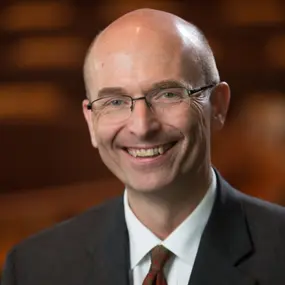
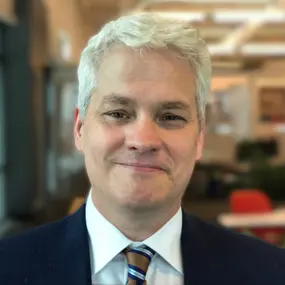
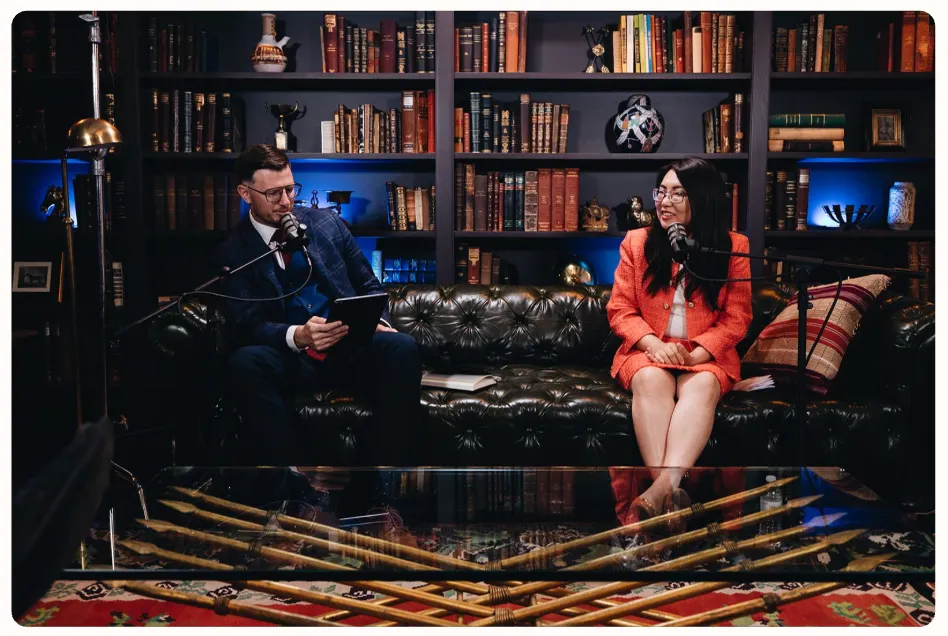
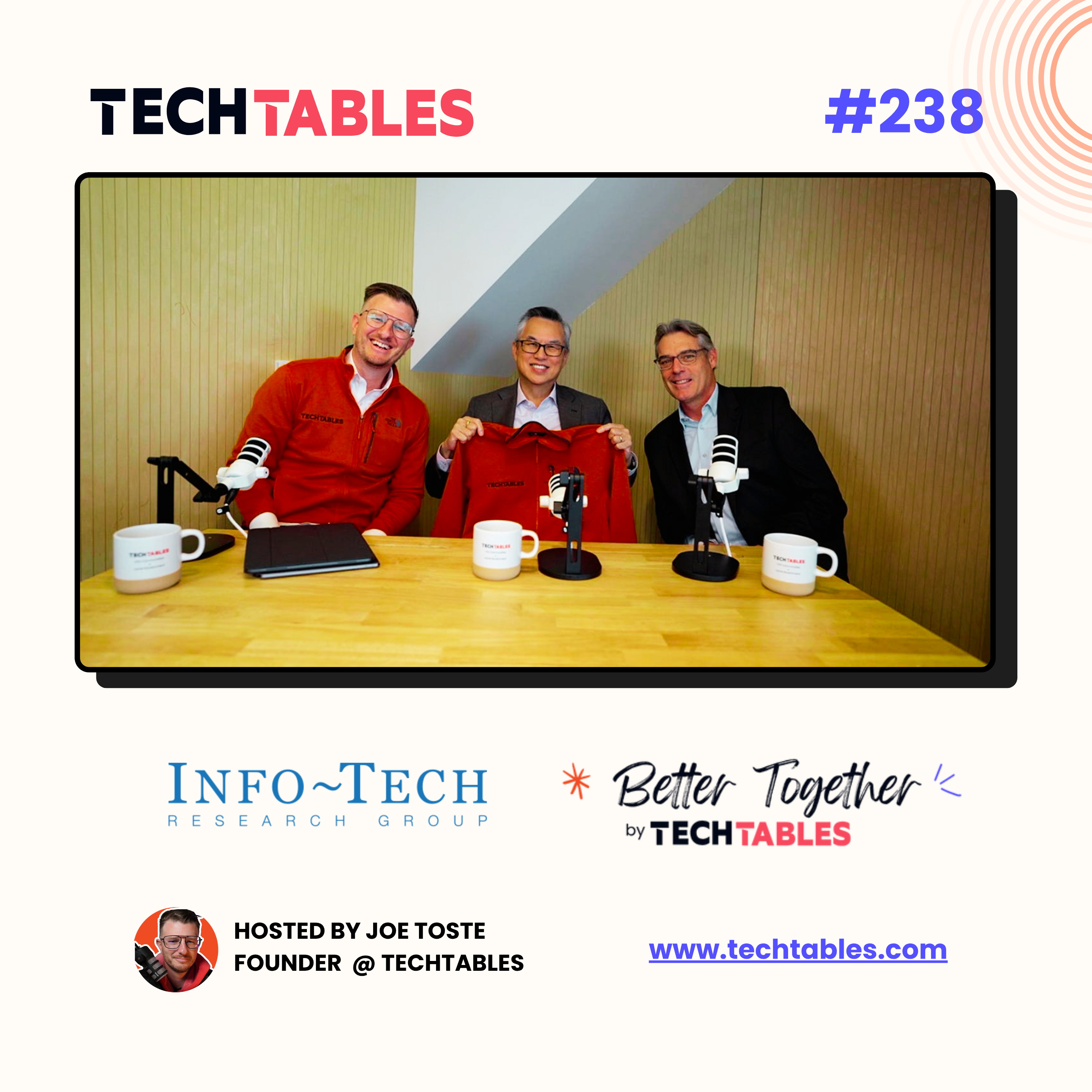
Recorded on-site at EDUCAUSE 2026 in Denver, inside the Info-Tech Research Group booth, this episode brings together John O'Brien (President & CEO, EDUCAUSE) and Mark Roman (Managing Partner, Education, Info-Tech Research Group).
John has led EDUCAUSE since 2015, and Mark was a CIO for a long time before working with colleges and universities around the world. John and Mark dig into where people still matter when the answers come from machines.
John raises a question that could reshape higher ed: if human connection becomes the premium experience, who gets access to it, and who is left with only automated alternatives?
Mark makes the case that a CIO who sees across the whole institution could rise to COO, and the conversation lands on the messy middle of learning that AI lets students skip.
Timestamps
(00:00) Intro to John O'Brien and Mark Roman
(02:55) College Isn't About the Knowledge
(05:50) Moving Up Bloom's Taxonomy
(10:40) Earning a Seat at the Table
(11:40) Skipping the Messy Middle
(14:20) The Future of the CIO
(17:05) The AI Slop Divide
(18:50) What John Is Proudest Of
(21:00) From Young Professional to Board Chair
(25:30) An Appeal to Kindness
(25:45) Promoted, Still Doing the Old Job
(26:35) Start With Values
Connect with the Guests
💼 John's LinkedIn: https://www.linkedin.com/in/johnobrienphd/
💼 Mark's LinkedIn: https://www.linkedin.com/in/markromanlinkedin/
Connect with Me
📬 Newsletter: https://techtables.com/
🎙️ Podcast: https://podcast.techtables.com/
🤝 Community: https://techtables.com/communities-local-government
💼 LinkedIn: https://www.linkedin.com/in/jtoste/
💼 Powered By Info-Tech Research Group, Verizon, Carahsoft, & NinjaOne
https://podcast.techtables.com/sponsors/
💜 Leave a review on Apple Podcasts
https://podcasts.apple.com/us/podcast/the-public-sector-show-by-techtables/id1661752549
🟢 Leave a rating on Spotify
https://open.spotify.com/show/0bFQBsDwKJkdNk2qENkhNL?si=0436c0c2ebca488e

🎥 Upcoming Live Podcast Tours
2026 TechTables Austin Live Podcast Tour - November 4th
We’re coming back to Texas for a live podcast stop in Austin, TX and we could not be more excited. TechTables heads to Austin to celebrate the leaders, the stories, and the work shaping the future of public sector!
→ Ready to join the conversation in person? Email joe@techtables.com
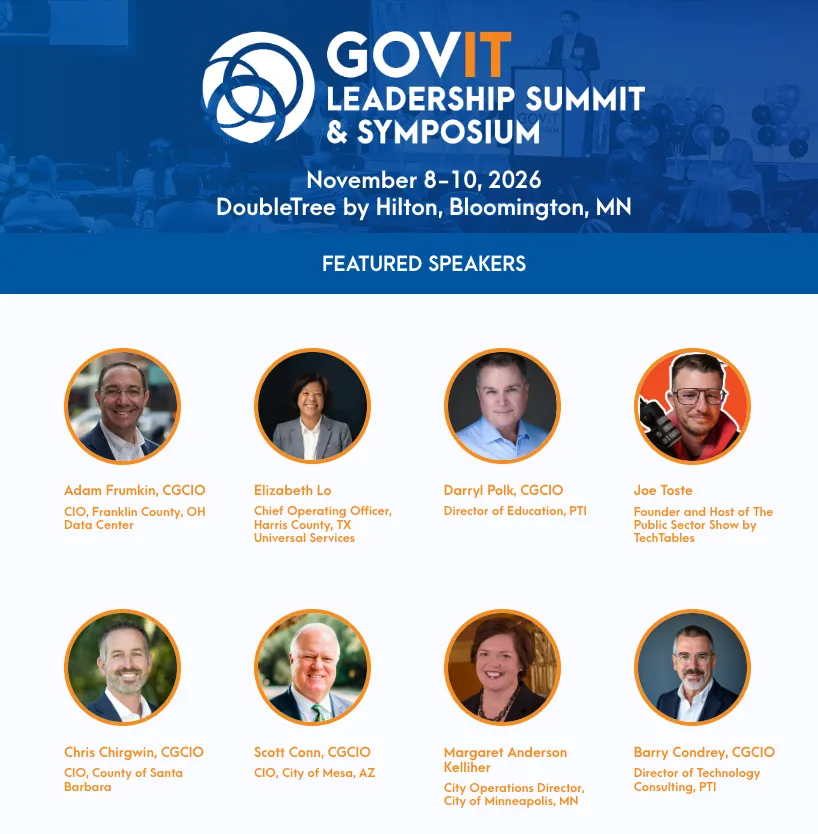
2026 GOVIT Leadership Summit - Bloomington, MN - November 8th - 10th, 2026
We’re heading to the GOVIT Leadership Summit & Symposium in Bloomington, MN and we could not be more excited to celebrate the leaders, the stories, and the work shaping the future of public sector!
→ See the program & mainstage speakers: click here.
→ Attending? Let's record while you're there. Email: joe@techtables.com
Whenever you’re ready, there are 3 ways you can connect with TechTables:
1. 📬 The TechTables Newsletter
Thanks for reading TechTables! Get early access to new episodes, insights, upcoming events, and more — straight to your inbox.
2. 🤝 You shouldn't make the hardest calls alone.
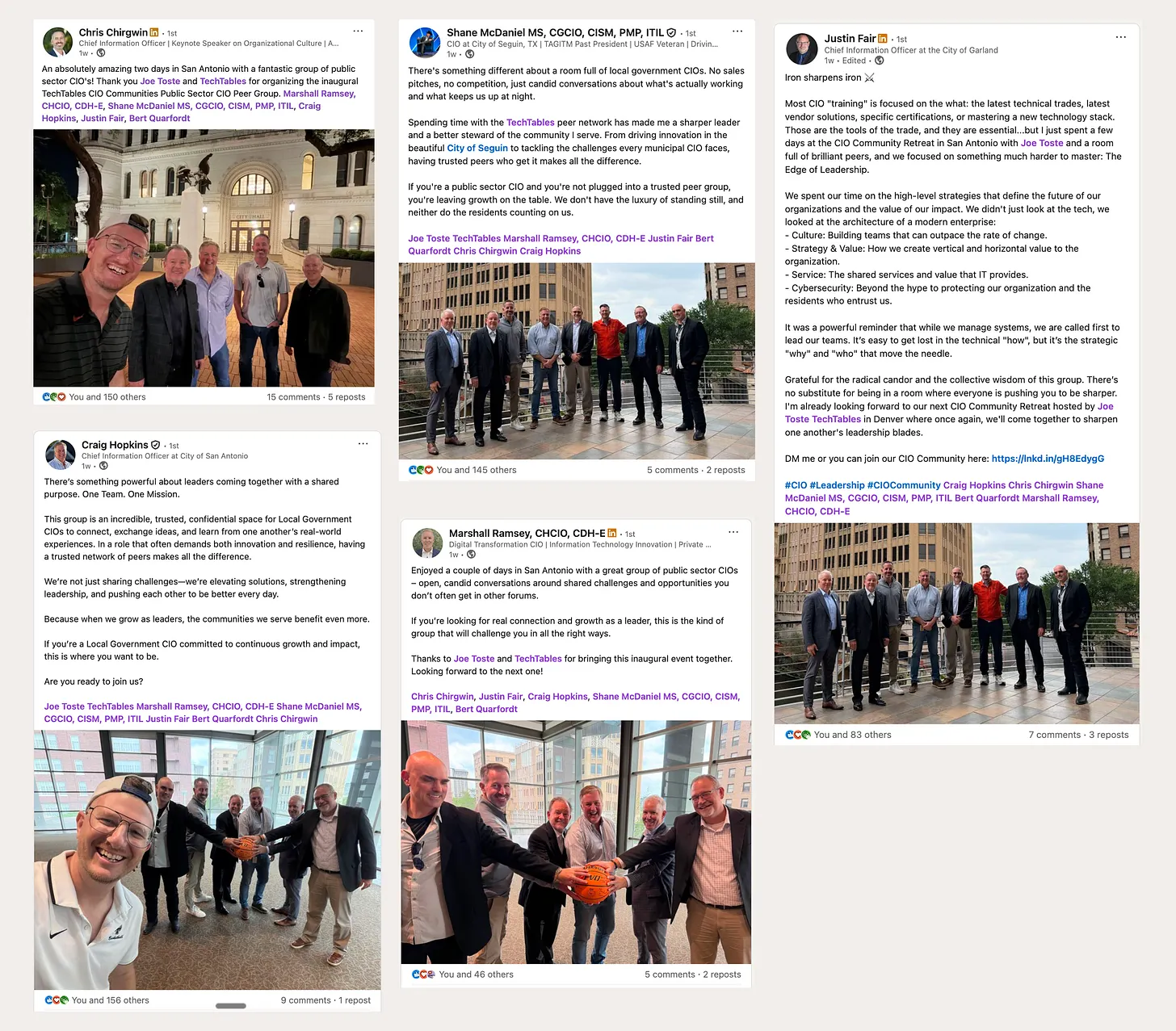
A peer advisory board of local government CIOs. Vendor-free, application only, twice a year in person — with 4x private forums in between.
See if you're a fit → https://techtables.com/communities-local-government
3. 🤝 The Better Together Series
The narrative-driven series bringing together industry partners and public sector CXOs. Discover the compelling stories that unfold when we stop working in silos and start building together.
»»» Email joe@techtables.com to learn more.
Title: John O'Brien (CEO of EDUCAUSE) on AI slop, the future of the CIO, and skipping the messy middle
Welcome & Introductions
---
Joe Toste: Welcome to The Public Sector Show by TechTables at EDUCAUSE 2026 in Denver inside the Info-Tech Research Group booth.
John O'Brien: Literally inside the
Joe Toste: booth. Yeah. Literally inside the booth. I'm very excited. This is gonna be a quick hitter type of episode. We're honored to have you on.
Joe Toste: This is the third year I've come to EDUCAUSE, and there are so many great people who have said so many great things that were also on the podcast this week. There you go. And for those who don't know you, give us a short intro.
John O'Brien: John O'Brien. I'm the president of EDUCAUSE. I've been president since 2015.
Joe Toste: 2015. 12
What is EDUCAUSE?
---
John O'Brien: years.
Joe Toste: Wow. And for those who don't know, 'cause I also cover state, and I also cover local government. So who-- for those who don't know what EDUCAUSE is, can you just give them a short intro?
John O'Brien: Yeah. EDUCAUSE is a association for anybody who works at a college or university who has the word technology in their job title or in their position description or who just loves technology.
John O'Brien: So we-- our community is sprawling across colleges and universities, instructional designers, institutional researchers, [00:01:00] faculty, CIOs, CISOs, ac- the whole acronym soup.
Mark Roman: Yeah.
Joe Toste: Yeah. I love it. Mark.
Mark Roman: Hi, I'm Mark. I'm the managing partner for education at Info-Tech, and work with universities and colleges literally around the world.
John O'Brien: You're skipping your most important,
Mark Roman: Oh, my most important thing is I've known John for about 12, 13, 14 years.
John O'Brien: And you were on the...
Mark Roman: I was on the EDUCAUSE with John. There you go.
Joe Toste: We'll link to it in the show notes. But in New Orleans, at Info-Tech Live. Shameless plug, 'cause I am an Info-Tech ambassador now. If you've not been to Live, please go, or any of the Ignite events. Like the plane ride I'm getting on tonight to be in Washington, D.C. tomorrow. You're living
John O'Brien: the
Joe Toste: dream.
Joe Toste: I live in the dream right now. Living the dream. Okay, so let's kick this off. I asked Mark "Hey, Mark, you're a really smart guy. What questions should I ask John O'Brien?" So I've got three right here, and then I also have been interviewing people the last two days, and I'm asking them, "What questions should I ask
The Mailbag: Knowledge as a Commodity
---
Joe Toste: John O'Brien?"
Joe Toste: And it ranges from Ed Clark, who's a friend of mine, and also an English [00:02:00] major Josh Bright at UCSB, and Vanessa Keenan, and whole group. So we're gonna go through-- we'll call it kind of the mailbag, All right. All right ... portion of it. But to kick it off so universities have historically managed a scarce resource, knowledge.
Joe Toste: As knowledge becomes a commodity, what is the university's value in the economy? And this is a fantastic question. Just to preface, everyone's been talking about this week. Yeah. So I'd love to hear your insights.
John O'Brien: Every term in that could be a dissertation. First of all, because most of my career was at community colleges, I have to say it's not just universities, but universities and colleges.
John O'Brien: And gosh, the, knowledge-- I think you're-- I understand the question that the knowledge economy is a thing and that AI makes knowledge easier to access, and I get that. But it's funny, if you ask students what is co- what is the college or university experience about they're not gonna say it's the knowledge.
John O'Brien: It-- They're gonna say it's the, it, "I grew as a professional. I learned [00:03:00] how to think creatively. I learned how to be a better human being and to be civically..." You know what I mean? It's-- And we have-- There's studies. You ask students at the beginning of their education, "What are you here for?" And they will all say, "I'm here to get a job," many of them.
John O'Brien: And then if you ask them at the end, they'll say, "What did you get out of it?" They'll say, "I learned how to become a better person. I learned how to learn. I learned how to be adaptive and be creative." And the reason that's also interesting now is because those are all also the skills that are gonna be critical in a AI everywhere world.
John O'Brien: So tomorrow, Paul LeBlanc will be doing a fireside chat with me interviewing him, and there's a rock star president who has really taken institutions, transformed them using technology, and just wrote a book on AI. And his book is-- makes the argument that, along the lines of your question, that universities business is changing from, I think he says, from epistemology to ontology.
John O'Brien: So from knowing, knowledge, empath- Yeah ... and to [00:04:00] being and that the universities are, need to move from a knowledge economy to a caring economy, he says, where we accent empathy and creativity and all of those. And actually, long before generative AI, Joseph Aoun, the president of Northeastern, wrote a book called Robot-Proof that got a lot of mileage, and his argument was AI is coming, 'cause this was 2018, before gen AI.
John O'Brien: He said, "AI's coming. It's going to take jobs. It's gonna change everything." And but he said the curriculum needs to create a new focus on what he calls humanics. And guess what that is? Creativity. But the, English majors we rise again.
Joe Toste: Yeah.
John O'Brien: So-
Joe Toste: And Ed Clark is an English major, too
John O'Brien: There's
John O'Brien: You cannot swing a stick without hitting an English major here. It's all pretty good.
Joe Toste: And my friend Josh Bright is a philosophy major. The two of them actually came on together. And I love that you mentioned community colleges. Just had on, I don't know, 30 minutes ago, [00:05:00] 40 minutes ago Dan Watkins.
Joe Toste: A friend of mine from Santa Barbara manages, had managed the Ventura Community College- Yeah ... and just got a new job a week ago at the LA Community College District, so he's got a big, new role, and honored to unpack that. I'd love to hear your insights too on
Mark Roman: this- so I'm not an English major, so I could be in trouble here.
John O'Brien: Oh, you were a history major, weren't you? Math.
Mark Roman: Nah. I'm a mathematician.
John O'Brien: As I slide my chair a little further away from
Mark Roman: his. I view it as, We're gonna have to introduce all kinds of change to understand how we have some-- how we deliver some value in the economy, right? So we used to have the scarce resource, right?
Mark Roman: Since the time of Socrates, the value of education was wrestling out this scarce resource called knowledge. And as it becomes a commodity, does it require us to rethink how we deliver value? And of course, all the social pieces and all that, I agree with all of that. I think the other piece is we need to teach at a higher level of abstraction if we're going to deliver value, right?
Mark Roman: So the old way [00:06:00] of, or any any level that's lower levels of Bloom's taxonomy are not gonna deliver a lot of value anymore. Which means we need to think about how we use AI to teach at a higher level of abstraction, whether it's using AI to flip the classroom or whatever. And as we move up Bloom's taxonomy, teach at a higher level of abstraction, we deliver more value, but two problems emerge.
Mark Roman: One is it means faculty will have to change, which we all know how much they love change, right? And teaching at a higher level of abstraction is harder work.
John O'Brien: Yep.
Mark Roman: And so you're asking people who don't like to change and to do harder things. And I think that's gonna be a non-trivial change in the education system in politics.
John O'Brien: Top to bottom, yeah.
Mark Roman: Even K to 12.
John O'Brien: Yeah. That's-- not the first person to point out change management is a thing. Yeah. Yeah. It's just, it's really quite- quite remarkable how we're coping with it and how it hits individual sectors very differently. The why your question just was so many, "Yeah, but.
John O'Brien: Yeah, but." Yeah, [00:07:00] but higher ed doesn't like to think of our- ourselves selling a commodity. One of my favorite EDUCAUSE Review articles was Higher Education is Not a Business and Other Myths. But that idea that we're not selling anything, that it, the question begs the question, like, how, what does higher ed think it's doing?
John O'Brien: And I think we don't, I don't think we fundamentally believe we're selling a commodity. I think we believe we're changing
The Evolution of the CIO
---
John O'Brien: lives, but-
Joe Toste: Yes. So w- that mission, that's the most important piece. And I think, and I had Amy McLaughlin. Yeah. She's so great. CIO, University of Wyoming, who I just found out was good friends with my friend Andrea Bollinger, who was at Oregon State and now moved.
Joe Toste: It is such a small world. It's a
John O'Brien: small world after all. Yeah.
Joe Toste: And she said, "Joe I'm doing all this technical stuff. We got these great projects. I need to be the chief storyteller even as the CIO." And I was like I really like that. That's really good."
John O'Brien: Actually, we've been talking about a version of that for a long time.
John O'Brien: Yeah. The [00:08:00] integrative CIO, remember that? Yes, I remember that. I think you've even written some-
Mark Roman: I might have done something ...
John O'Brien: I feel like you have. But literally since, gosh, 2017, I'll say. I can't do time anymore, so I just make up numbers. But like for quite a while we really, EDUCAUSE used all of its, it channels all of its influence to tell that story, to say You know, being a CIO in some past time amounted to just basically saying no to things and- Yeah
John O'Brien: and keeping the, the plumbing working and- Yeah ... which nobody appreciated until it stopped working, and then suddenly. But we told the story that being a CIO is totally different. It requires storytelling, it requires connecting in ways with across the organization. And the good news and the kind of exciting thing as I think about retiring is that I feel like we've fully realized that now.
John O'Brien: I don't think there's a CIO who doesn't get that their job is being able to tell the story of how technology makes a difference and [00:09:00] being able to work acro-- not just work in IT, but work with academic fairs, work with faculty, work with research and so-
Mark Roman: No longer the CI-no- ... but a storyteller, and a CIO sees everything.
Mark Roman: Sees how everything works, whether it's in putting an alumni system in, an HR system, teaching and learning technologies. So the CIO sees everything, and as AI starts to permeate and change pedagogy and change how we do research, become technology-first enterprises. And what a great opportunity for the CIO to grasp the brass ring and elevate the role of CIO to chief operating officer.
John O'Brien: It's happening. So we have two, two members of our board, and our board's only 12, 12 people, and two of them are-- were CIOs and now are vice presidents of strategy or vice presidents of... they're seeing the CIO because CIOs know how to do stuff. They know how to tell stories. They n- know how to [00:10:00] work with senior leadership.
John O'Brien: They know how to listen to students. So when people are wondering, "Hey, who are we gonna get to, to lead?" We have a-- I know CIOs who were given HR as a part of an- But not
Mark Roman: the mathematicians usually.
John O'Brien: No, we don't do it. No. But just to say, it it's quite exciting to see how the role has changed.
John O'Brien: I mean- originally we-- when I first arrived at EDUCAUSE, we complained a lot about how f- relatively few presidents reported or CIOs reported to the president, relatively how few CIOs were on the cabinet. And when I would talk to presidents, I would say, "Sh-shame on you for not listening to your CIOs."
John O'Brien: I'd talk to CIOs and I'd say, "You need to earn the right to be at that table."
John O'Brien: And then COVID came. I don't take credit for-- EDUCAUSE didn't create the change, but COVID came, and suddenly everybody had a firsthand understanding of how critical what that IT is not a plumbing, it's a [00:11:00] strategic asset.
John O'Brien: And-
Mark Roman: Yeah. Yeah ...
John O'Brien: and now it's how do you stay at the table, and that's a different conversation.
Mark Roman: But you can't knock on the door. You have to earn the right. You have to be invited in.
John O'Brien: By the way you conduct yourself and carry yourself, and- Exactly ... we've-- I realize now we've just strayed so far off your topic.
John O'Brien: But-
Mark Roman: Sorry, Joe ...
John O'Brien: but, Heather McLaughlin today at-- Was that-
Skipping the Messy Middle
---
Mark Roman: Yesterday.
John O'Brien: Yesterday. I need a vacation. What are they gonna do, fire you? What are they gonna do, fire me? Her keynote she had so many good slides, but the one I really liked was it talked about learning, and s-student learning was, moving left to right, and left was just squiggly lines like this, and then it gradually got to a single line of you- Yeah
John O'Brien: you've understood the problem and you've reached a conclusion. And what she pointed out is that AI just allows you to jump to the solution and missing the whole messy middle, which we call learning. And so that's, that-- So your question about is information or knowledge the commodity, the main thing [00:12:00] we're doing at a university?
John O'Brien: If that's true, that would be a great shortcut. But I don't think it is true. I think it's about that middle that is what makes universities and colleges unique and makes the work we do critical. If all we needed was answers, we have machines for that, and we-- or we will.
Mark Roman: We will. But- Makes it a lot easier.
Mark Roman: I have a daughter who's finished her thesis. When she started, I said to her, "Why don't you use AI to summarize all the material you have to read?" And she said no I really wanna internalize the knowledge." And I was really proud of her, right? It was a proud dad moment. When she finished it she said, "I did use AI."
Mark Roman: I said what did you use it for?" And she said, "It was my Hemingway. I used AI to shorten-" ' Cause, you know- Yeah ... I hope she never sees this podcast. Yeah. But she's a very long, says a lot.
John O'Brien: She has complicated ideas,
Mark Roman: thank you. Yeah. And so she used AI to summarize it, right?
John O'Brien: Yeah.
Mark Roman: So she still internalized the knowledge and used the tools-
John O'Brien: I love that
Mark Roman: in a different way.
John O'Brien: And for every dystopian story, there's one like that where it might not destroy [00:13:00] humanity, and it's actually gonna help people-
Mark Roman: Yeah ...
John O'Brien: discover and learn in a different way, and- And
Mark Roman: to become better people.
John O'Brien: Yeah. That would be a nice thing.
Joe Toste: So you said that, you might have strayed from the original question, but actually, it was one of the questions that I believe Ed Clark had asked me that he really wanted to know, and you had already answered it, was what, what-- You've seen 12 years, 13 years
The Future of the CIO
---
Joe Toste: at EDUCAUSE.
Joe Toste: You kinda answered that a little bit of that role of the CIO. The next question from one of the other CIOs was what do you think is gonna be the next 10 to 12 years?" I know it's loaded, I'm sorry
John O'Brien: And for higher ed
Joe Toste: or for the world for the role of the CIO.
John O'Brien: Yeah. Actually I-- and I touched on this.
John O'Brien: I-- and I wouldn't have said this 10 years ago, but there's so many different ways to answer it. One way is for a while there, remember there were articles coming out that said IT is irrelevant. I-- there-- somebody wrote a big article- Oh, yeah ... and it got everybody's attention.
Mark Roman: Yeah.
John O'Brien: And the idea wasn't that the work of IT is- It was Carr
John O'Brien: is Carr maybe.
Mark Roman: Carr, yes. Yeah.
John O'Brien: Not that the work of IT goes away, it's just that IT isn't-- [00:14:00] is gonna be so ubiquitous that we're never-- we're not gonna need to call it out any more than you'd have a Department of Electricity or... and I think that's-- like, there could be a version of that. I don't think so.
John O'Brien: I think it, I think it could be possible that the role of the CIO could broaden out and become more of a strategic services - and instead of a CIO, you might have a VP of strategic services, which is what one of our board members who was a CIO very recently was promoted to a VP of strategic services, David Weil at Ithaca College.
John O'Brien: And, and-
John O'Brien: Good ... I think that, I actually think that is probably the direction we'll go because AI will be ubiquitous and presumably effective and settle into strategies and ways that it works and doesn't work and- Yeah ... and yeah. I think I, I'm gonna go with that. So you're gonna dig me up in 12 years and,
Joe Toste: hey, I'm young. You can
John O'Brien: wheel me out to your podcast and tell me-- check my work. Yeah.
Mark Roman: I think you're- What [00:15:00] do you
John O'Brien: think?
Mark Roman: I think you're bang on. There's two directions. One is to become a greater have greater impact in the organization and as a, as a technology first organization, the CIO really step up to a leadership strategic role.
Mark Roman: But some CIOs like the technology, and they will go the other direction, right? The danger in that is that it's 150 years ago, organizations had a vice president of electricity, right? We don't see that anymore.
John O'Brien: Yeah.
Mark Roman: We're not gonna see a vice president of technology or IT. But what we will see is the people who really understand those issues or have those skills-
John O'Brien: S- a VP of systems or something.
John O'Brien: Yeah.
Mark Roman: Yeah. Yeah. But they will be ubiquitous in the organization. Every organization's a technology first organization. The leadership has to be technology first.
John O'Brien: Yeah. Then you get into this whole-- like I have- And I've been, I've done media training, so I know I don't have to answer the question you asked.
John O'Brien: So let me answer a question you didn't ask. [00:16:00] Let's just learn something. Oh, yeah. No, the famous story of that is Winston Churchill supposedly, everything gets attributed to Churchill, but he supposedly came to a press conference and said, "I'm so excited to hear what what questions you have for my answers."
Joe Toste: Yeah.
John O'Brien: But to me the question also is just What is gonna be the future of institutions? I worry about, I think as we settle into nobody talks about technology the same 'cause technology's everywhere, I think there may be a kind of a renaissance of the tech-free cl- I already saw an article the other day.
John O'Brien: I think there's a possibility that maybe some-- Well, remember the Great Books movement?
Mark Roman: Yep.
John O'Brien: So that there may be a sort of a movement for campuses to have tech-free environments. I think that will be an interesting development. My other worry, which is deep, is that we're gonna have a digital divide sort of dystopian thing where, I'm being crass and I'm over-exaggerating, but the elite [00:17:00] experiences will be low tech,
AI Slop & the Digital Divide
---
John O'Brien: high human-
John O'Brien: And then the rest of us get AI slop. And I'm being provocative in saying it that way, but that- Yeah. That, AI can reduce costs, it can do things at scale. I hope it doesn't become an either/or. I hope all institutions will use AI in the way that you hinted at, which is use AI to do the lower tactical things that are bothersome and waste of time and not good use of big brains, and then repurpose the time that creates to do better and different things.
John O'Brien: I hope that's how it works. But it could go sideways in a couple ways that concern me a little bit.
Mark Roman: We're shifting from deterministic systems, right? The the classic general ledger system adds up all the numbers, tells you total, and you know it's the right answer, and when you ask the same question twice, you get the same answer twice.
Mark Roman: To probabilistic models, to stochastic models where we don't know if the answer's quite correct, and if we ask the same question twice, we might not get the same answer. Yeah. And so using these [00:18:00] systems requires, different set of attitudes and responsibility criteria.
John O'Brien: Yeah. Likewise. Fun times. Yeah. Never a dull moment.
Joe Toste: Yeah.
John O'Brien: Gosh, we need a lot of consultants or something, don't
Joe Toste: we? Hey, he's pretty smart, all I'm saying. I don't wanna hijack the interview, but I guess I am the host.
Joe Toste: A lot of pe- a lot of CI-
John O'Brien: Fill us out. Can you hijack your own interview? I don't know. Are
Mark Roman: you the next
Proudest Accomplishments at EDUCAUSE
---
Mark Roman: Winston Churchill?
Joe Toste: A lot of folks I've been talking to really wanna know, John, over the last 12 or 13 years, what's the one thing you've been most proud of at EDUCAUSE? If you had to choose one
John O'Brien: Because I don't have to answer the question I was asked?
John O'Brien: Let me tell you the two things that I-
Joe Toste: Yeah. Yeah
John O'Brien: I'm really proud of broadening the EDUCAUSE tent, and when I started it, it was a narrower conversation. And when the board hired me, I spent a lot of time while I was interviewing talking about-- I remember saying, 'cause I thought it was a great phrase, I said, "The future of IT is not IT talking to itself more intensively.
John O'Brien: It has to be..." And I was-
Mark Roman: Yeah ... [00:19:00]
John O'Brien: without knowing it, I was talking about this integrative CIO-
Mark Roman: Right ...
John O'Brien: part and in the evolution of EDUCAUSE over the last 12 years, that's meant that we now welcome faculty, instructional designers, the names I was rattling off earlier, that the tent has gotten so much bigger that it makes the conversation richer.
John O'Brien: And we've made a priority of- Defining ourselves not by who we turn away but by who we welcome, and we welcome anybody who, who has the word technology in their job and loves it and wants to talk about it.
Mark Roman: You've built a the mantra around the greater good.
Mark Roman: Yeah.
John O'Brien: Yeah.
Mark Roman: And so it's not just about technology. You've changed EDUCAUSE into something that thinks about the broader social issues. It's a big deal.
John O'Brien: Yeah. That was our vision statement is transforming higher education in service to a greater good. Doesn't mention technology 'cause the tools come and go, but it's how are you using them and the difference you wanna make.
Mark Roman: The tools are ephemeral.
John O'Brien: Yeah.
Mark Roman: Yeah.
John O'Brien: And that's not about me. That's about the whole organization and rallying around an [00:20:00] idea that made sense and makes sense and I'm s- really proud of that and and the part of that, among the voices that w- were part of that broadening was an initiative at the very beginning I gave, did a listening tour.
John O'Brien: Not listening tour, listening post. I just said, "Hey, I'm the new guy." And we published an EDUCAUSE Review, three questions like, "What do you love about EDUCAUSE? What do we need to do better?" And some, just very easy questions. And-
Mark Roman: But
John O'Brien: appreciative
Mark Roman: as opposed to
John O'Brien: negative. Definitely. Definitely.
Mark Roman: Yeah.
John O'Brien: But the biggest negative thing that came out it'll in-- I'll tell you both of them. I don't usually say both of them, but the two groups that were the least happy-
Mark Roman: Yeah ...
John O'Brien: were corporate members-
Mark Roman: Yeah ...
John O'Brien: which we now call industry partners.
...
John O'Brien: And young professionals. And it's not hard to imagine why the, the corporate and I look at Leah Lang who she has taken that, She's amazing
John O'Brien: my job at this point is just get out help support Leah and get out of her way. She's awesome and but it's she's changed that conversation.
Mark Roman: Yes.
John O'Brien: [00:21:00] But that in those first moments at EDUCAUSE that was something. That's then so like in my first year created the corporate engagement advisory committee.
John O'Brien: That was the beginning of that. The same time I did that, I created the YPAC group, the Young Professional Advisory Committee, and that I'm just-- I can't help but be so proud not of-
Joe Toste: I know your post- ... what we did ... your poster was out there. I looked. It was right there. I took a photo of
John O'Brien: it. The cardboard agenda?
John O'Brien: Yeah. But that and they are now but there was nothing like that before, and now they are a force to be reckoned with. Absolutely. And Leah, just support them and get out of their way. Yes. So think about this, the, we started the YPAC the group, Young Professional Advisory Committee, about 10 years ago.
John O'Brien: It's now 10 years later, and the EDUCAUSE board, as Mark knows, is small. It's only 12 people voting and me. Yeah. And currently two of the 12 people are former Young Professional Advisory Group folks. The current board chair, Tara Hughes, is one of the original young [00:22:00] professionals that- Found a home and a voice-
Mark Roman: Yeah
John O'Brien: in that. So that to, to me, I'm proud of that. I- Yeah ... and I have every confidence that , that train can't be stopped at this point.
Mark Roman: You're investing in the future with YPAC.
John O'Brien: I think so. I think so. Yeah. So thanks for asking.
Joe Toste: I love that. I also love the young pr- I- Mark knows, I talk about it all the time on the podcast.
Joe Toste: I coach high school basketball, and so I love spending time with kids and seeing they, they come back to campus and when they graduate and-
John O'Brien: Yeah ...
Joe Toste: seeing where they go on in their journey. And so I love supporting the younger folks and,
John O'Brien: It's energizing too- It's
Joe Toste: so energizing ... for
John O'Brien: us less younger folks.
Joe Toste: And yeah, and I, it's, it's interesting, when I travel the country, I have what I call these live podcast tours. And so I would go different places, go to Houston go to Washington State go all over. And so I would have it was so fun 'cause I would always find a, an organization that the kids were in college.
Joe Toste: And so I remember when I was in Houston, for example at Ri- I think it was Rice University. They have the Future Information Technology Professionals. So their team comes out and, we've got the CIOs, all this. There's the [00:23:00] vendor partners, industry partners. And I go, I stop the event.
Joe Toste: I'm doing the podcast. I stop and I'm like, "All right if you're, a college student, come up here on stage." And it's small. It's maybe there's 40 people in this. And I have, "All right, if you're a, a vendor partner or a CIO, take out your business card. You're gonna give it to one of these."
Joe Toste: And these kids are counting them like cash, like- and, like- Just a piece of that, of and as an entrepreneur, small business owner, like helping the next generation. 'Cause I get questions all the time like, "How are you doing the podcast," right? And I love it. I love seeing some of the folks here.
Joe Toste: There are, some of the college students are here asking those questions, and how does media intersect with cybersecurity? Like that's such a great- Yeah ... great topic. So we're rounding the corner on the pod- on the podcast. My grandfather was, I sent you this, I think I put this article.
Joe Toste: You did. He taught at UCSB for 50 years.
John O'Brien: UCSB?
Joe Toste: UC Santa Barbara. And I was in- He taught? He taught history. He specialized in Brazilian and Portuguese history. And so I had the honor of auditing his classes when I was in high school, so it was all these college [00:24:00] kids. And so I grew up, every family barbecue, and he would barbecue he would be talking about, he, he would just be talking about history and, everything from Portuguese, world history, all this.
Joe Toste: And and I just absolutely loved kinda his heart for the university and history. So I started as a history major, and then turned to finance and math. So there's a part of me I'm, maybe I'm, I should be in the middle of this seat. You
Mark Roman: really should be, yeah.
Joe Toste: I-
John O'Brien: You started as math.
Joe Toste: Yeah.
John O'Brien: Or no, you were gonna start history- Started-
John O'Brien: you switched to math.
Joe Toste: Yeah.
John O'Brien: You did math, and now you love history. Yes.
Joe Toste: Yes.
John O'Brien: And I actually started thinking I was gonna be a history major, but went with English,
Joe Toste: there you go. So I'd love to hear from you, kinda one, one parting you still got a year. I know you're not going still around, but. I'm not
John O'Brien: dead yet.
Joe Toste: You're not dead yet.
John O'Brien: Feeling better.
Joe Toste: What, yeah, I'd love to hear, like what's one thing that you would love to leave for the next generation? And it can be for the young professionals, it could be for CIOs, other technology leaders, and then same thing for Mark. I'd love to hear from Mark's perspective
A Parting Appeal to Kindness
---
Joe Toste: too.
John O'Brien: Yeah, I think ultimately when the future is gonna ask [00:25:00] so much of us I actually just would love to have my last word be an appeal to kindness. Everything that's happening has taken a lot out of us. The overall lack of civility the decline of civility.
John O'Brien: I've talked to probably four or five people here at the conference who have been promoted, and I asked every single one, "Are you still doing your old job?" And they all just laugh and say, "Yeah." I think people are worn out. People are tired. It's, so we've got a declining, we've got all the data that says that the general public are valuing higher education less.
John O'Brien: We've got do more with less. We've got lack of civility and a polarized environment where being mean becomes almost expected. And-
Mark Roman: Yeah ...
John O'Brien: that, that would be my, I know it sounds corny or namby-pamby, but- I think, we all do mission, vision, values, and we talk about values, and oftentimes they're the last thing we talk about.
John O'Brien: And honestly, I think the values now are rising up [00:26:00] to be really critical determine how we do what we do and the spirit with-- that we're gonna bring to this serious polycrisis and challenges we have. So that's what I got.
Mark Roman: It's a polycrisis. I love that.
John O'Brien: Brian Alexander says that. I like, I like-
Mark Roman: That's a beautiful-
John O'Brien: I like his thinking.
Mark Roman: We're, You need to start with values 'cause that's the only way you're gonna survive. It... It's the only way that you're going to respect yourself at the end-
John O'Brien: Yeah ...
Mark Roman: end of the day. So I I was a CIO for a long time, and now I talk to CIOs. Probably talk to a dozen CIOs,
Mark Roman: and I listen to their issues, I listen to their challenges, and I think to myself, "Thank God I don't do that job anymore."
John O'Brien: It's gotten really hard.
Mark Roman: It's gotten incredibly hard. And I think there's a breaking point, and I hate to see a lot of really good people going through a lot of quite difficult times right now.
Mark Roman: And it's it's a non-trivial challenge.
John O'Brien: Yeah. And one of the really good things that came out of COVID at-- was after COVID where- Mental health and wellness became a thing, and people talked about it.
John O'Brien: Yes. [00:27:00] And it was destigmatized more than it ever had been. And I... Those are all... And the idea of bringing your whole self to work and being, those are all good things, and- Sure ... I don't think they're extra extras now. I think we gotta have, we got more work- ... less appreciation. There's gotta be something on the other end to- And so can we be nice to each other?
John O'Brien: Can we be kind? Can we-
Mark Roman: Yeah ...
John O'Brien: can we focus on our values? Just focus on our values. Yeah. But Brandie Nonnecke came to our very first AI summit, and she said 'cause this was a few years ago, and people were like, "What should we be doing with AI? What should we be doing?" And she said, "Start with your values."
John O'Brien: If you're a, if you're a campus that is focused on sustainability, then look hard at how AI can help with that. If you're, you know-
Mark Roman: Yeah ...
John O'Brien: lead with your values.
Mark Roman: Yeah. Yeah. What are your core values and what do you believe in?
John O'Brien: But hold yourself accountable for it.
John O'Brien: Yeah. Yeah.
Mark Roman: Write it down and
Joe Toste: review
Mark Roman: it, right? Look in the mirror every few months.
John O'Brien: Yeah.
Joe Toste: I love this conversation. I love that y- what you ended on, Dan ended on almost [00:28:00] identical, the same thing about kindness. And TechTables is the brand, but my business is Levity Media LLC- ... for lightness and fun, so I love it.
Joe Toste: Mark knows I come with a lot of energy. I've
Mark Roman: seen that, Joe.
Joe Toste: Yeah. So thank you for coming on the show. Always welcome back. Of course. Thank you. And Mark, always a pleasure. Yeah. Love having you on. Thank you both.